

These Cadbury Egg cookies are the ultimate Easter treat thick, soft, and packed with crunchy chocolate mini eggs in every bite. If you’ve ever struggled with cookies spreading too much or turning cakey, this foolproof recipe gives you bakery-style results every single time.
If you love festive spring desserts, you might also enjoy these peanut butter Easter eggs another easy and colorful treat perfect for Easter celebrations.
Table of Contents
Why These Cadbury Egg Cookies Work
The brown sugar creates moisture retention that keeps cookies soft for days. This recipe uses a precise 60-40 ratio of brown to white sugar.
Melted butter creates dense, fudgy cookies rather than cakey ones. The cooling period allows the butter to resolidify slightly before mixing.
The flour-to-fat ratio produces thick cookies that spread minimally during baking. Each cookie maintains its shape while developing crispy edges.
What Makes This Recipe Special
- No mixer required, just one bowl
- Cookies stay soft for 5+ days
- Minimal spreading means perfect shapes
- Works with multiple candy types
- Customizable batch sizes included
For more fun dessert ideas, try this banana split recipe for a classic, crowd-pleasing treat everyone loves.
What to Watch For
- Mini eggs can crack if chopped incorrectly
- Overbaking ruins the chewy texture
- Skipping chill time affects thickness
- Candy coating may bleed color slightly
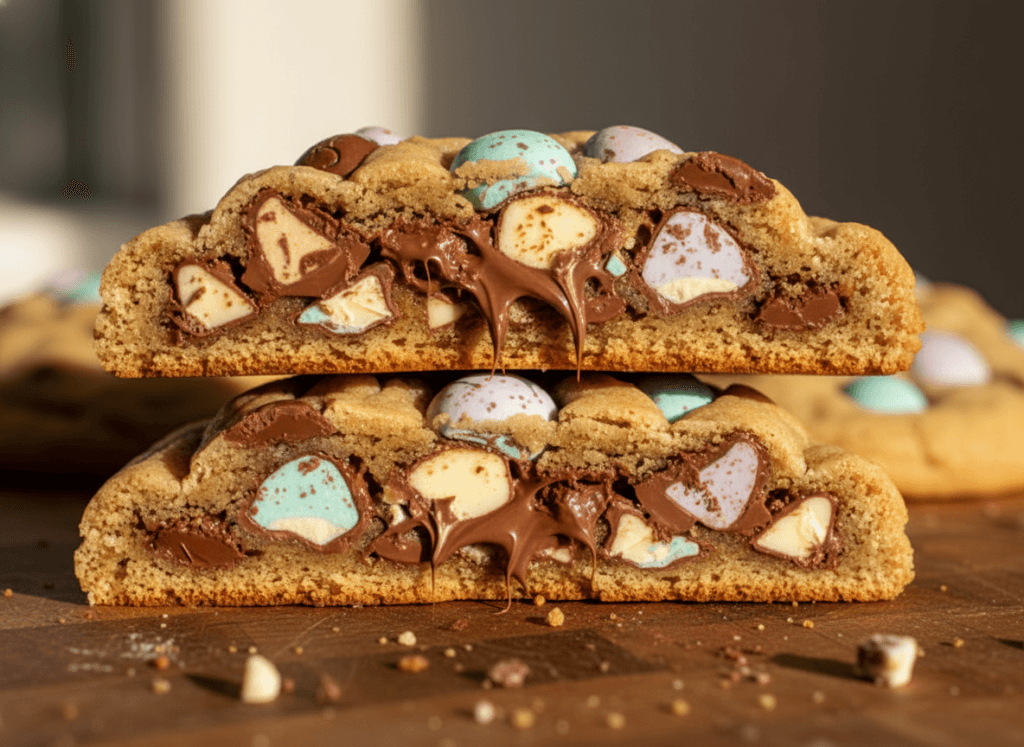
Best Cadbury Eggs to Use
The candy type dramatically affects texture and appearance. Cadbury mini eggs provide the best results for cookies.
These candy-coated chocolate eggs maintain their shape during baking. The thin shell prevents excessive melting while adding color.
Mini Eggs vs Crème Eggs
Cadbury mini eggs work perfectly in cookie dough because they hold their structure. The candy shell protects the chocolate at 350 degrees oven temperature.
Crème eggs contain fondant filling that liquefies completely when baked. This creates puddles and uneven texture throughout cookies.
| Candy Type | Baking Result | Best Use | Texture Impact |
| Cadbury Mini Eggs | Holds shape perfectly | Mixed into dough | Crunchy candy shell |
| Cadbury Crème Eggs | Melts completely | Not recommended | Creates liquid pockets |
| Cadbury Caramel Eggs | Partial melting | Chopped, limited quantity | Gooey caramel spots |
| Mini Egg Chocolate Bar | Melts like chocolate chips | Chopped for mix-ins | Melted chocolate pools |
Crush vs Chop vs Whole
Whole mini eggs create visual impact and concentrated chocolate bursts. Place them on top before baking for the most attractive presentation.
Chopped candy distributes color throughout every cookie. Use a sharp knife and gentle pressure to avoid pulverizing the candy shell.
Crushed mini eggs create tiny candy pieces that blend into the dough. This method works best when you want subtle candy flavor without large chunks.
Pro Tip: Place whole mini eggs in a sealed plastic bag, then gently tap with a rolling pin. This controlled crushing prevents powder while creating uniform pieces.

Ingredients That Matter for Thick, Chewy Cookies
Unsalted butter gives you control over salt levels. Melted butter creates denser cookies compared to softened butter.
Brown sugar contains molasses that adds moisture and chewiness. The recipe ratio uses more brown than white sugar for maximum softness.
All-purpose flour provides the right protein content for structure. Bread flour makes cookies too tough, while cake flour creates fragile texture.
- 1 cup unsalted butter, melted and cooled
- 1 cup packed brown sugar
- 2/3 cup granulated white sugar
- 2 large eggs, room temperature
- 2 teaspoons vanilla extract
- 3 cups all-purpose flour
- 1 teaspoon baking soda
- 1 teaspoon salt
- 1.5 cups chocolate chips
- 1.5 cups Cadbury mini eggs, chopped
- Melted butter creates fudgy texture
- Brown sugar adds moisture and chew
- White sugar helps with spreading control
- Eggs bind and add richness
- Vanilla enhances chocolate flavor
- Flour provides structure and thickness
- Baking soda creates slight lift
- Salt balances sweetness
- Chocolate chips add melty pockets
- Mini eggs provide crunch and color
Room temperature eggs incorporate more smoothly into melted butter. Cold eggs can cause the butter to resolidify and create lumps.
The baking soda amount is deliberately conservative. Too much creates puffy, cakey cookies instead of dense, chewy ones.
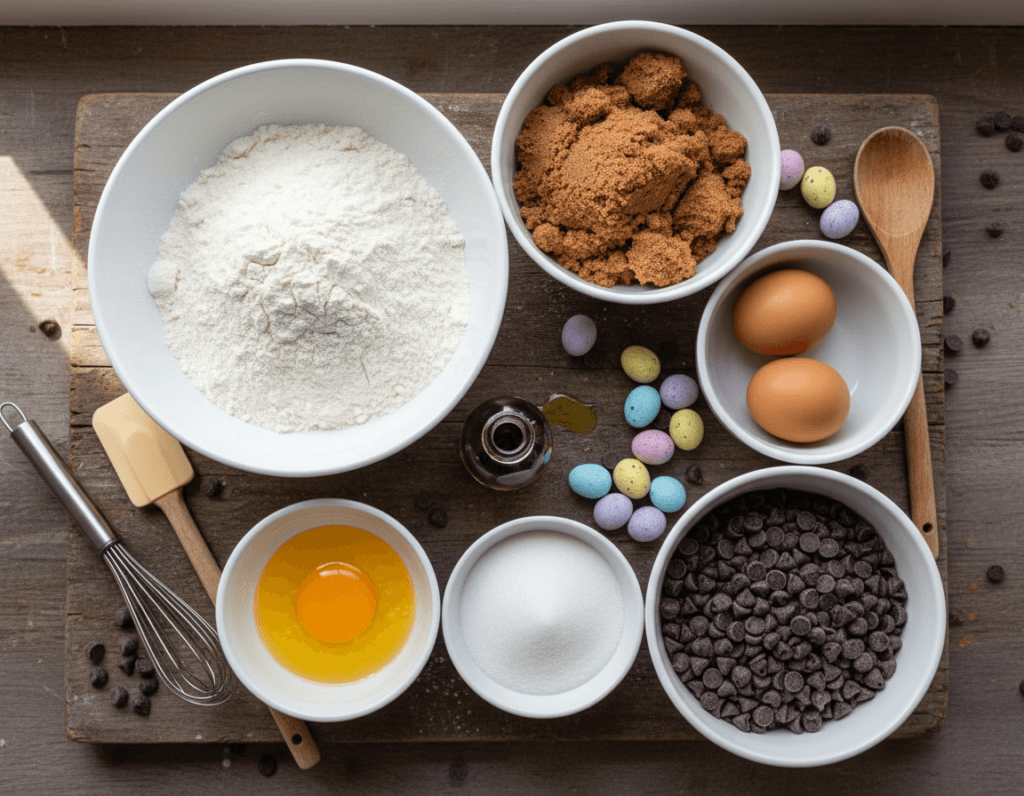
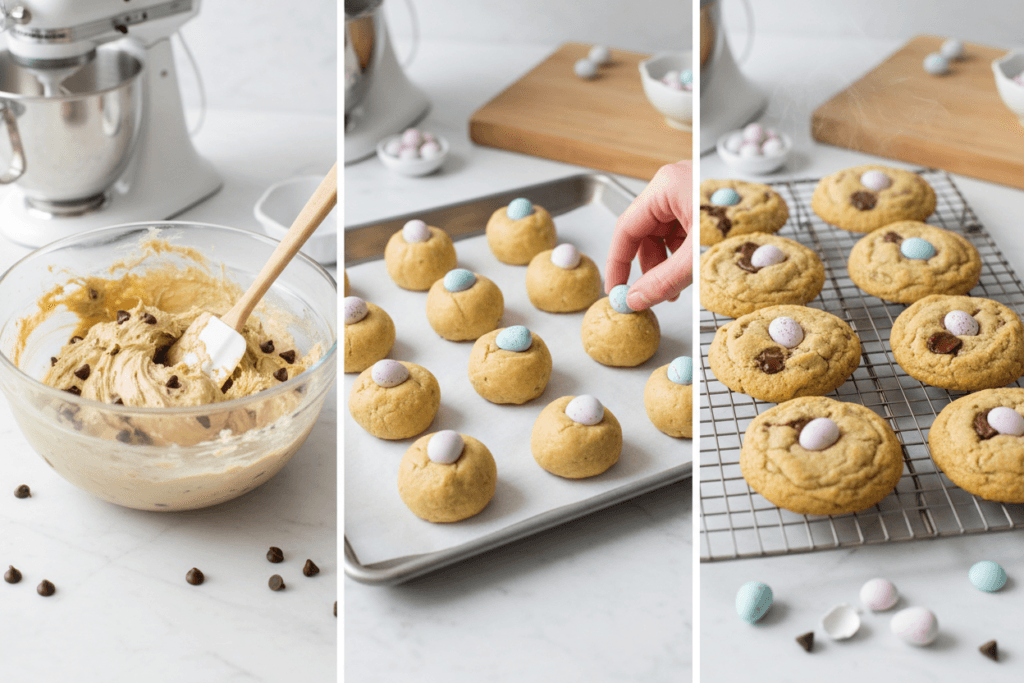
How to Make Cadbury Egg Cookies
This single-bowl method takes 25 minutes from start to first bite. No electric mixer needed.
Step-by-Step with Visual Checkpoints
Preheat oven to 350 degrees Fahrenheit. Line two baking sheets with parchment paper. Set aside.Melt butter and let it cool for 5 minutes. The butter should be warm but not hot to touch. This prevents cooking the eggs in the next step.Mix together melted butter, brown sugar, and white sugar. Stir until the mixture comes together and looks like wet sand. No lumps should remain.Add eggs and vanilla extract. Whisk vigorously for 30 seconds until the mixture becomes smooth and glossy.Combine flour, baking soda, and salt in a separate bowl. Whisk the dry ingredients to distribute the baking soda evenly.Add flour mixture to wet ingredients. Stir just until no dry flour remains visible. Overmixing creates tough cookies.Fold in chocolate chips and chopped Cadbury mini eggs. Reserve a handful of mini eggs for topping if desired.Scoop 2-tablespoon portions of dough. Space them 2 inches apart on the prepared baking sheet. The dough will be thick and scoopable.Press reserved whole mini eggs on top of each cookie. Gently push them halfway into the dough so they stick during baking.Bake for 11-13 minutes. Cookies are done when edges turn golden brown but centers still look slightly underdone. They firm up as they cool.Let cookies cool on the baking sheet for 5 minutes. This cooling time prevents breaking when you transfer them.Transfer to a wire rack. Allow cookies to cool completely before storing. They continue to set during this time.
Visual Checkpoint: Properly baked Cadbury Egg cookies have golden edges, slightly puffed centers, and visible candy pieces. The surface should look matte, not wet or glossy.

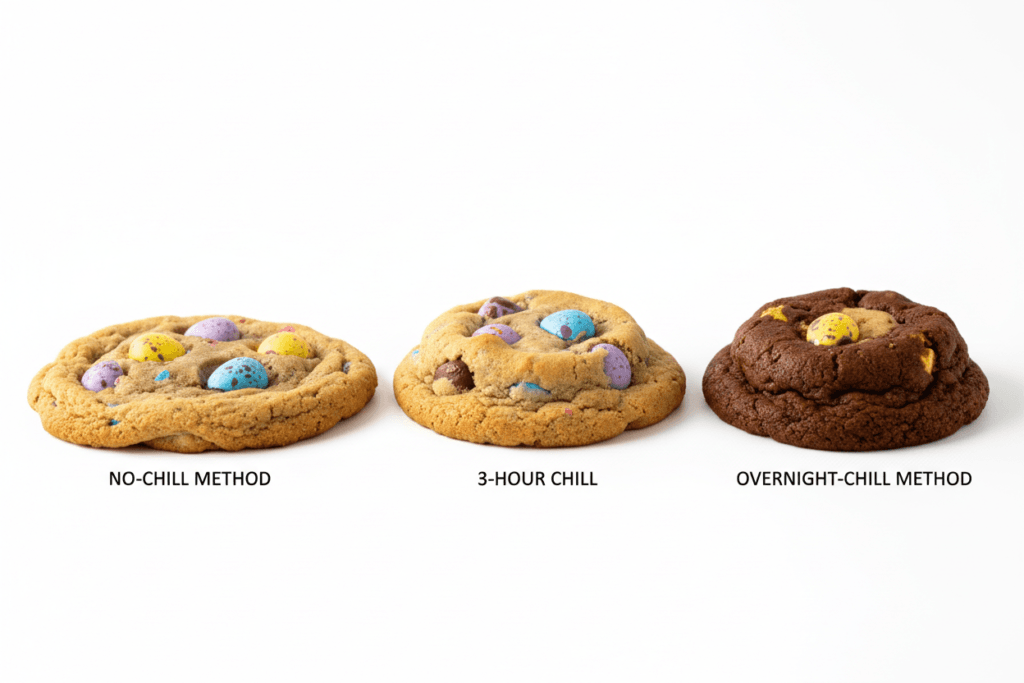
Texture Guide
Chilling time dramatically changes the final cookie texture. Each method produces different results based on your preference.
No Chill
Baking immediately creates thinner cookies with more spread. The edges become crispier while centers stay soft and chewy.
This method works when you want cookies fast. The total time from mixing to eating is under 30 minutes.
Expect cookies to spread to about 4 inches in diameter. They develop lacy, crispy edges with a chewy middle.
30-Minute Chill
A brief chill time produces thicker cookies with less spread. The dough firms up just enough to hold shape better during baking.
Place the mixing bowl in the refrigerator for exactly 30 minutes. This method balances speed with improved texture.
Cookies bake up about 25% thicker than the no-chill method. They maintain a more uniform texture throughout.
Overnight Chill
Refrigerating dough for 12-24 hours creates the thickest, most flavorful cookies. The extended chill time allows flour to fully hydrate.
This method also deepens the flavor as ingredients meld together. The brown sugar develops a more complex caramel taste.
Overnight-chilled cookies spread minimally and bake up tall. They have crispy edges and extremely soft, almost gooey centers.
| Chill Method | Cookie Thickness | Edge Texture | Center Texture | Total Time |
| No Chill | Thinner (0.5 inch) | Very crispy | Soft chewy | 25 minutes |
| 30-Minute Chill | Medium (0.75 inch) | Crispy | Uniformly chewy | 60 minutes |
| Overnight Chill | Thickest (1 inch) | Crispy | Very soft, gooey | 12-24 hours |
Common Problems and How to Fix Them
Most cookie failures come from three main issues: incorrect oven temperature, wrong measurements, or overbaking.
Cookies Spread Too Thin
This happens when butter is too warm or dough isn’t chilled enough. Make sure melted butter cools to room temperature before mixing. Chill dough for at least 15 minutes before baking.
Also check that you’re measuring flour correctly. Spoon flour into the measuring cup and level it off. Scooping directly from the bag compacts flour and gives you less than needed.
Cookies Turn Out Cakey Instead of Chewy
Too much flour creates cakey texture. Make sure you’re not packing the measuring cup. Use the spoon-and-level method for accuracy.
Overbaking also dries out cookies and makes them cakey. Remove cookies when centers still look slightly underdone. They continue baking on the hot sheet.
Mini Eggs Sink to the Bottom
Heavy candies naturally sink in soft dough. Chill the dough for 30 minutes to firm it up before adding mini eggs. The colder, firmer dough holds candy in place better.
You can also press whole mini eggs on top of each cookie instead of mixing them in. This guarantees they stay visible and don’t sink.
Cookies Turn Hard After Cooling
Overbaking is the number one cause of hard cookies. Set a timer for 11 minutes and check them. Cookies should look slightly underdone in the center when you remove them from the oven.
Proper storage also matters. Store cookies in an airtight container with a slice of bread. The bread releases moisture that keeps cookies soft for days.
Candy Coating Bleeds Color
The candy shell contains food coloring that can bleed slightly when baked. This is normal and doesn’t affect taste. To minimize bleeding, avoid washing mini eggs before use. Any moisture on the surface increases color transfer.
Some color bleeding into the cookie creates a fun, festive marbled effect that many bakers actually prefer.
Oven Temperature Warning: Many home ovens run 25 degrees hotter or cooler than the display shows. Use an oven thermometer to verify actual temperature. This single tool prevents most baking failures.
For best baking results, always ensure your cookies reach a safe internal temperature as recommended by food safety experts like FoodSafety.gov.
Make Ahead, Freeze, and Store
Cookie dough freezes beautifully for up to 3 months. This makes Cadbury Egg cookies perfect for advance Easter preparation.
Scoop individual cookie portions onto a baking sheet. Freeze until solid, then transfer to a freezer bag. Bake from frozen, adding 2 extra minutes to baking time.
Baked cookies stay fresh for 5 days in an airtight container at room temperature. Place parchment paper between layers to prevent sticking.
- Scoop dough into portions before freezing
- Flash-freeze on a baking sheet for 2 hours
- Transfer frozen dough balls to freezer bags
- Label with date and baking instructions
- Bake from frozen at 350 degrees for 13-15 minutes
- Storage time: up to 3 months
- Cool cookies completely before storing
- Use airtight container or resealable bag
- Add slice of bread to maintain softness
- Store at room temperature, not refrigerator
- Replace bread slice every 2 days
- Freshness duration: 5-7 days
Refrigerator storage actually dries out cookies faster. The cold environment pulls moisture from baked goods.
For longer storage, freeze baked cookies in airtight containers. They maintain quality for up to 2 months. Thaw at room temperature for 30 minutes before serving.
Batch Options
Scale this recipe up or down depending on your needs. The ratios work perfectly at any size.
Small Batch
This version makes 12 cookies, perfect for small households or recipe testing. Baking time remains the same at 11-13 minutes.
Small Batch Ingredients
- 1/3 cup unsalted butter, melted
- 1/3 cup packed brown sugar
- 3 tablespoons white sugar
- 1 large egg
- 1 teaspoon vanilla extract
- 1 cup all-purpose flour
- 1/3 teaspoon baking soda
- 1/3 teaspoon salt
- 1/2 cup chocolate chips
- 1/2 cup Cadbury mini eggs, chopped
Yield: 12 cookies
Standard Batch
The standard recipe produces 36 cookies. This quantity works well for family gatherings or weekly treat preparation.
Standard Batch Ingredients
- 1 cup unsalted butter, melted
- 1 cup packed brown sugar
- 2/3 cup white sugar
- 2 large eggs
- 2 teaspoons vanilla extract
- 3 cups all-purpose flour
- 1 teaspoon baking soda
- 1 teaspoon salt
- 1.5 cups chocolate chips
- 1.5 cups Cadbury mini eggs, chopped
Yield: 36 cookies
Party Batch
This large batch creates 72 cookies for parties, bake sales, or Easter celebrations. Use a stand mixer for easier preparation with this quantity.
Party Batch Ingredients
- 2 cups unsalted butter, melted
- 2 cups packed brown sugar
- 1 1/3 cups white sugar
- 4 large eggs
- 4 teaspoons vanilla extract
- 6 cups all-purpose flour
- 2 teaspoons baking soda
- 2 teaspoons salt
- 3 cups chocolate chips
- 3 cups Cadbury mini eggs, chopped
Yield: 72 cookies
For party batches, bake in multiple rounds. Keep extra dough refrigerated while previous batches bake to maintain optimal texture.

Variations
Transform the base recipe with these flavor variations. Each modification maintains the thick, chewy texture while adding unique taste profiles.
Brown Butter
Brown butter adds nutty, caramel notes that complement the Cadbury mini eggs perfectly. This variation requires one extra step but delivers restaurant-quality flavor.
Melt butter in a light-colored saucepan over medium heat. Continue cooking, stirring constantly, until the butter turns amber brown and smells nutty. This takes 5-7 minutes.
Pour brown butter into a heatproof bowl immediately to stop the cooking. Let it cool to room temperature before using in the recipe. The cooled brown butter should be liquid but not warm.
Brown Butter Tip: Watch the butter carefully during the browning process. It goes from perfect to burned in seconds. Look for golden amber color and a nutty aroma as your cues.
Double Chocolate
For chocolate lovers, this version delivers intense chocolate flavor. Replace 1/2 cup of flour with 1/2 cup unsweetened cocoa powder.
The cocoa powder creates dark chocolate cookies that make the colorful mini eggs pop visually. Sift the cocoa powder with the flour to prevent lumps.
Increase the white sugar by 2 tablespoons to balance the cocoa’s bitterness. Baking time remains the same, but watch carefully as dark dough makes it harder to see browning.
If you enjoy rich, creamy flavors, you can also explore this pistachio cream recipe perfect as a filling, topping, or dessert spread.
Oatmeal
Add 1 cup old-fashioned oats to the standard recipe for heartier texture. Reduce flour to 2.5 cups to maintain proper dough consistency.
The oats add nutty flavor and extra chewiness. They also make the cookies more filling and substantial.
Let the dough rest for 10 minutes after mixing to allow the oats to absorb moisture. This prevents dry, crumbly cookies.

Frequently Asked Questions
Can I use Cadbury Crème Eggs instead of Mini Eggs?
Cadbury Crème Eggs don’t work well in cookie dough. The fondant filling melts completely during baking and creates liquid pockets that make cookies soggy.
The chocolate shell also melts away entirely. You end up with sweet puddles rather than distinct candy pieces throughout your cookies.
Stick with Cadbury mini eggs for best results. Their candy coating holds up during baking while the chocolate center creates pleasant melty spots.
Do I need to chill the dough?
Chilling is optional but recommended for thicker cookies. No-chill cookies spread more and bake flatter with crispier edges.
A 30-minute chill produces medium-thick cookies with balanced texture. Overnight chilling creates the thickest cookies with minimal spread.
Choose based on your preference and available time. All three methods produce delicious results with slightly different textures.
How do I crush mini eggs without turning them to powder?
Place mini eggs in a heavy-duty plastic freezer bag. Seal the bag, removing as much air as possible.
Use a rolling pin to gently tap the candies. Apply light, controlled pressure rather than heavy smashing. The goal is to break each candy into 2-4 pieces.
Check progress frequently by feeling the bag. Stop when you have mostly quarter and half pieces rather than powder or whole candies.
Why did my cookies spread too much?
Excess spreading usually happens when butter is too warm or dough isn’t cold enough. Make sure melted butter cools to room temperature before mixing.
Insufficient flour also causes spreading. Check that you’re measuring flour correctly using the spoon-and-level method, not scooping directly from the bag.
Baking on a hot sheet pan contributes to spreading. Always use cool pans or run used pans under cold water, then dry completely before adding more dough.
How do I keep Cadbury Egg cookies soft?
Underbake slightly by removing cookies when centers still look a bit underdone. They continue baking on the hot sheet after removal from the oven.
Store in an airtight container immediately after cooling. Add a slice of bread to the container. The bread releases moisture that keeps cookies soft and chewy.
Replace the bread slice every 2-3 days as it dries out. Never refrigerate baked cookies as cold temperatures actually dry them faster.
Can I freeze the dough?
Cookie dough freezes perfectly for up to 3 months. Scoop individual portions onto a baking sheet and freeze until solid, about 2 hours.
Transfer frozen dough balls to a freezer-safe bag or container. Label with the date and baking instructions.
Bake from frozen without thawing. Add 2 extra minutes to the standard baking time. Preheat oven to 350 degrees as usual.
Can I make these ahead for Easter?
These Cadbury Egg cookies work perfectly as make-ahead treats. Bake up to 5 days in advance and store in an airtight container.
For even earlier preparation, freeze baked cookies up to 2 months ahead. Thaw at room temperature for 30 minutes before serving.
Alternatively, freeze scooped dough balls and bake fresh on Easter morning. This gives you warm, fresh-baked cookies with minimal effort on the holiday.
Can I make these as smaller cookies?
Use a 1-tablespoon scoop instead of 2 tablespoons for mini cookies. This creates bite-sized treats perfect for parties or cookie platters.
Reduce baking time to 8-10 minutes for smaller portions. Watch carefully as mini cookies bake faster and can overbake easily.
The standard recipe yields approximately 60-65 mini cookies instead of 36 regular-sized ones. Adjust your planning accordingly.
Ready to Bake Your Best Cadbury Egg Cookies
Everything you need to bake thick, soft, and bakery-style Cadbury Egg cookies—quick, simple, and guaranteed to impress.
This recipe delivers perfectly chewy chocolate chip cookies loaded with colorful Cadbury mini eggs using a simple one-bowl method. You can have fresh cookies ready in under 30 minutes, whether you choose the quick no-chill method or the overnight chill for even deeper flavor and thicker texture.
Perfect for Easter baking, spring gatherings, or sharing with family and friends, these cookies are easy to customize with variations like brown butter, double chocolate, or oatmeal. Start with the standard batch to master the technique, then experiment to find your favorite version.

Cadbury Egg Cookies
Equipment
- Mixing bowl
- Whisk
- Rubber spatula
- Measuring cups and spoons
- Baking sheets
- Parchment paper
- Cookie scoop
- Wire rack
Ingredients
Cookie Dough
- 1 cup unsalted butter melted and cooled
- 1 cup brown sugar packed
- 2/3 cup granulated white sugar
- 2 large eggs room temperature
- 2 teaspoons vanilla extract
- 3 cups all-purpose flour
- 1 teaspoon baking soda
- 1 teaspoon salt
- 1.5 cups chocolate chips
- 1.5 cups Cadbury mini eggs chopped, plus extra for topping if desired
Instructions
- Preheat the oven to 350 degrees Fahrenheit and line two baking sheets with parchment paper.
- Melt the butter and let it cool for about 5 minutes until warm but not hot.
- In a large bowl, stir together the melted butter, brown sugar, and granulated sugar until the mixture looks like wet sand and no lumps remain.
- Add the eggs and vanilla extract, then whisk for about 30 seconds until smooth and glossy.
- In a separate bowl, whisk together the flour, baking soda, and salt.
- Add the dry ingredients to the wet ingredients and stir just until no dry flour remains visible. Do not overmix.
- Fold in the chocolate chips and chopped Cadbury mini eggs, reserving a small handful of mini eggs for topping if desired.
- Scoop 2-tablespoon portions of dough onto the prepared baking sheets, spacing them about 2 inches apart.
- Press a few reserved mini egg pieces onto the tops of the cookies for a festive finish.
- Bake for 11 to 13 minutes, or until the edges are golden brown and the centers still look slightly underdone.
- Let the cookies cool on the baking sheet for 5 minutes before transferring them to a wire rack to cool completely.