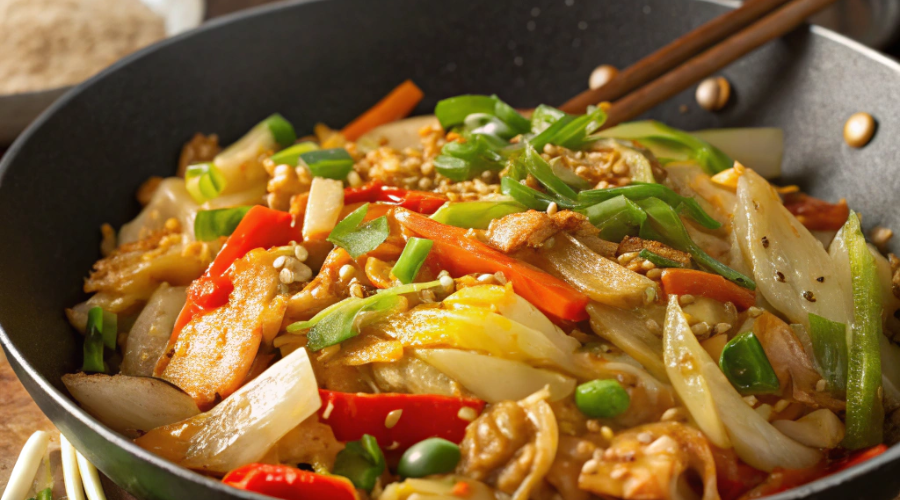
If you’re looking for fresh, flavorful, and easy ways to upgrade your meals, these Napa Cabbage Recipes are about to become your new favorites. Known for its tender leaves, mild sweetness, and delicate crunch, napa cabbage is one of the most versatile vegetables you can cook with. From quick stir-fries and comforting soups to refreshing salads and savory wraps, this humble ingredient can transform simple dishes into something truly memorable. Whether you’re cooking a fast weeknight dinner or exploring new Asian-inspired flavors, these Napa Cabbage Recipes will show you just how delicious and exciting cabbage can actually be.
Table of Contents
Ingredients Napa Cabbage Recipes
Main Ingredients
For our signature napa cabbage stir-fry, you’ll need:
- 1 medium head napa cabbage (about 2 pounds)
- 3 tablespoons vegetable oil
- 4 cloves garlic, minced
- 1 inch fresh ginger, grated
- 3 green onions, sliced
- 2 tablespoons soy sauce
- 1 tablespoon rice vinegar
- 1 teaspoon sesame oil
- 1 tablespoon toasted sesame seeds
- Salt and black pepper to taste
Ingredient Substitutions
Vegan Alternative This recipe is naturally vegan! To add protein, consider adding:
- 8 ounces firm tofu, cubed and pan-fried
- 1 cup edamame, shelled
- 1/2 cup cashews or peanuts
Gluten-Free Option
- Replace soy sauce with tamari or coconut aminos
- Check that your sesame oil is processed in a gluten-free facility
Other Dietary Alternatives
- Low-sodium: Use reduced-sodium soy sauce and add a squeeze of lemon for flavor
- Low-carb: This dish is already low in carbohydrates, but you can add more protein options
- Spicy version: Add 1-2 teaspoons of chili oil or 1 sliced fresh chili pepper
How to Make Napa Cabbage Recipes
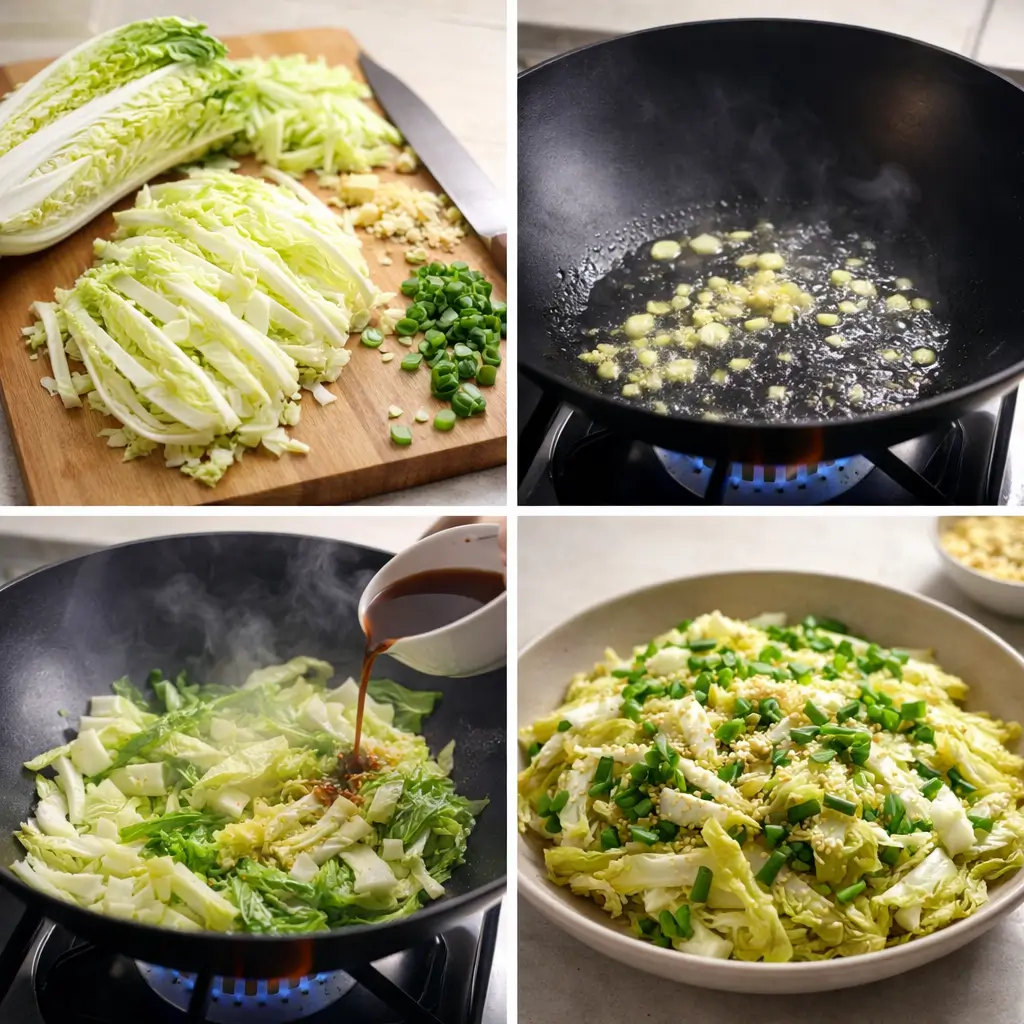
Step 1: Preparing the Ingredients
- Wash the napa cabbage thoroughly. Remove any damaged outer leaves.
- Cut the cabbage in half lengthwise, then remove the core.
- Slice the cabbage into 1-inch wide strips, keeping the leaves and stems together.
- Mince the garlic and grate the ginger.
- Slice the green onions, separating the white and green parts.
- If using tofu, press it between paper towels to remove excess moisture, then cut into 1-inch cubes.
Proper prep work makes all the difference with napa cabbage. Unlike green cabbage, the leaves are more delicate, so avoid over-handling them. The stems add a nice crunch, so keep them in your recipe rather than discarding them.
Step 2: Cooking Process
- Heat a large wok or skillet over medium-high heat until hot.
- Add vegetable oil and swirl to coat the surface.
- Add the white parts of green onions, garlic, and ginger. Stir-fry for 30 seconds until fragrant.
- If using tofu or other proteins, add them now and cook for 2-3 minutes until lightly browned.
- Add the napa cabbage, starting with the firmer stem pieces. Stir-fry for about 1 minute.
- Add the leafy parts and continue cooking for 2-3 minutes until the cabbage is wilted but still crisp.
- Pour in soy sauce and rice vinegar, tossing quickly to coat all ingredients.
The key to perfect stir-fried napa cabbage is high heat and quick cooking. Napa cabbage contains a lot of water, which releases during cooking. The goal is to cook it just enough to soften while maintaining some texture – overcooked napa cabbage becomes mushy and loses its pleasant crunch.
Step 3: Final Touches & Serving
- Remove the wok from heat.
- Drizzle with sesame oil and sprinkle with black pepper.
- Toss gently to distribute the seasonings.
- Transfer to a serving plate.
- Garnish with the green parts of the green onions and toasted sesame seeds.
Serve this stir-fried napa cabbage hot as a side dish with steamed rice or as part of a larger Asian-inspired meal. The mix of textures – from the softer leaves to the still-crisp stems – creates a satisfying dish that pairs well with almost any protein.
Tips & Variations
Flavor Enhancements
- Add a tablespoon of oyster sauce for extra umami depth
- Mix in a teaspoon of honey or brown sugar for a hint of sweetness
- Try a splash of rice wine for a more complex flavor
- Use chicken or vegetable broth instead of some of the oil for a lighter version
- Include minced lemongrass for a citrusy note
Texture Modifications
- For extra crunch, add water chestnuts or bamboo shoots
- Mix in quick-cooking vegetables like snow peas or bean sprouts
- For a heartier dish, include shiitake or oyster mushrooms
- Add scrambled eggs for a softer texture contrast
- For a noodle dish, toss with cooked soba or rice noodles
Serving Suggestions
Napa cabbage works beautifully in various preparations:
- Wrap filling: Use whole leaves as wraps for ground meat mixtures
- Salad base: Thinly slice raw napa cabbage for a crunchy slaw
- Soup addition: Add to miso soup or hot pot in the last few minutes of cooking
- Kimchi starter: Use napa cabbage as the base for homemade kimchi
- Cabbage rolls: Blanch whole leaves and use as wrappers for rice and protein fillings
This stir-fried napa cabbage also pairs perfectly with simple proteins like grilled tofu, shrimp, or juicy chicken. For a quick and flavorful option, try this Frozen Chicken Breast Air Fryer recipe for a complete and satisfying meal.
Nutritional Information
Nutritional Value Per Serving
For a 1-cup serving of stir-fried napa cabbage (about 1/6 of this recipe):
- Calories: 85
- Protein: 2g
- Fat: 6g
- Carbohydrates: 7g
- Fiber: 2g
- Sugar: 3g
- Sodium: 350mg
- Vitamin A: 30% DV
- Vitamin C: 45% DV
- Vitamin K: 40% DV
- Calcium: 8% DV
Health Benefits
Napa cabbage offers impressive nutritional benefits:
Vitamin C – Napa cabbage contains more vitamin C than regular cabbage, supporting immune function and skin health.
Fiber – The dietary fiber aids digestion and helps maintain healthy blood sugar levels.
Antioxidants – Its high antioxidant content helps fight inflammation and cellular damage.
Cruciferous Benefits – Like other cruciferous vegetables, napa cabbage contains compounds that may help reduce cancer risk.
Low Calorie – With its high water content, napa cabbage makes a filling addition to meals without adding many calories.
The sesame oil and seeds in this recipe provide healthy fats and additional minerals, while garlic and ginger bring their own set of anti-inflammatory and immune-boosting properties.
Common Mistakes & Fixes
Issue 1: Soggy, Overcooked Cabbage
Problem: Napa cabbage releases water when cooked and can quickly become mushy.
Fix: Use high heat and cook quickly. For stir-fries, cook for just 3-4 minutes total. If you notice excess water, don’t cover the pan, as this traps steam and leads to sogginess.
Issue 2: Bland Flavor
Problem: Napa cabbage has a mild taste that some find too subtle.
Fix: Season in layers. Add salt when preparing the cabbage, use flavorful oils, and finish with acids like rice vinegar or citrus juice. Don’t skip the sesame oil – it adds depth that complements napa cabbage perfectly.
Issue 3: Tough Stems
Problem: The white stems remain too crunchy while the leaves are properly cooked.
Fix: Separate the stems from the leafy parts before cooking. Start by stir-frying the stems for 1-2 minutes before adding the leafy sections. This ensures even cooking throughout.
FAQs
How can I store this recipe?
Napa Cabbage Recipes Leftover cooked napa cabbage will keep in an airtight container in the refrigerator for up to 3 days. Reheat gently in a skillet with a splash of water, or enjoy cold as a salad. Raw, prepped napa cabbage can be stored in the refrigerator for up to 5 days in a sealed plastic bag with a paper towel to absorb moisture.For extra food safety guidance, check the FoodSafety.gov Cold Food Storage Chart to see how long leftovers can be stored safely in the refrigerator and freezer.
Can I prepare it in advance?
You can wash and slice napa cabbage up to 2 days before cooking. Store it in the refrigerator in a sealed container lined with paper towels. For the stir-fry, it’s best cooked just before serving, but you can prepare all other ingredients ahead of time.
What are the best add-ons for this recipe?
Napa cabbage pairs well with:
Proteins: Chicken, shrimp, beef, tofu
Vegetables: Carrots, bell peppers, mushrooms, bean sprouts
Nuts: Cashews, peanuts, slivered almonds
Sauces: Hoisin, sweet chili, teriyaki
Herbs: Cilantro, Thai basil, mint
What is the best way to eat napa cabbage?
Napa cabbage can be enjoyed both raw and cooked:
Raw: Use in salads, slaws, or as fresh wraps
Quick-cooked: Stir-fries, sautés, or flash-grilled
Slow-cooked: Soups, stews, or braised dishes
Fermented: Traditional kimchi or sauerkraut
Steamed: Whole leaves steamed and used as wraps
Is napa cabbage the same as kimchi?
No, napa cabbage is not the same as kimchi, though there’s a strong connection. Napa cabbage is the fresh vegetable commonly used as the main ingredient in traditional kimchi. Kimchi is a fermented Korean side dish made from napa cabbage (or sometimes other vegetables) combined with seasonings like chili powder, garlic, ginger, and fish sauce, then allowed to ferment. Think of napa cabbage as the essential raw ingredient, while kimchi is the finished, fermented product.
Is it OK to eat Napa cabbage raw?
Absolutely! Raw napa cabbage has a mild, sweet flavor with a wonderful crisp texture. It’s often used in fresh salads, slaws, and as a crunchy addition to sandwiches or wraps. The tender leaves make excellent alternatives to lettuce, with more nutritional value and a refreshing crunch. When eating raw, make sure to wash it thoroughly and pat dry before use.
Conclusion
These Napa Cabbage Recipes prove that this simple vegetable can turn into something truly delicious. From quick stir-fries and comforting soups to fresh salads and homemade kimchi, napa cabbage is versatile, affordable, and packed with nutrients. Its mild flavor makes it perfect for everyday cooking and easy to pair with many ingredients.
Try one of these Napa Cabbage Recipes and see how easily it can upgrade your meals. If you enjoyed this guide, share your favorite recipe or cooking tips in the comments. For more inspiration, explore our related recipes like Asian vegetable slaw, cabbage rolls, and beginner-friendly homemade kimchi.
1 thought on “Best Napa Cabbage Recipes for Quick Homemade Meals”
Comments are closed.