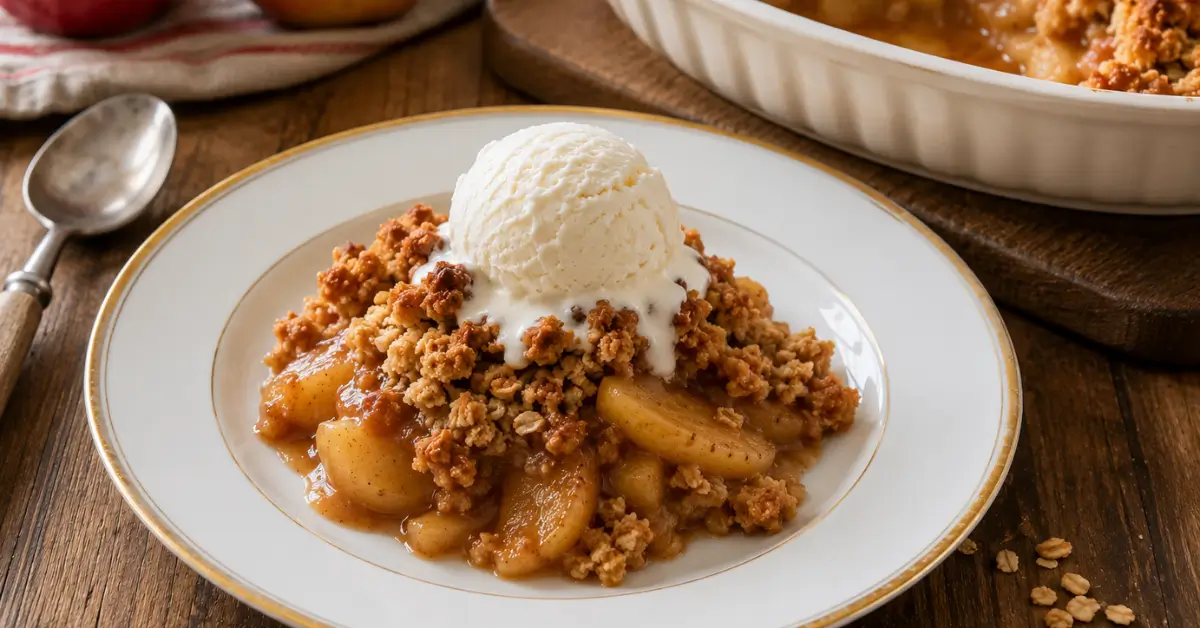
There’s something almost magical about a crumble fresh from the oven. The fruit is bubbling, the topping is golden and crisp, and the whole kitchen smells incredible. It’s one of those desserts that looks impressive but is genuinely easy to make even if you’ve never baked a thing in your life.
Table of Contents
What Is a Crumble?
A crumble is a baked dessert made of two parts: a soft, juicy fruit filling on the bottom and a buttery, crumbly topping on top. The topping is made from a simple mix of flour, butter, sugar, and often oats rubbed together until it forms rough, sandy clumps. When it bakes, those clumps turn golden and crisp while the fruit underneath becomes tender and jammy.
The crumble is a British classic, born out of wartime rationing in the 1940s when pastry ingredients were scarce. Instead of a full pie crust, home cooks made do with a simpler, flour-and-butter topping and it turned out to be even better. Today, the crumble is beloved across the UK, the US, Australia, and beyond, and for good reason: it delivers maximum comfort with minimum effort. The crumble is a true British classic and nobody does it more justice than BBC Good Food, whose apple crumble recipe has remained one of the most trusted versions of the dish for decades.
Crumble vs Crisp vs Cobbler
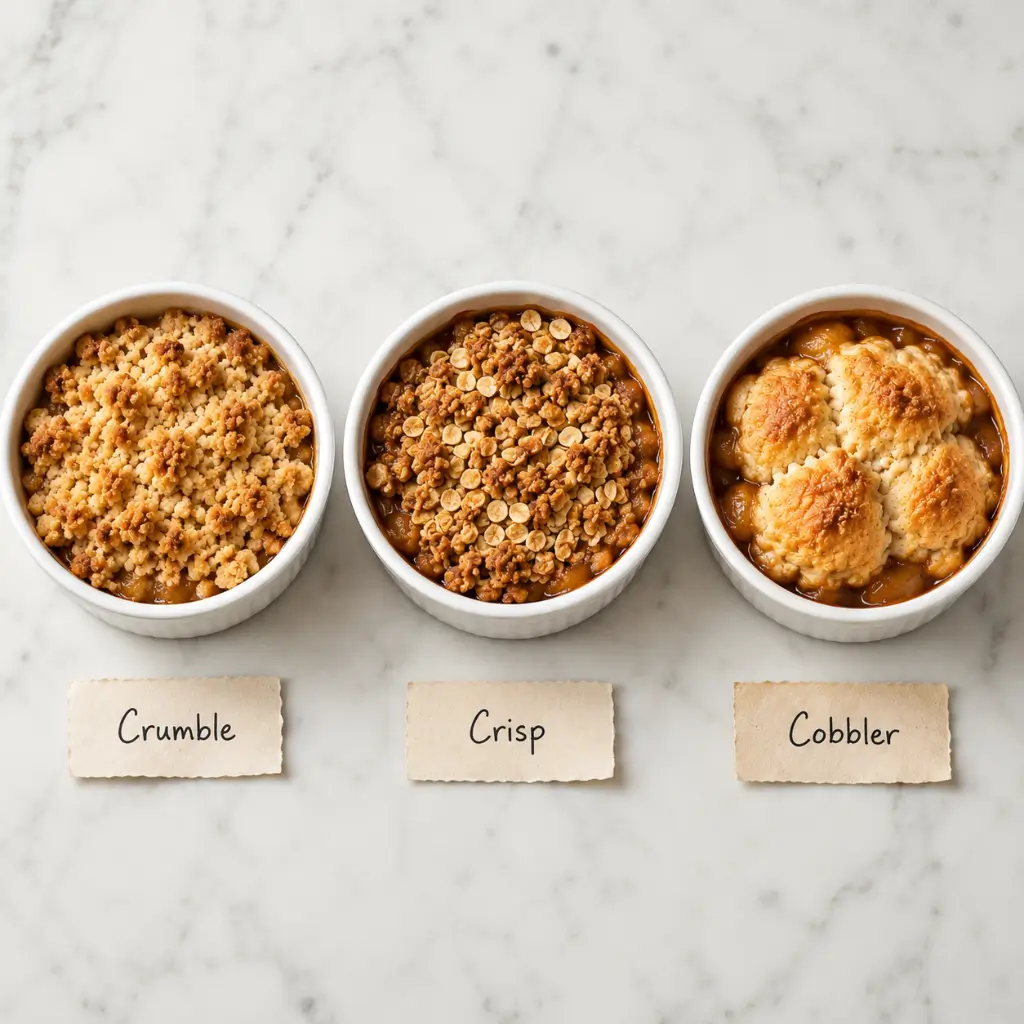
These three desserts are close cousins, but they’re not the same thing.
A crumble has a topping made from flour, butter, and sugar sometimes with oats, sometimes without. It bakes into a sandy, crumbly texture.
A crisp is almost identical to a crumble but always includes oats (and sometimes nuts) in the topping, giving it a crunchier, more textured finish. In the US, the terms crumble and crisp are often used interchangeably but technically, if it has oats, it’s a crisp.
A cobbler is different altogether. Instead of a crumbly topping, a cobbler uses a biscuit or cake batter dropped over the fruit, creating a softer, bread-like crust.
For this recipe, we’re making a true crumble with oats in the topping for the best possible texture.
If you love the combination of rhubarb and a crunchy oat topping, our rhubarb crisp recipe is a great companion to this post same fruit, slightly crunchier topping, just as easy to make.
Why You’ll Love This Crumble Recipe
This is the kind of dessert that works for every occasion. Weeknight dinner? Done in 45 minutes. Dinner party? It looks beautiful and tastes like you spent hours. Potluck? It travels well and everyone asks for seconds.
The topping formula here is foolproof cold butter, oats, flour, and brown sugar rubbed together into perfect crumble clusters. And because the fruit filling is so adaptable, you can make this recipe year-round with whatever is in season. Apple in autumn. Peach in summer. Rhubarb in spring. Mixed berry any time. One recipe, endless variations all of them delicious.
The Perfect Crumble Topping
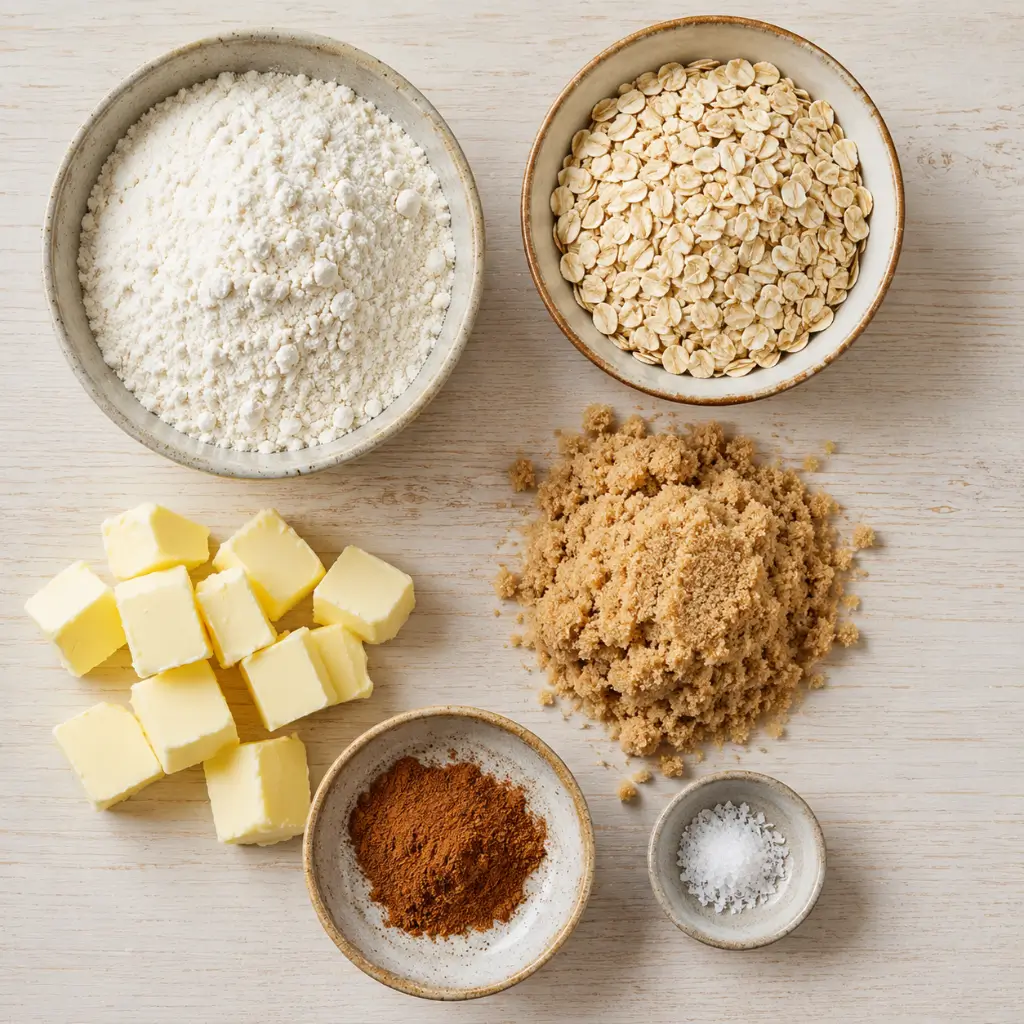
The topping is everything. Get this right and the rest takes care of itself.
Flour
Use plain all-purpose flour as the base. It gives the topping structure and helps it hold together in clusters rather than turning to powder. Don’t swap for self-raising flour you don’t want the topping to puff up.
Butter
Use cold, unsalted butter cut into small cubes. Cold butter is the key to a crumbly, textured topping. When you rub cold butter into flour, it creates small pockets of fat that turn crisp and flaky in the oven. Room temperature butter blends in too smoothly and produces a dense, greasy topping instead.
Oats
Rolled oats (old-fashioned oats) add crunch, texture, and a slightly nutty flavour to the topping. They’re what separates a good crumble from a great one. Use rolled oats, not instant oats — instant oats are too fine and will disappear into the topping without adding texture.
Sugar
Brown sugar is best here. It has a subtle molasses flavour that adds warmth and depth, and it caramelises beautifully in the oven to give you that golden, slightly sticky crumble top. Caster sugar or granulated sugar works too, but brown sugar is the upgrade.
Salt & Spices
A pinch of salt is non-negotiable it sharpens all the other flavours. Ground cinnamon is the natural partner for most fruit crumbles, adding warmth without overpowering. Add a pinch of nutmeg for extra depth, especially in apple or pear crumbles.
Best Fruits for Crumble
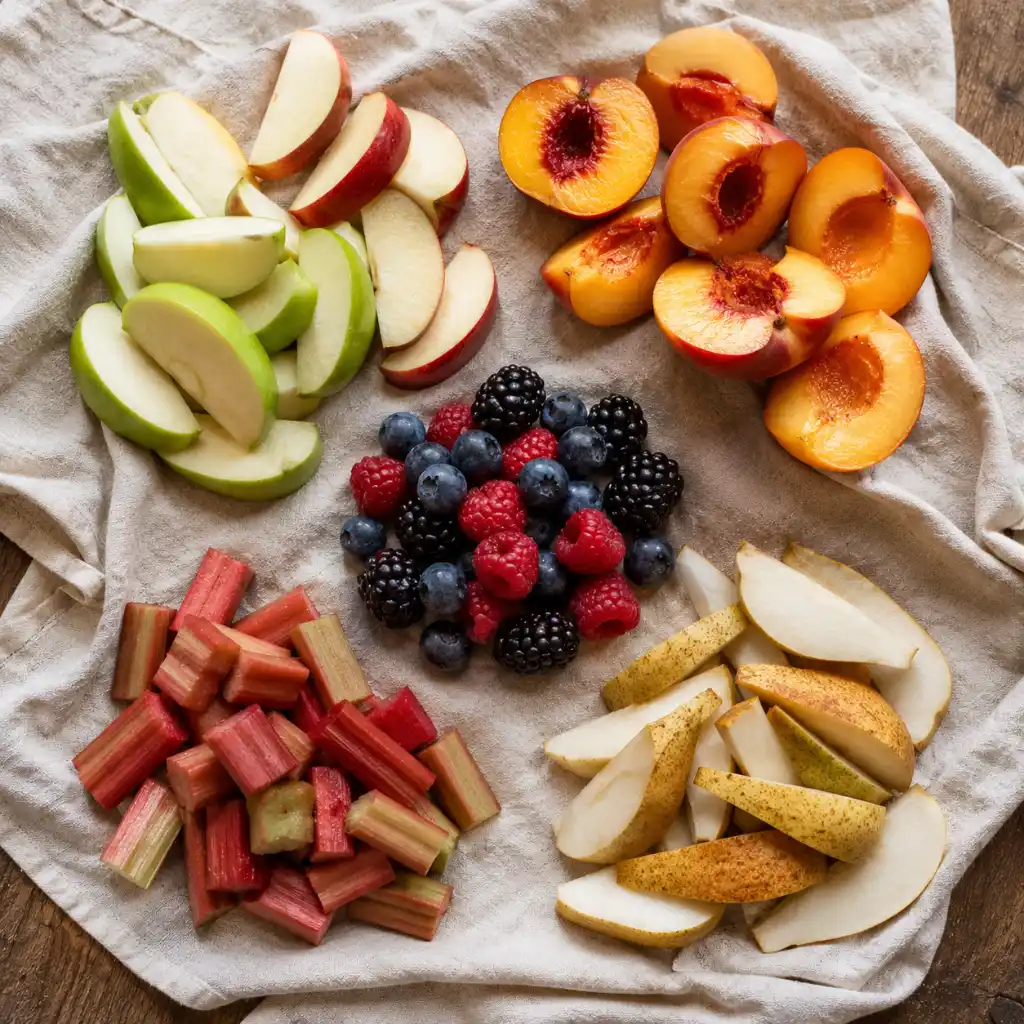
Almost any fruit works in a crumble, but some work better than others. Here’s what to know about the most popular choices.
Apple
Apple is the classic crumble fruit and for good reason. It holds its shape during baking, releases just enough juice to create a saucy filling, and pairs perfectly with cinnamon. Use a mix of tart and sweet apples (like Granny Smith and Honeycrisp) for the best flavour balance.
Peach
Peach crumble is a summer dream. Fresh peaches are ideal, but frozen peaches work well too — just thaw and drain them first. Peaches are sweeter and softer than apples, so they need less sugar and less bake time. A hint of vanilla in the filling takes peach crumble to another level.
Mixed Berry
Blueberries, raspberries, blackberries, and strawberries all work beautifully either alone or combined. Berry crumbles bake faster than apple and the filling turns a deep, jewel-like colour that looks stunning when served. Frozen mixed berries are perfectly fine here no need to thaw.
Rhubarb
Rhubarb crumble is a British institution. Rhubarb is intensely tart on its own, so it needs more sugar in the filling than other fruits. It breaks down completely during baking, creating a soft, almost jammy filling that contrasts wonderfully with the crisp topping. Pairing rhubarb with strawberries softens the tartness and adds natural sweetness.
Pear
Pear crumble is underrated. Pears become incredibly tender and fragrant when baked, with a delicate sweetness that pairs well with ginger try adding a teaspoon of ground ginger to the topping for a pear and ginger crumble that’s genuinely special.
How to Make Crumble
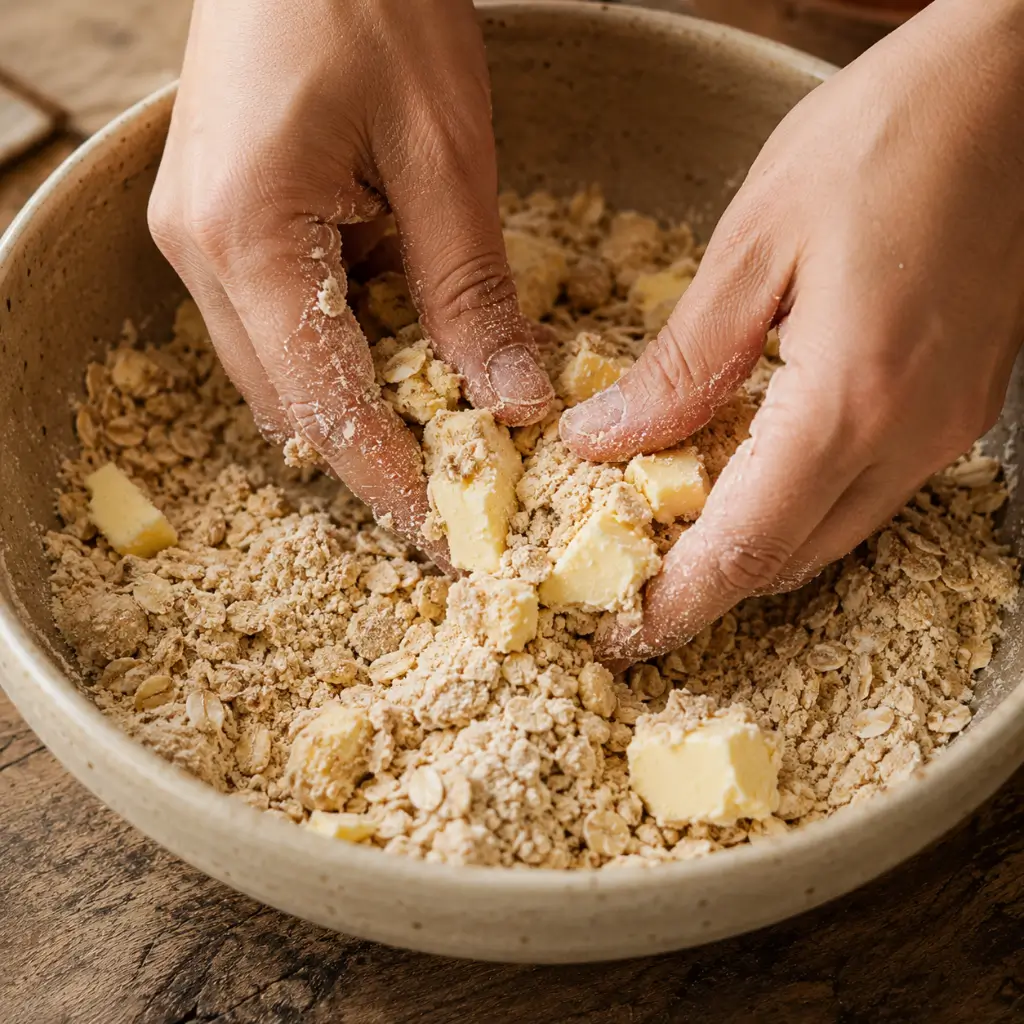
Here’s the full step-by-step process for a classic crumble that works with any fruit.
Prepare the Fruit Filling
Peel and slice your fruit (or leave skin on for berries and peaches) and toss it in a baking dish with sugar, cornstarch, and spices. The sugar draws out the fruit’s natural juices and the cornstarch thickens them into a luscious sauce as it bakes. For a 9×13-inch dish, you’ll need about 6 to 8 cups of prepared fruit.
For apples and pears: peel, core, and slice into ½-inch pieces. Toss with 3 tablespoons sugar, 1 tablespoon cornstarch, 1 teaspoon cinnamon, and a squeeze of lemon juice.
For peaches and berries: toss gently with 2 to 3 tablespoons sugar (less if the fruit is very ripe and sweet), 1 tablespoon cornstarch, and ½ teaspoon vanilla extract.
Make the Crumble Topping
In a large bowl, combine 1½ cups all-purpose flour, 1 cup rolled oats, ¾ cup packed brown sugar, ½ teaspoon cinnamon, and a pinch of salt. Add ½ cup (1 stick / 115g) cold unsalted butter, cut into small cubes.
Using your fingertips, rub the butter into the dry ingredients by pressing and smearing it between your fingers until the mixture resembles coarse, clumpy breadcrumbs. You want some larger pea-sized chunks they’ll bake into satisfying crispy clusters. Don’t overwork it.
Assemble and Bake
Spread the fruit filling evenly in your baking dish. Scatter the crumble topping over the fruit in an even layer don’t press it down. You want it loose and textured so air can circulate and the top can crisp properly.
Bake at 350°F (180°C) for 35 to 40 minutes, until the topping is deep golden brown and the fruit filling is visibly bubbling around the edges.
How to Know When It’s Done
Two signs tell you it’s ready: the topping should be a deep golden brown (not pale yellow that means it needs more time), and the fruit filling should be actively bubbling around the edges of the dish. If the topping is browning too fast but the fruit isn’t bubbling yet, loosely cover with foil and continue baking.
Tips for the Best Crumble Topping
Use Cold Butter
This is the single most important rule. Cold butter creates distinct pockets of fat in the topping that turn crisp and flaky during baking. If your butter softens while you’re working, pop the bowl in the freezer for 10 minutes before continuing.
Don’t Overmix
You want chunky, uneven clumps not a uniform powder. Stop rubbing as soon as you have a mix of pea-sized chunks and sandy crumbs. Overmixing produces a dense, floury topping without any of the satisfying crunch.
Add Oats for Texture
Even if a recipe doesn’t call for them, adding ½ cup of rolled oats to any crumble topping improves the texture dramatically. They toast in the oven and add a nutty crunch that flour alone can’t give you.
Taste the Fruit First
Every piece of fruit is different. A perfectly ripe summer peach needs almost no sugar. A tart autumn Granny Smith apple needs more. Taste your fruit before adding sugar and adjust accordingly. This one habit makes a bigger difference than any other tip.
Crumble Variations
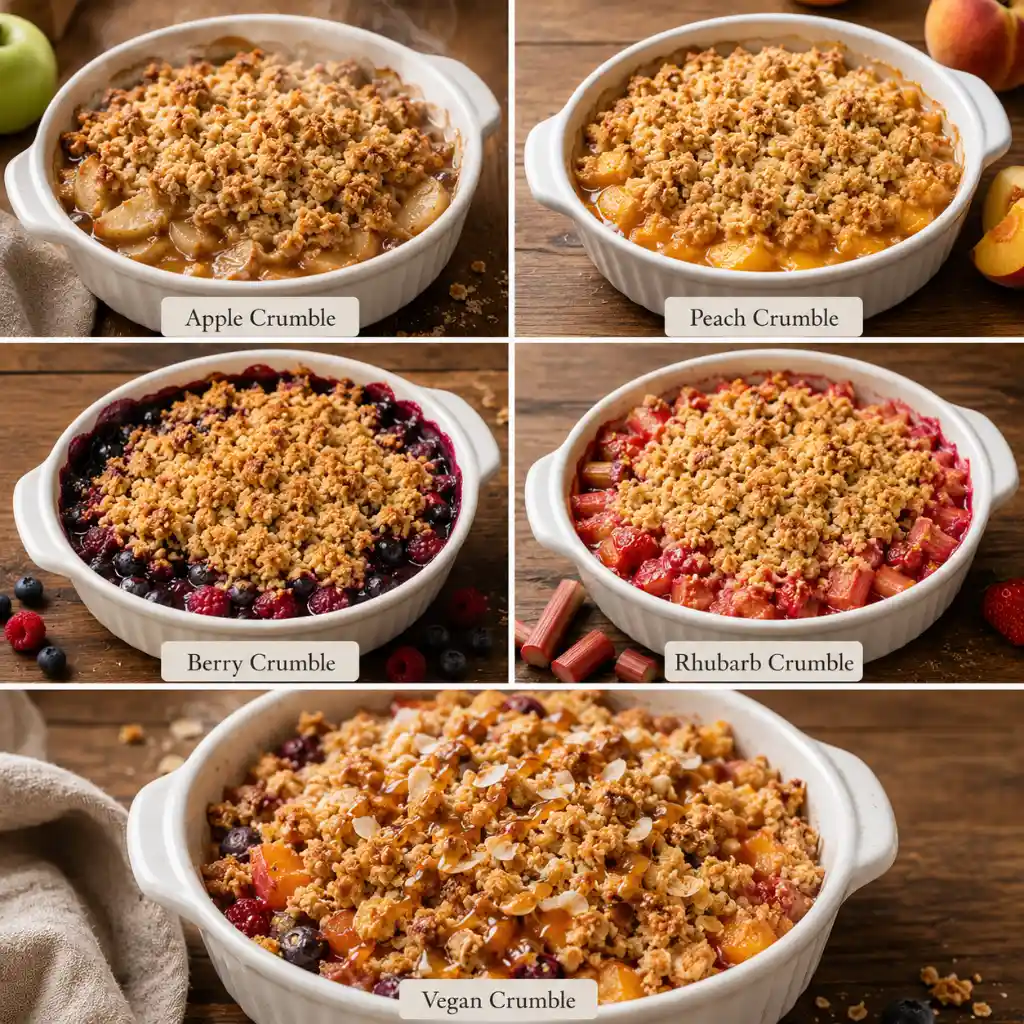
Apple Crumble Recipe
The undisputed classic. Use 6 large apples (a mix of tart and sweet varieties), peeled, cored, and sliced. Add 3 tablespoons brown sugar, 1 teaspoon cinnamon, ¼ teaspoon nutmeg, 1 tablespoon cornstarch, and a squeeze of lemon juice. Top with the standard crumble topping and bake at 350°F for 40 minutes. Serve warm with vanilla ice cream.
Peach Crumble Recipe
Fresh or frozen peaches both work. Slice 6 to 8 peaches and toss with 2 tablespoons sugar, 1 teaspoon vanilla extract, 1 tablespoon cornstarch, and a pinch of cinnamon. The filling will be juicier than apple, so don’t skip the cornstarch. Bake for 35 minutes. This variation shines with a scoop of good vanilla ice cream.
Berry Crumble Recipe
Use 6 cups of mixed berries — any combination of blueberries, raspberries, blackberries, and strawberries. Toss with 2 to 3 tablespoons sugar and 1½ tablespoons cornstarch (berry fillings are very juicy). Bake for 30 to 35 minutes. The filling turns a gorgeous deep purple that looks stunning at the table.
Rhubarb Crumble
Chop 6 cups of rhubarb into 1-inch pieces. Rhubarb is very tart, so use ½ cup sugar in the filling and add 1 teaspoon vanilla. For a classic combination, mix rhubarb with 2 cups of hulled strawberries — the strawberries balance the tartness perfectly. Bake for 35 to 40 minutes until the filling is completely soft and bubbling.
Vegan Crumble
Replace the butter with cold coconut oil or vegan butter (same quantity). The topping won’t be quite as rich, but it still bakes golden and crisp. Use maple syrup instead of brown sugar for a more complex, slightly caramel-like flavour. Everything else stays the same.
What to Serve With Crumble
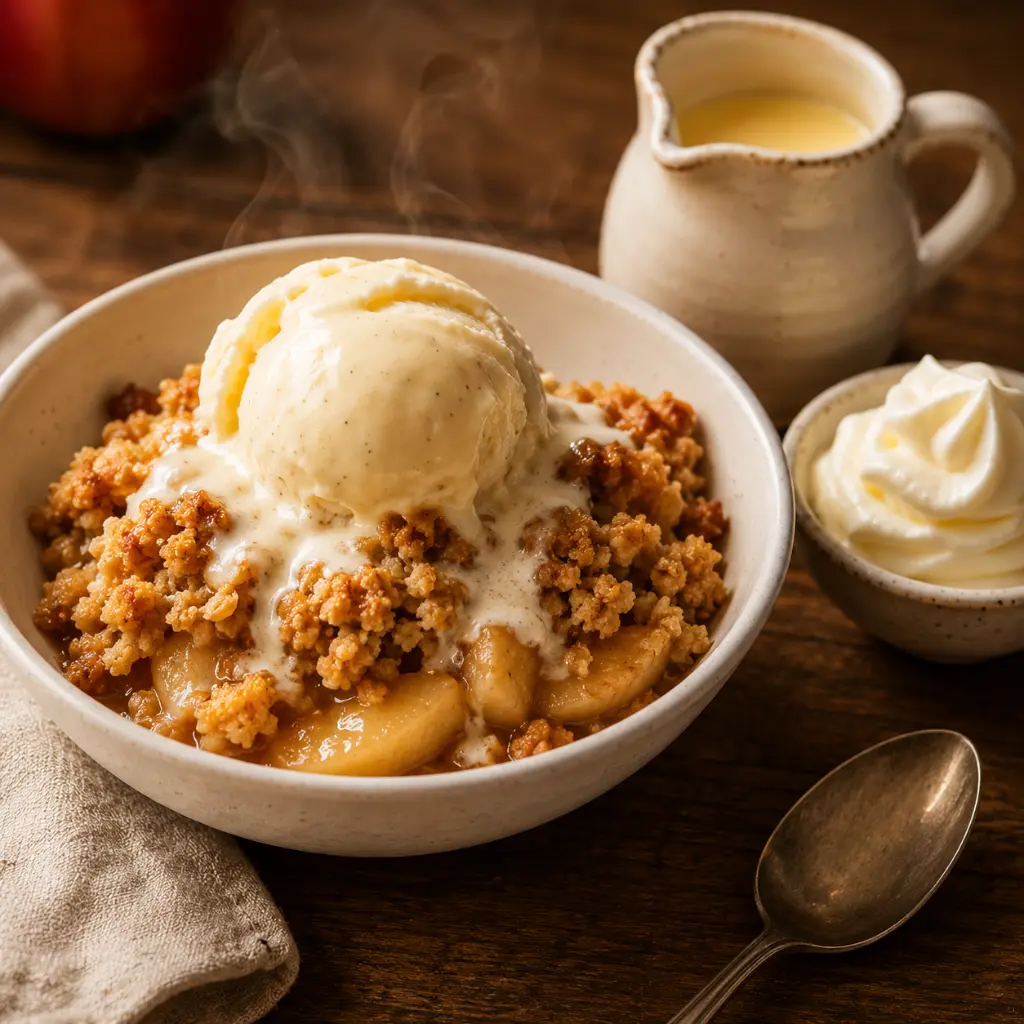
Vanilla Ice Cream
The classic pairing. The contrast of hot bubbling crumble and cold melting ice cream is one of the great dessert experiences. Use good-quality vanilla bean ice cream for the best result. If you’re already reaching for the ice cream, our banana split recipe is another crowd-pleasing dessert worth having in your back pocket no baking required.
Whipped Cream
A dollop of lightly sweetened whipped cream is the lighter option it adds richness without the temperature contrast of ice cream. Particularly good with berry crumbles where you want the fruit flavour to stay front and centre. Want to take it further? Serve your crumble with a scoop of this homemade ice cream for a fully from-scratch dessert that will genuinely impress.
Custard
Warm vanilla custard poured over crumble is the traditional British way to serve it and arguably the best. The custard soaks into the topping slightly and makes everything more indulgent. Use a good pourable custard or make your own.
Crème Fraîche
A spoonful of crème fraîche adds a slightly tangy, cooling richness that works beautifully against the sweetness of the fruit. It’s especially good with rhubarb or berry crumble where you want a little acidity to balance the sweetness.
If you own a Ninja Creami, these Ninja Creami recipes are perfect for making custom ice cream flavours that pair beautifully with any warm fruit crumble.
How to Store Crumble
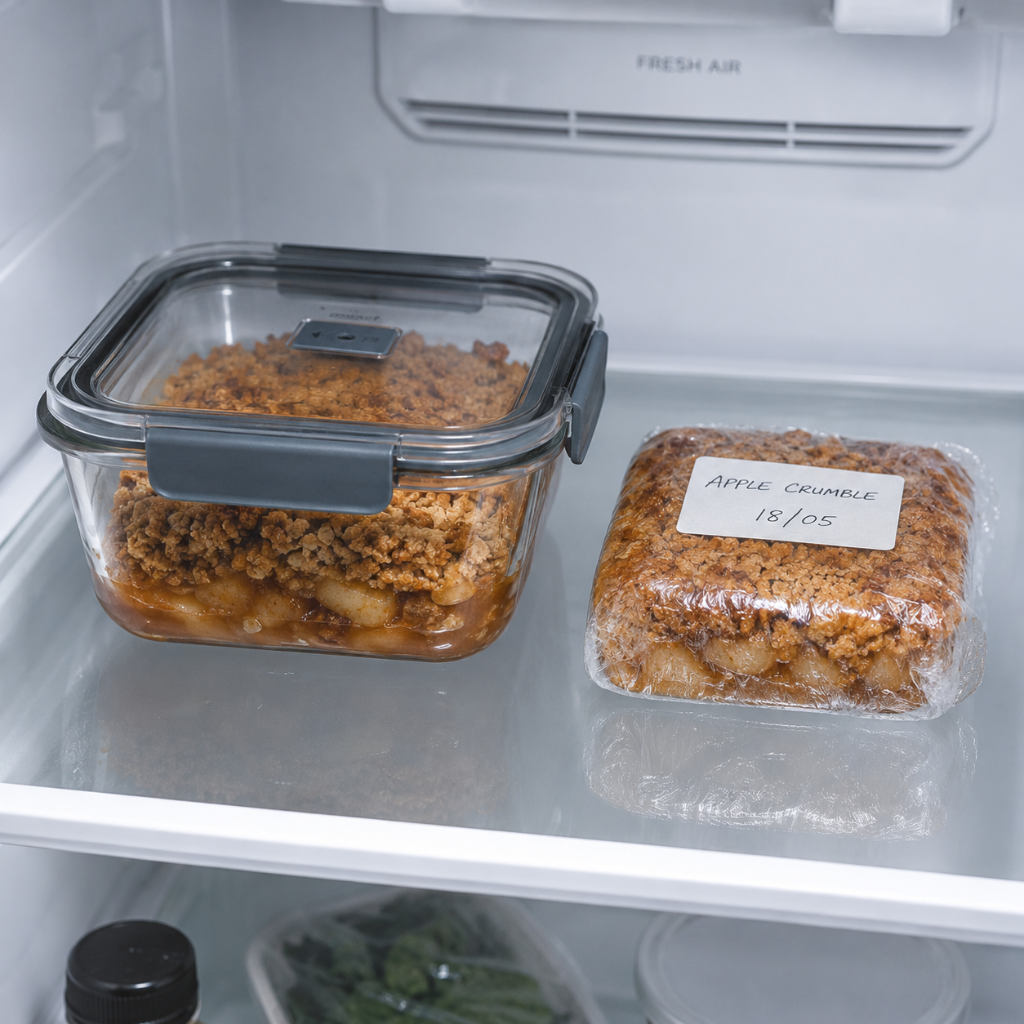
Room Temperature
A baked crumble can sit covered at room temperature for up to 2 days. The topping will soften slightly as it absorbs moisture from the filling, but it’s still delicious. To re-crisp, put it back in a 350°F oven uncovered for 10 minutes.
Refrigerator
Store leftovers covered in the fridge for up to 5 days. Reheat individual portions in the microwave for 60 to 90 seconds, or reheat the whole dish in the oven at 325°F for 15 to 20 minutes.
Freezer
Crumble freezes extremely well both baked and unbaked. For unbaked: assemble the full crumble in a freezer-safe dish, cover tightly, and freeze for up to 3 months. Bake from frozen at 350°F for 55 to 65 minutes. For baked: cool completely, cover tightly, and freeze for up to 3 months. Thaw overnight in the fridge and reheat in the oven.
Can You Make Crumble Ahead of Time?
Yes — and it’s one of the best make-ahead desserts you can have in your repertoire. There are two approaches.
Assemble ahead, bake later: Make the fruit filling and crumble topping separately, then layer them in the baking dish, cover, and refrigerate for up to 24 hours. Bake straight from the fridge add 5 to 10 extra minutes to the baking time.
Bake ahead, reheat to serve: Bake the crumble up to 2 days in advance. When ready to serve, reheat uncovered at 350°F for 15 to 20 minutes until warmed through and the topping has re-crisped. This method works perfectly for dinner parties all the work is done and you just need 20 minutes of oven time before serving.
Common Mistakes to Avoid
Using Warm Butter
Room-temperature or melted butter is the most common crumble mistake. It produces a greasy, dense topping instead of the light, crispy clusters you want. Always start with cold butter straight from the fridge.
Pressing the Topping Down
It’s tempting to press the topping flat over the fruit, but resist it. A loosely scattered topping allows hot air to circulate around each cluster, crisping them evenly. A packed-down topping steams rather than bakes and ends up soft and dense.
Not Enough Cornstarch in the Filling
Without cornstarch (or a little flour) in the fruit filling, the juices stay watery and make the bottom of the topping soggy. Cornstarch thickens those juices into a beautiful sauce. Don’t skip it — especially with juicy fruits like peaches, berries, and rhubarb.
Underbaking
A pale, sandy-coloured topping means it’s not done yet. You need that deep golden brown colour for the full crunch. If you’re unsure, give it another 5 minutes. The fruit should always be actively bubbling before you pull it from the oven.
Crumble Recipe Card
Easy Crumble Recipe
Equipment
- 9×13-inch Baking Dish
- Large mixing bowl
- Small Mixing Bowl
- Sharp Chef’s Knife
- Cutting board
- Vegetable Peeler
- Pastry Cutter or Fingertips
- Measuring cups and spoons
- Oven
Ingredients
Fruit Filling (Apple Version)
- 6 large apples mix of Granny Smith and Honeycrisp, peeled, cored, and sliced into 1/2-inch pieces
- 3 tablespoons brown sugar adjust to taste based on sweetness of fruit
- 1 tablespoon cornstarch thickens the fruit juices into a sauce
- 1 teaspoon ground cinnamon
- 1/4 teaspoon ground nutmeg
- 1 tablespoon fresh lemon juice brightens the filling and prevents browning
Crumble Topping
- 1 1/2 cups all-purpose flour do not substitute self-raising flour
- 1 cup rolled oats old-fashioned rolled oats only — not instant oats
- 3/4 cup packed brown sugar light or dark brown sugar both work
- 1/2 teaspoon ground cinnamon
- 1/4 teaspoon salt
- 1/2 cup (115g) cold unsalted butter cut into small cubes — must be cold, straight from the fridge
Instructions
- Preheat the oven. Set your oven to 350°F (180°C). Lightly butter a 9×13-inch baking dish and set aside.
- Prepare the fruit filling. Peel, core, and slice the apples into even ½-inch pieces. Add them to a large bowl with brown sugar, cornstarch, cinnamon, nutmeg, and lemon juice. Toss until every piece is evenly coated. Spread the filling into the prepared baking dish in a single even layer.
- Make the crumble topping. In a large mixing bowl, combine the flour, rolled oats, brown sugar, cinnamon, and salt. Stir briefly to mix. Add the cold butter cubes. Using your fingertips, rub the butter into the dry ingredients by pressing and smearing it between your fingers until the mixture forms coarse, clumpy crumbs with visible pea-sized chunks of butter. Do not overmix — uneven chunks are exactly what you want.
- Assemble the crumble. Scatter the crumble topping evenly over the fruit filling. Spread it to cover the fruit completely but do not press it down. A loosely scattered topping allows hot air to circulate and creates the crispy clusters you’re after.
- Bake. Place the dish in the preheated oven and bake for 35 to 40 minutes, until the topping is deep golden brown and the fruit filling is visibly bubbling around the edges of the dish. If the topping browns too quickly before the filling bubbles, loosely cover with foil and continue baking.
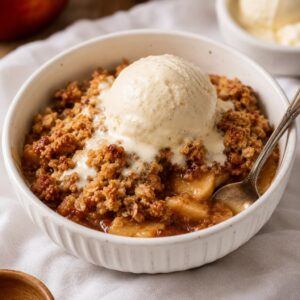
- Rest before serving. Remove the crumble from the oven and let it rest for 10 minutes before serving. This allows the filling to settle and thicken slightly so it doesn’t run when scooped. Serve warm with vanilla ice cream, pourable custard, or whipped cream.
Notes
- Cold butter is essential: Always use butter straight from the fridge. Warm or room-temperature butter produces a dense, greasy topping instead of crispy clusters. If the butter softens while you work, refrigerate the bowl for 10 minutes before continuing.
- Do not press the topping down: Scatter it loosely over the fruit. Pressing it flat traps steam and results in a soft, dense topping instead of a crispy one.
- Don’t skip the cornstarch: It thickens the fruit juices into a sauce and prevents the bottom of the topping from going soggy. Essential for juicy fruits like peaches, berries, and rhubarb.
- Taste your fruit first: Adjust sugar in the filling based on the natural sweetness of the fruit. Very ripe peaches need less sugar; tart Granny Smith apples need more.
- Fruit variations: This recipe works with any fruit. For peaches or mixed berries, reduce filling sugar to 2 tablespoons and use the same topping. For rhubarb, increase filling sugar to 1/2 cup and consider mixing with strawberries to balance tartness.
- Add nuts for extra crunch: Stir 2 tablespoons of chopped pecans or walnuts into the topping before baking for an added texture layer.
- Make it vegan: Substitute cold coconut oil or vegan butter for the dairy butter in equal amounts. The topping will still bake golden and crisp.
- Make ahead: Assemble the full crumble without baking, cover tightly, and refrigerate for up to 24 hours. Bake straight from the fridge, adding 5 to 10 extra minutes to the baking time.
- Freezer friendly: Freeze unbaked for up to 3 months and bake from frozen at 350°F for 55 to 65 minutes. Or freeze fully baked, thaw overnight in the fridge, and reheat at 325°F for 15 to 20 minutes.
Frequently Asked Questions
What is the difference between a crumble and a crisp?
In most cases, the terms are used interchangeably — but technically there is a difference. A crisp always includes oats (and sometimes nuts) in the topping, giving it a crunchier, more textured finish. A crumble traditionally uses only flour, butter, and sugar in the topping, with no oats. That said, many modern crumble recipes (including this one) add oats for better texture. In the UK, it’s almost always called a crumble regardless of whether oats are included.
Can I make crumble without oats?
Yes. The original British crumble has no oats at all just flour, butter, and sugar. It still works and bakes into a golden, sandy topping. Without oats, the texture is softer and more uniform. If you prefer a crunchier top, oats make a noticeable difference and are worth including.
Why is my crumble topping not crunchy?
There are three common causes. First, the butter was too warm — always use cold butter straight from the fridge. Second, the topping was pressed down before baking it should be scattered loosely. Third, it was underbaked the topping needs to reach a deep golden brown before it crisps properly. If it’s pale when you pull it out, it needs more time.
Can I freeze crumble?
Yes , crumble freezes beautifully. You can freeze it unbaked (up to 3 months) and bake straight from frozen, adding 15 to 20 extra minutes. Or freeze it fully baked, thaw in the fridge overnight, and reheat in the oven at 325°F for 15 to 20 minutes. Both methods work well.
What fruit is best for crumble?
Apple is the classic and most forgiving choice — it holds its shape and doesn’t release too much liquid. Peach, berry, and rhubarb are all excellent choices too. The key is to adjust the sugar and cornstarch based on how sweet and juicy your fruit is. Very ripe, juicy fruits need more cornstarch; tart fruits need more sugar.
Can I make crumble ahead of time?
Absolutely. Assemble the full crumble up to 24 hours ahead, cover, and refrigerate. Bake straight from the fridge add 5 to 10 minutes to the baking time. Alternatively, bake it fully up to 2 days ahead and reheat in the oven before serving. Both approaches work perfectly for entertaining.
Is crumble served hot or cold?
Crumble is best served warm straight from the oven or reheated. Warm crumble with cold ice cream is the ultimate combination. That said, leftover crumble eaten cold from the fridge the next morning is a legitimate and deeply satisfying experience that many people (myself included) consider a feature, not a bug.
How do I stop crumble going soggy?
A few things prevent a soggy crumble. Always add cornstarch to the fruit filling it thickens the juices so they don’t soak into the topping. Don’t press the topping down. Bake until the topping is genuinely golden brown. And if you’re making it ahead, keep the topping and filling separate in the fridge and layer just before baking, rather than assembling fully and letting it sit overnight.