
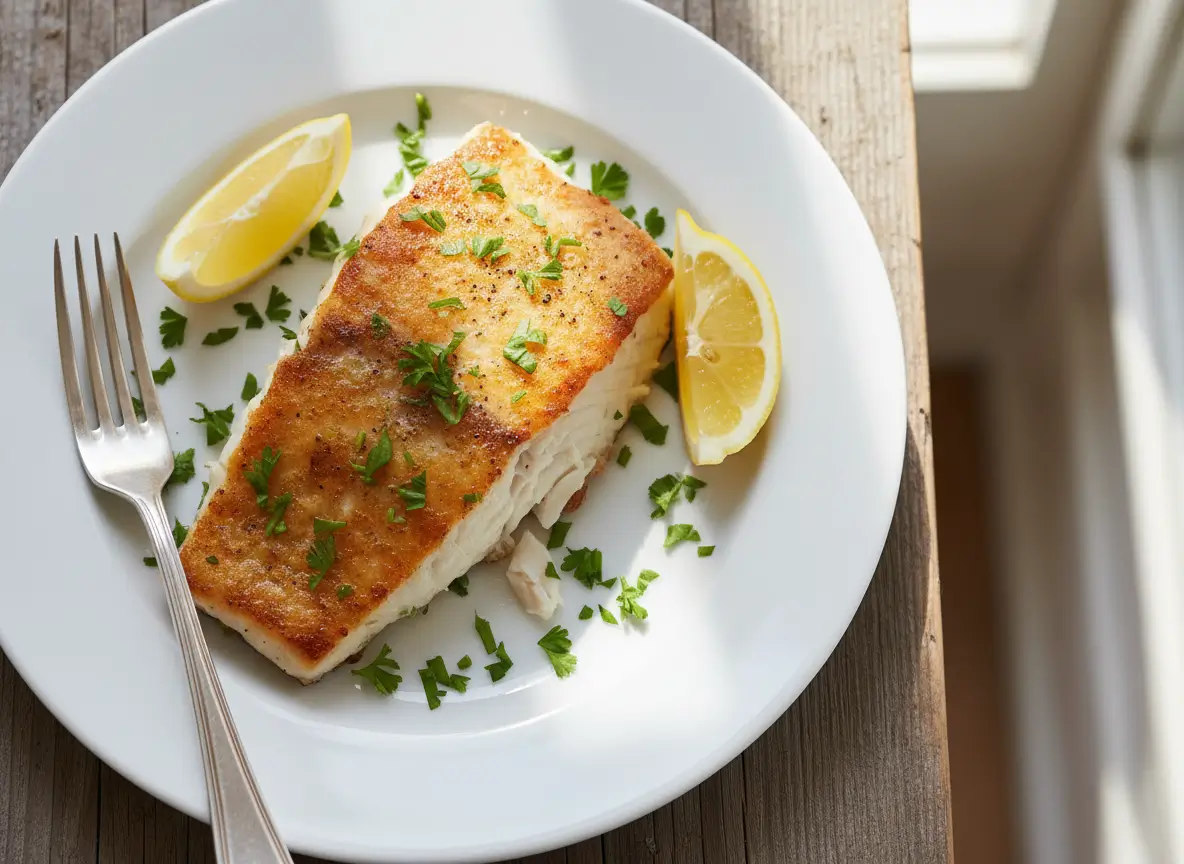
Baking orange roughy transforms this delicate white fish into a tender dinner that practically melts in your mouth. Whether you grabbed frozen fillets on sale or you’re cooking with this mild fish for the first time, you’ll discover how simple it is to create restaurant-quality results right in your home oven.
This recipe walks you through every step with clear instructions and helpful tips. You’ll learn the exact temperature and time needed, plus how to keep the fish moist and flavorful.
Table of Contents
Quick Answer: Best Temperature, Bake Time, and Doneness
Getting straight to the point helps you start cooking faster. Here are the essential numbers you need for perfect baked orange roughy every time.
Quick Reference: Bake at 375°F for 12-18 minutes until internal temperature reaches 145°F.
Best oven temperature for baked orange roughy
Preheat oven to 375°F for the ideal balance between cooking through and staying moist. This moderate heat cooks the fish evenly without drying out the delicate flesh.
Some recipes call for 400°F, but that higher temperature increases the risk of overcooking. The gentle heat at 375°F gives you more control and a better margin for error.
How long to bake orange roughy by fillet thickness
Thin fillets about half an inch thick need just 12 minutes in the oven. Standard fillets measuring three-quarters of an inch require 15 minutes of baking time.
Thicker pieces reaching one inch need the full 18 minutes to cook through properly. Always check doneness rather than relying solely on the clock, since oven temperatures vary.
Timing Guide
- ½ inch thick: 12 minutes
- ¾ inch thick: 15 minutes
- 1 inch thick: 18 minutes
- Check at minimum time first
Temperature Checkpoints
- Oven temp: 375°F
- Fish internal: 145°F
- Remove at 140°F (carryover cooking)
- Use instant-read thermometer
The fastest ways to tell when orange roughy is done
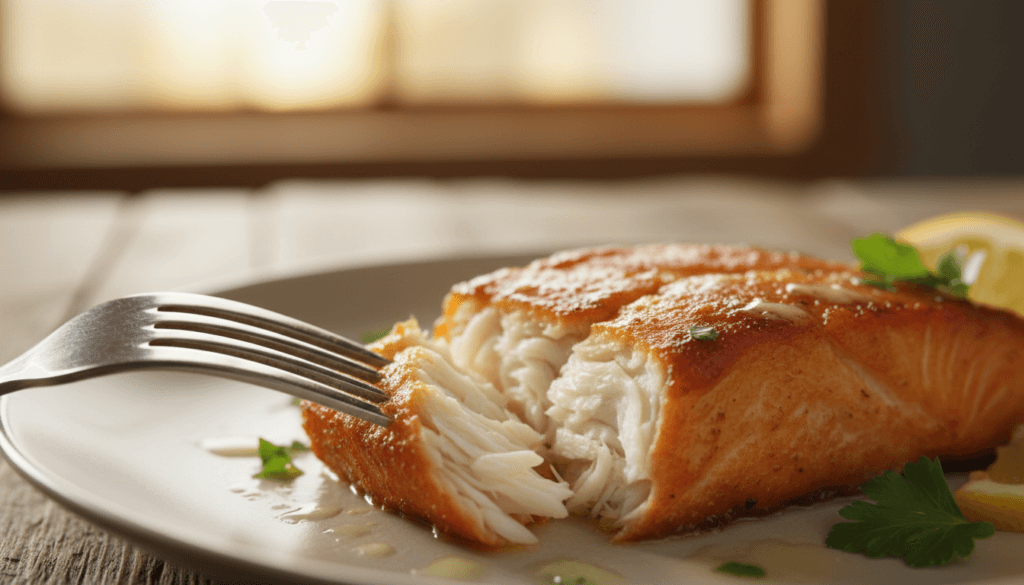
Insert a fork at the thickest part and twist gently. The fish should flake easily into large, moist pieces when fully cooked.
Press the top lightly with your finger. Done fish feels firm but still springs back slightly, never mushy or hard.
The flesh turns from translucent to opaque white throughout. Any remaining glassy or see-through areas mean it needs more time in the oven.
Why This Baked Orange Roughy Recipe Works
Understanding why certain techniques protect delicate fish helps you cook with confidence. This straightforward method delivers consistent results without complicated steps or special equipment.
A simple method that protects a delicate, lean fish
Orange roughy contains very little natural fat, which means it dries out quickly with harsh cooking methods. Gentle oven baking at a moderate temperature keeps moisture locked inside while the outside develops light browning.
The addition of butter or olive oil creates a protective coating that bastes the fish as it cooks. This extra fat compensates for what the fish lacks naturally.
Why mild seasoning, fat, and lemon work so well together
Simple seasonings let the subtle sweetness of orange roughy shine through without overwhelming its natural flavor. Salt and pepper enhance rather than mask the fish.
Butter adds richness and helps seasonings stick to the surface. Lemon juice brightens the taste and cuts through any richness from the fat, creating a balanced flavor profile that feels light and fresh.
This classic combination has stood the test of time for good reason. The ingredients work together to complement the fish rather than compete with it.
Why this recipe is ideal for beginners and weeknights
You can have dinner on the table in under 30 minutes from start to finish. Most of that time is hands-off baking while you prepare sides or set the table.
The ingredient list stays short and uses items you likely already have on hand. No special sauces or hard-to-find ingredients required for delicious results.
Cleanup is minimal with just one baking dish to wash. The simple preparation means less stress and more time enjoying your meal.
What Orange Roughy Tastes Like
Knowing what to expect helps you decide if this fish suits your preferences. Orange roughy offers distinct characteristics that make it popular with many home cooks.
Flavor, texture, and what to expect
The taste is remarkably mild and slightly sweet, without any strong fishy flavor. This makes orange roughy an excellent choice for people who typically avoid seafood because of taste concerns.
The texture is firm yet delicate with a fine flake when cooked properly. The meat turns bright white and separates into tender pieces that feel substantial without being dense or chewy.
After baking, you’ll notice the fish has a clean, subtle flavor that pairs well with various seasonings and sauces. It absorbs other flavors easily while maintaining its pleasant texture.
Who this fish is best for
People who dislike strong seafood taste appreciate orange roughy for its gentle flavor profile. Kids often enjoy it because it doesn’t taste overwhelmingly “fishy” like some other varieties.
Beginning cooks find success with this forgiving fish that responds well to simple preparations. The mild taste means you can’t go too wrong with seasoning choices.
Anyone watching their diet benefits from the lean protein that’s naturally low in fat and calories. Orange roughy fits easily into healthy meal plans without feeling like a sacrifice.
Best substitutes if you cannot find orange roughy
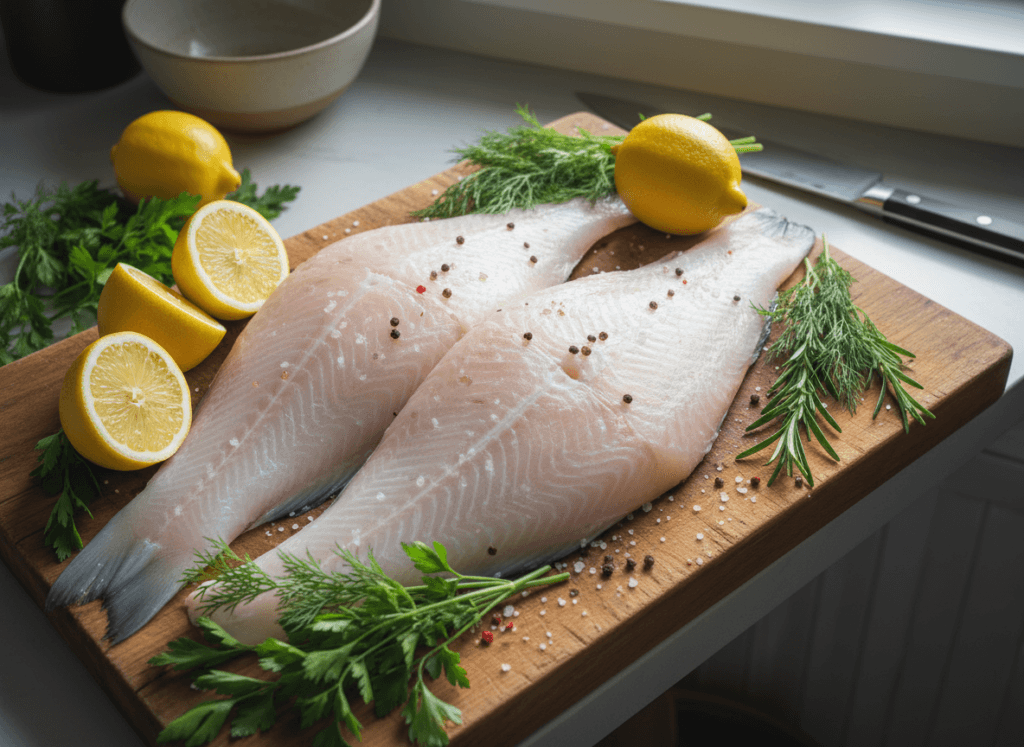
Tilapia works as the closest match in both flavor and texture. It offers the same mild taste and similar cooking time, making it an easy swap in any recipe.
Cod provides a slightly firmer texture but maintains the mild, sweet flavor profile. You might need to add a minute or two to the bake time depending on thickness.
Sole or flounder are thinner and more delicate but share the subtle taste. Reduce cooking time by several minutes to prevent overcooking these flatter fish.
Ingredients You’ll Need
A short list of common ingredients is all you need for this straightforward recipe. These basic items come together to create a flavorful dinner without fuss.
Core ingredients for the fish
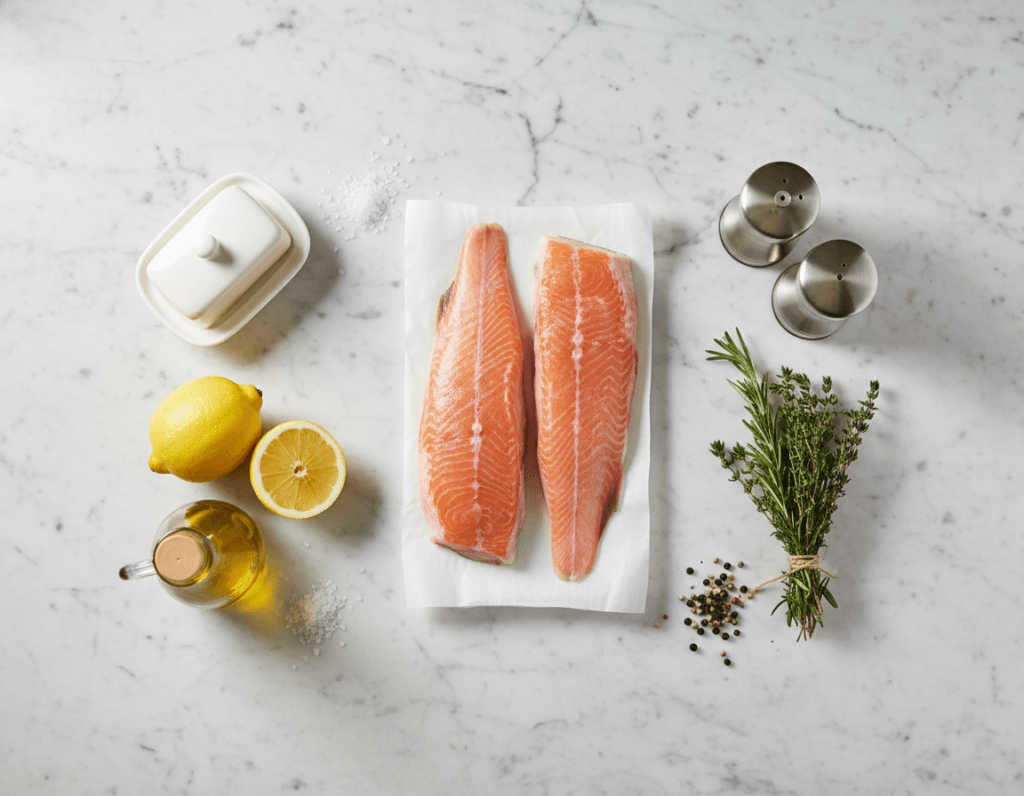
Start with 4 orange roughy fillets, each about 6 ounces and three-quarters of an inch thick. Look for fillets that appear white to pale pink with no brown spots or strong odor.
Use 3 tablespoons of melted butter or olive oil to coat the fish. This fat keeps the lean fish moist during baking and helps brown the top slightly.
Add 1 teaspoon of salt and half a teaspoon of black pepper for basic seasoning. These simple seasonings enhance the natural flavor without overwhelming the delicate taste.
Finish with 2 tablespoons of fresh lemon juice to brighten the flavor. The acid balances the richness from the butter and adds a fresh note to the finished dish.
Required Ingredients
- 4 orange roughy fillets (6 oz each)
- 3 tablespoons melted butter
- 1 teaspoon salt
- ½ teaspoon black pepper
- 2 tablespoons lemon juice
Optional Additions
- 2 cloves minced garlic
- 1 teaspoon dried herbs
- ¼ teaspoon paprika
- Fresh parsley for garnish
- Extra lemon wedges
- ¼ cup white wine
Ingredient notes for flavor, moisture, and texture
Butter creates a richer taste than olive oil while adding moisture to the lean fish. The milk solids in butter also contribute to light browning on top that looks appealing on the plate.
Olive oil offers a lighter option with a subtle fruity flavor that complements the fish well. It works perfectly if you prefer to avoid dairy or want a slightly healthier fat choice.
Fresh lemon juice tastes brighter than bottled versions and contains no preservatives. The fresh citrus also provides better acidity that balances the dish more effectively.
Optional add-ons and easy substitutions
Garlic powder at half a teaspoon adds savory depth without overwhelming the mild fish. Mix it with the salt and pepper for even distribution across all fillets.
Dried herbs like thyme, dill, or Italian seasoning bring extra flavor dimension. Start with just a teaspoon and adjust based on your taste preferences for future batches.
A light sprinkle of paprika adds color and a hint of sweetness without changing the flavor dramatically. This works especially well if you want your fish to look more golden on top.
Before You Start: Prep Tips That Make a Big Difference
Taking a few minutes to prepare properly sets you up for success. These simple steps prevent common problems and ensure even cooking throughout.
Fresh vs frozen orange roughy
Fresh orange roughy from the seafood counter should smell clean like the ocean, never fishy or ammonia-like. The flesh appears firm and springs back when pressed gently with your finger.
Frozen fillets are often fresher than “fresh” fish at the counter since they’re frozen right after catching. Most orange roughy sold in stores has been previously frozen anyway because it’s caught far from shore.
Quality frozen fish works perfectly in this recipe and costs less than fresh. Just make sure the package shows no ice crystals or freezer burn, which indicates old or improperly stored fish.
How to thaw, dry, and season fillets properly
Thaw frozen fillets overnight in the refrigerator on a plate to catch any liquid. This slow thawing preserves texture better than quick methods that can make fish mushy.
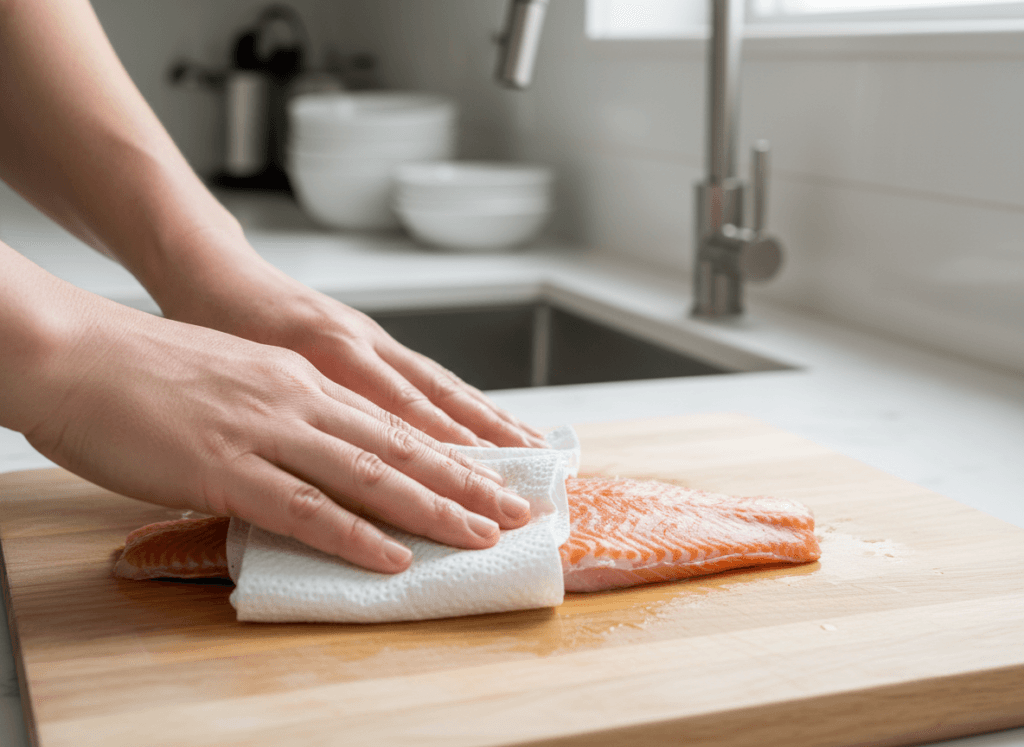
Pat each fillet completely dry with paper towels before seasoning. Excess moisture creates steam in the oven that prevents browning and can make the fish watery instead of flaky.
Season both sides of each fillet for balanced flavor throughout. Most people only season the top and miss the opportunity to enhance the entire piece of fish.
Best pan, lining, and tools for even baking
Use a rimmed baking sheet or shallow baking dish that fits all fillets in a single layer without crowding. Crowded fish steams instead of bakes, resulting in a less appealing texture.
Line the pan with parchment paper or spray it lightly with cooking spray to prevent sticking. This makes cleanup easier and helps you slide a spatula under delicate cooked fish without it falling apart.
Keep an instant-read thermometer handy to check doneness accurately. This simple tool takes the guesswork out of timing and prevents both undercooking and overcooking.
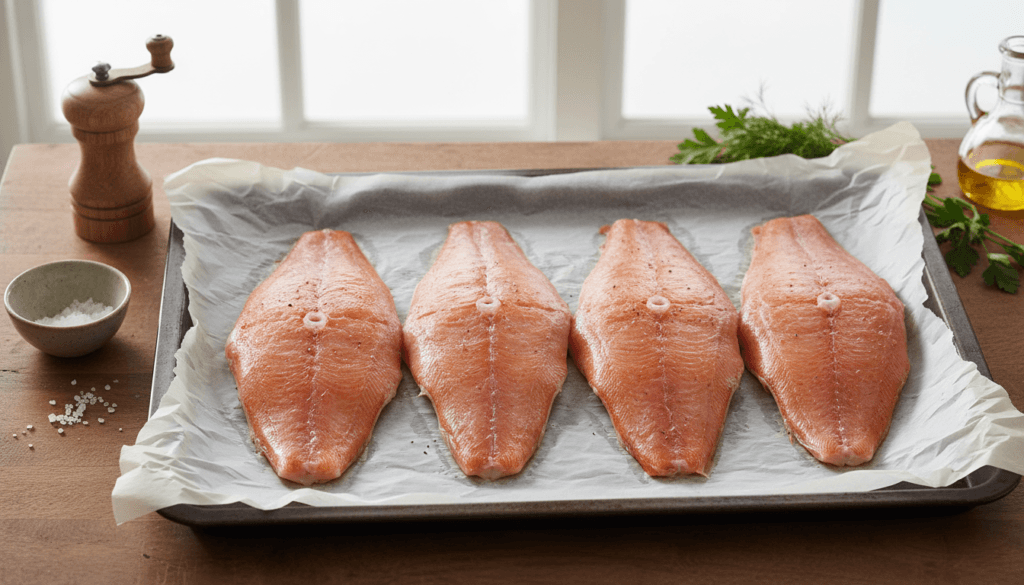
How to Bake Orange Roughy Step by Step
Follow these clear steps for perfect results every time. The process is straightforward and takes less than 30 minutes total from start to finish.
Step 1: Prep the baking dish and fish
Preheat oven to 375°F and position the rack in the center for even heat circulation. While the oven heats, line your baking sheet with parchment paper or give it a light coating of cooking spray.
Remove fillets from packaging and pat them thoroughly dry with paper towels. Place them on the prepared baking sheet with at least an inch of space between each piece for proper air circulation.
Step 2: Season the fillets evenly
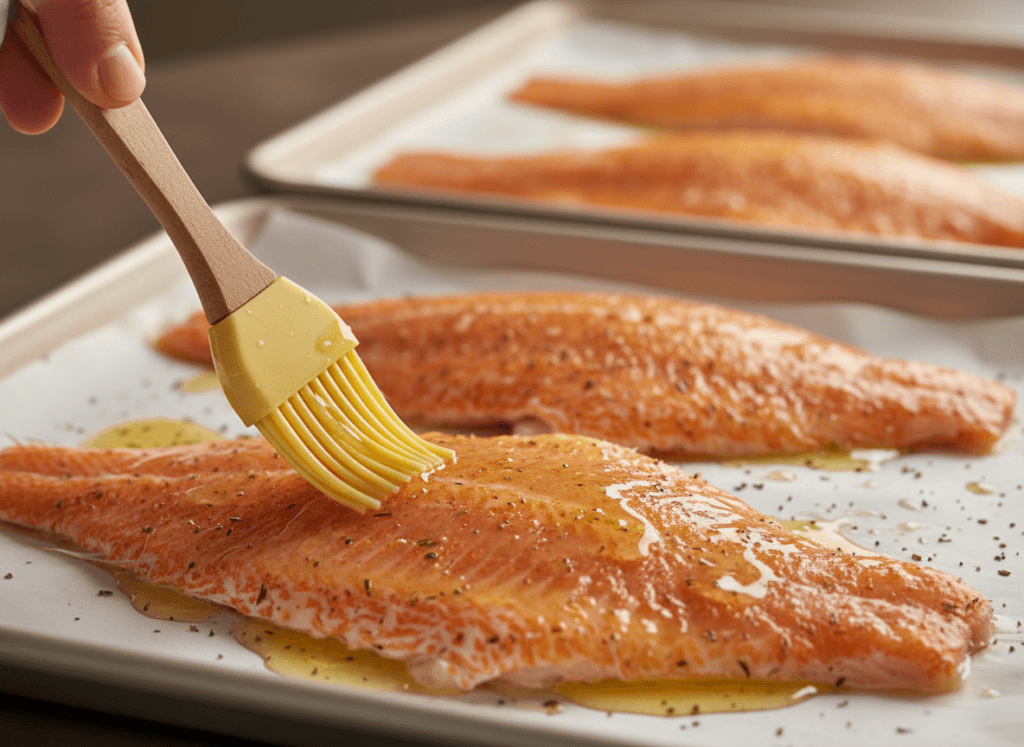
Brush the top of each fillet with melted butter or drizzle with olive oil, making sure to coat the entire surface. Use about three-quarters of a tablespoon per fillet for good coverage.
Sprinkle salt and pepper evenly across all fillets, then add any optional seasonings like garlic powder or herbs. Don’t forget to flip each fillet and season the bottom side as well for flavor throughout.
Drizzle lemon juice over the top of each seasoned fillet just before baking. The acid starts working right away to enhance flavor and help keep the fish moist.
Step 3: Bake until flaky and tender
Place the baking sheet in the preheated oven on the center rack. Set a timer for the minimum time based on fillet thickness, usually around 12 minutes for thinner pieces.
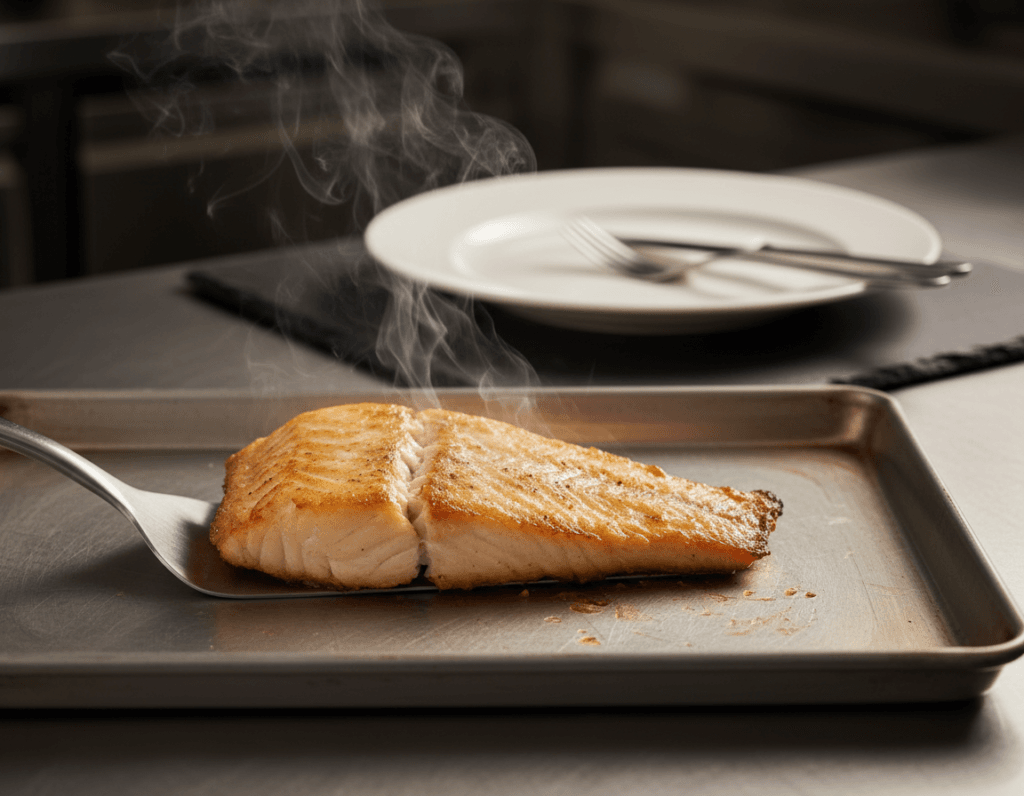
Check doneness at the minimum cook time by inserting a fork at the thickest part. The fish should flake easily and look opaque throughout with no translucent areas remaining.
If needed, return to the oven for 2-3 more minutes and check again. Orange roughy cooks quickly, so checking frequently prevents accidental overcooking.
Step 4: Rest briefly, finish, and serve
Let the fish rest on the baking sheet for 2 minutes after removing from the oven. This brief resting time allows juices to redistribute throughout the fish for better moisture.
Slide a thin spatula under each fillet and transfer carefully to serving plates. The fish is delicate when hot, so support it fully with the spatula to prevent breaking.
Garnish with fresh parsley and extra lemon wedges if desired. Serve immediately while the fish is hot for the best taste and texture.
How to Tell When Baked Orange Roughy Is Done
Knowing exactly when fish is perfectly cooked prevents the disappointment of dry, overcooked results. Use multiple methods to confirm doneness with confidence.
Internal temperature and safe doneness
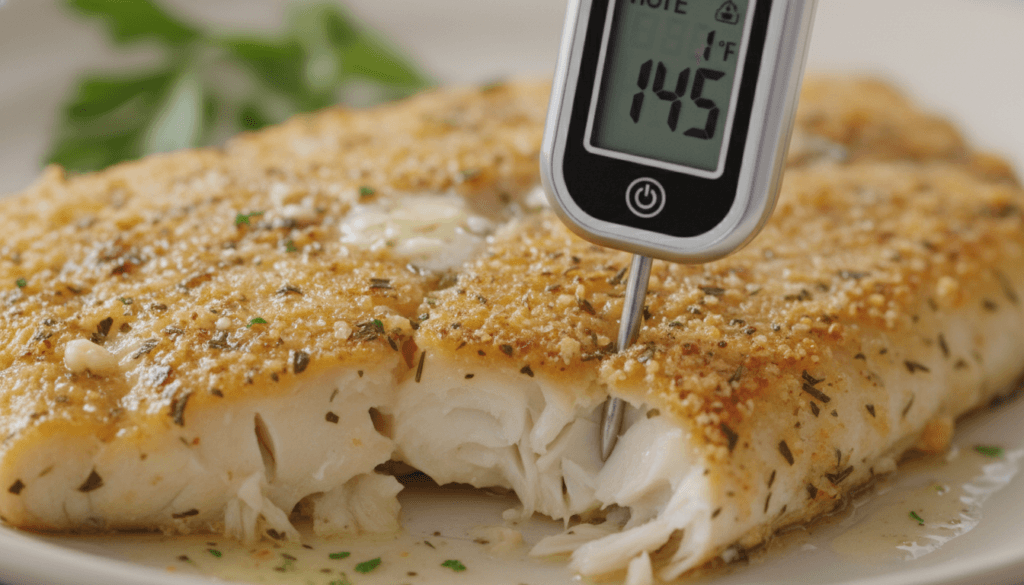
Insert an instant-read thermometer into the thickest part of the fillet to check the internal temperature. The fish is safe to eat when it reaches 145°F according to food safety guidelines.
You can actually remove the fish from the oven at 140°F since carryover cooking will bring it up to 145°F while it rests. This prevents overcooking from leaving it in the oven too long.
The thermometer should slide in easily without much resistance when the fish is done. Undercooked fish feels more resistant and dense when you insert the probe.
Visual and texture cues to look for
Look for flesh that has turned completely opaque white throughout with no translucent or glassy areas. Any see-through sections mean the fish needs more time in the oven.
Gently press the top of the fillet with your finger. Properly cooked fish feels firm yet still has a slight spring when touched, similar to the fleshy part of your palm below your thumb.
Insert a fork and twist gently at the thickest part. The fish should separate into large, moist flakes without much resistance when it’s fully cooked through.
Signs the fish is starting to overcook
White liquid pooling on top of the fish or in the pan indicates overcooking. This albumin protein gets squeezed out when the fish cooks too long or at too high a temperature.
The edges start to look dry and pull away from the center of the fillet. This happens when moisture evaporates from extended oven time or excessive heat.
The texture becomes tough or rubbery instead of tender and flaky. Once fish reaches this stage, you can’t reverse the damage, so check early and often.
For the most reliable doneness check, use a food thermometer and cook the fish to a safe minimum internal temperature
Troubleshooting and Common Mistakes
Even simple recipes can go wrong without proper technique. These solutions fix the most common problems people encounter when baking orange roughy.
Why orange roughy turns dry and how to prevent it
Overcooking is the number one cause of dry fish since orange roughy contains very little natural fat. Check doneness early and remove from the oven at 140°F internal temperature rather than waiting for 145°F.
Not using enough fat during baking leaves the lean fish without moisture protection. Brush each fillet generously with butter or oil to create a protective coating that bastes the fish as it cooks.
Baking at too high a temperature causes the outside to dry before the inside cooks through. Stick with 375°F rather than cranking up the oven to cook faster.
Why the fish turns watery or steams instead of bakes
Failing to pat fillets dry before seasoning leaves excess moisture that creates steam in the oven. Always use paper towels to remove all surface moisture before adding any oil or seasonings.
Crowding too many fillets on one pan traps moisture between pieces. Leave at least an inch of space between fillets so air can circulate and moisture can evaporate properly.
Using frozen fish without proper thawing releases excess water during cooking. Thaw completely in the refrigerator overnight and drain any liquid before drying and seasoning.
Why mild fish can taste bland and how to fix it
Under-seasoning is the most common mistake with delicate white fish. Don’t be shy with salt and pepper, and make sure to season both sides of each fillet, not just the top.
Skipping acid like lemon juice leaves the dish tasting flat. The bright citrus flavor balances the richness from butter and enhances the natural sweetness of the fish.
Using only salt and pepper limits flavor development. Add garlic, herbs, or a pinch of paprika to create more interest without overwhelming the mild fish.
How to keep delicate fillets from falling apart
Moving fish too early before it’s set causes it to break into pieces. Let fillets bake undisturbed for at least 10 minutes before checking or attempting to flip.
Using a spatula that’s too small provides inadequate support for the entire fillet. Choose a wide, thin spatula that can slide under and support the whole piece at once.
Not lining the pan properly makes fish stick and tear when you try to remove it. Always use parchment paper or a generous coating of cooking spray on the baking surface.
Pro Tips for Moist, Flaky, Flavorful Fish
Small techniques separate good results from great ones. These professional tricks ensure your baked orange roughy turns out perfectly every single time.
When to use butter, olive oil, or both
Butter creates the richest flavor and helps achieve light browning on top of the fish. It works best when you want a more indulgent dinner or when serving the fish with simple sides.
Olive oil provides a lighter, healthier option that still protects the fish with fat. Choose this when you’re watching calories or prefer a Mediterranean-style flavor profile.
Combining both gives you the best of each: use 2 tablespoons butter for flavor and 1 tablespoon olive oil for its higher smoke point. This combination tastes rich while handling oven heat better than butter alone.
Why patting the fish dry matters
Dry fish surfaces allow seasonings to stick properly instead of sliding off. Moisture creates a barrier that prevents salt, pepper, and other seasonings from adhering to the fish.
Removing excess water helps achieve light browning on top during baking. Wet fish steams rather than browns, resulting in a less appealing appearance and texture.
Less surface moisture means better overall texture in the finished dish. The fish bakes instead of steaming, creating a more pleasant mouthfeel when you eat it.
When to bake uncovered and when a quick broil helps
Always bake orange roughy uncovered to allow moisture to escape and prevent steaming. Covering the fish traps humidity that makes the texture soggy instead of flaky.
A quick 1-2 minute broil at the end adds appealing color to the top if your fish looks pale. Watch constantly during broiling since the high heat can quickly burn delicate fish.
Skip the broiler if your fillets are already golden from the butter or oil. Extra browning isn’t necessary and risks drying out the fish at the last minute.
How long to rest fish before serving
Let baked orange roughy rest for 2 minutes after removing from the oven. This brief pause allows the proteins to relax slightly and retain more moisture when you cut into the fish.
Don’t rest longer than 3 minutes or the fish will cool too much. Orange roughy tastes best served hot, so get it to the table quickly after the short resting period.
Use the resting time to finish plating sides or garnishing with fresh herbs and lemon. This makes efficient use of the wait without leaving the fish sitting too long.
Easy Variations and Flavor Options
The basic recipe adapts easily to different flavor preferences. Try these simple variations to keep weeknight fish dinners interesting without learning new techniques.
Lemon butter orange roughy
Increase the lemon juice to 3 tablespoons and mix it directly into the melted butter before brushing on the fish. Add 1 teaspoon of lemon zest for extra bright citrus flavor that’s more intense than juice alone.
This variation works beautifully with a sprinkle of fresh parsley on top right before serving. The combination creates a classic French-style fish dish that tastes restaurant-quality with minimal effort.
Garlic herb orange roughy
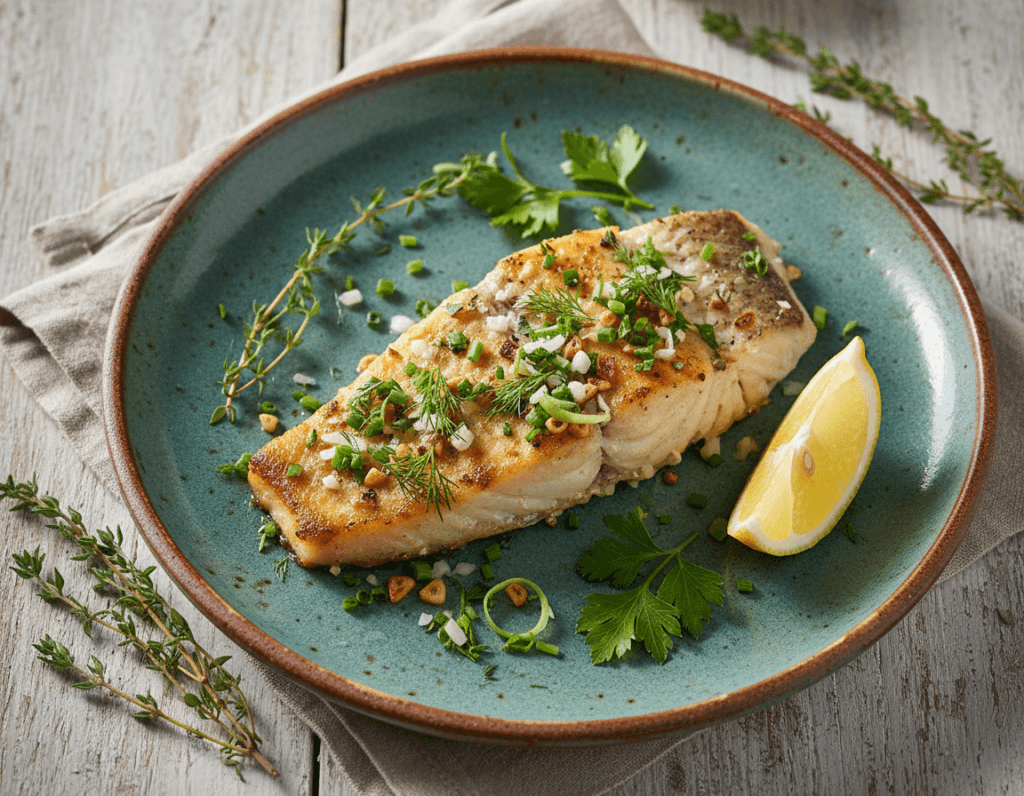
Mix 2 cloves of minced garlic into your melted butter along with 1 teaspoon each of dried thyme and parsley. Brush this aromatic mixture generously over both sides of the fillets before baking.
The garlic mellows as it bakes and infuses the fish with savory flavor. Fresh herbs work even better if you have them, using about 1 tablespoon each instead of dried seasonings.
Paprika or Cajun-style version
Season the fish with 1 teaspoon of smoked paprika along with your regular salt and pepper for a subtle smoky flavor. This adds beautiful color and a hint of warmth without making the dish spicy.
For a Cajun twist, use a store-bought Cajun seasoning blend at about 1 to 2 teaspoons depending on how spicy you like your food. The bold seasonings transform mild orange roughy into something exciting and flavorful.
Light dairy-free and butter-free options
Replace butter with olive oil for a completely dairy-free version that still keeps the fish moist. Add extra lemon juice and a pinch of garlic powder to compensate for the flavor butter would have provided.
Avocado oil works as another healthy alternative with a neutral flavor and high smoke point. It handles oven heat well while providing the fat coating that lean fish needs to stay tender.
Optional sauces, including a lemon wasabi version
Serve plain baked fish with a simple lemon butter sauce on the side. Melt 3 tablespoons of butter, whisk in 2 tablespoons of lemon juice and a pinch of salt, then drizzle over plated fish.
For an upscale lemon wasabi sauce, mix 2 tablespoons of mayonnaise, 1 tablespoon of lemon juice, half a teaspoon of wasabi paste, and a pinch of salt. This creamy sauce adds sophistication with a gentle kick of heat.
A simple tartar sauce complements the mild fish well for those who prefer traditional accompaniments. The tangy, creamy sauce balances the lean fish perfectly without overpowering its delicate flavor.
What to Serve With Baked Orange Roughy
Choosing the right sides creates a complete, satisfying meal. These pairings complement the mild fish without overwhelming its delicate flavor.
Best vegetable sides for a light meal
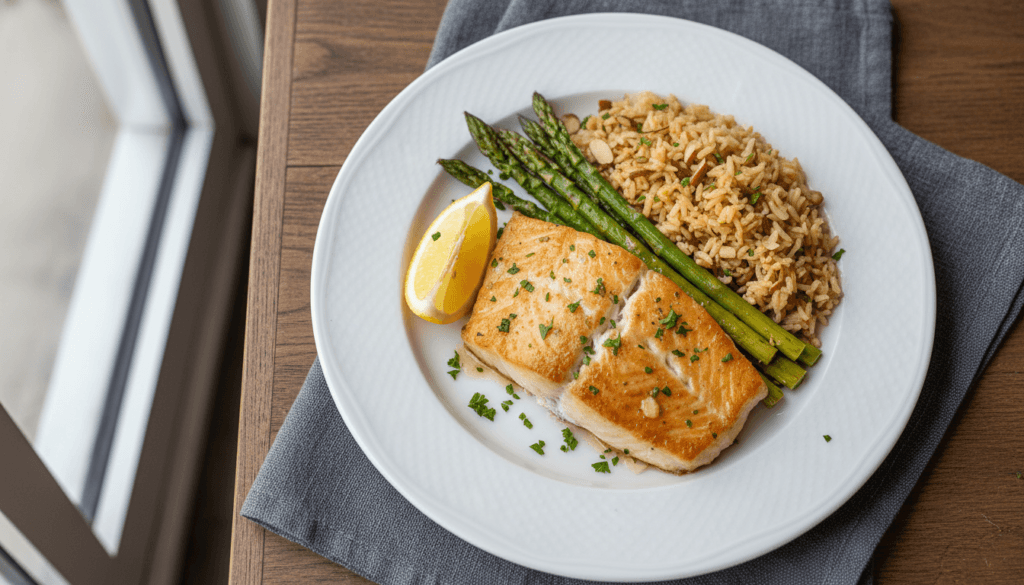
Roasted asparagus makes an elegant side that cooks at the same temperature as the fish. Toss spears with olive oil, salt, and pepper, then roast them on a separate pan for about 15 minutes.
Steamed broccoli or green beans offer quick, healthy options that take just minutes to prepare. The simple vegetables let the fish shine while adding color and nutrition to your plate.
A fresh garden salad with a light vinaigrette keeps the meal feeling fresh and bright. The crisp vegetables provide textural contrast to the tender, flaky fish.
Rice, potatoes, and other easy starch pairings
White rice or rice pilaf soaks up any buttery juices from the fish and adds satisfying substance to the meal. Cook it while the fish bakes to have everything ready at the same time.
Roasted baby potatoes seasoned with herbs and olive oil create a heartier dinner option. Cut them small so they finish cooking in about 20 minutes at 375°F alongside the fish.
Quinoa offers a nutritious alternative that cooks quickly and adds a pleasant nutty flavor. The light grain complements delicate fish better than heavy pasta would.
Sauces, garnishes, and citrus finishes
Fresh lemon wedges on the side let everyone add extra brightness to taste. The citrus cuts through any richness and enhances the natural sweetness of the orange roughy.
Chopped fresh parsley or dill adds a pop of color and fresh herb flavor right before serving. Just a tablespoon of herbs makes the dish look more polished and appetizing.
Melted butter with a squeeze of lemon works as an easy pan sauce. Pour the cooking juices over the fish on the plate for extra moisture and flavor.
Simple complete meal ideas for weeknights
Pair baked orange roughy with steamed rice and roasted vegetables for a balanced dinner that comes together in under 30 minutes. Everything can cook at once with minimal attention needed.
Serve the fish over a bed of mixed greens with cherry tomatoes and cucumber for a lighter option. The warm fish on cool salad creates an interesting temperature contrast.
Make it a Mediterranean-style meal with couscous, sautéed zucchini, and a yogurt-dill sauce on the side. These flavors complement the mild fish while keeping preparation simple for busy weeknights.
This baked orange roughy recipe pairs best with light, simple sides that do not overpower the delicate fish. For a warm and comforting starter, you can serve it with sweet potato miso soup. If you want more vegetable-based side ideas, browse these napa cabbage recipes to round out the meal.
Storage, Reheating, and Make-Ahead Tips
Proper storage helps you enjoy leftovers without sacrificing quality. These methods keep baked orange roughy tasty for later meals.
How to store leftover baked orange roughy
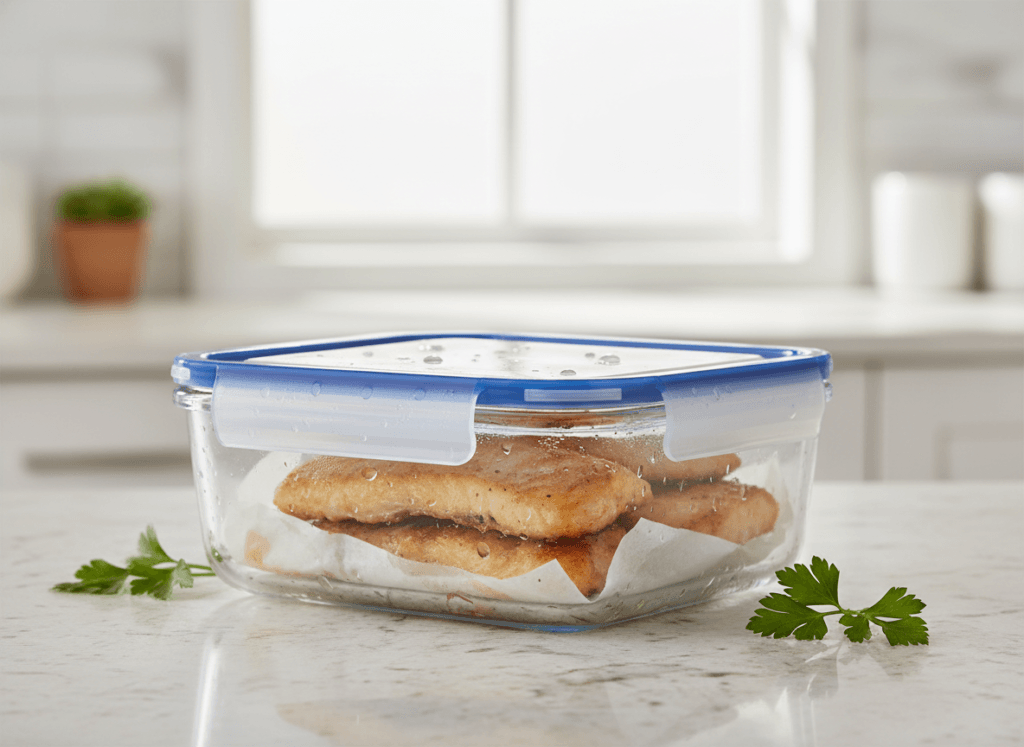
Let the fish cool to room temperature before storing, which takes about 15 minutes after baking. Transfer cooled fillets to an airtight container or wrap tightly in plastic wrap or aluminum foil.
Store in the refrigerator for up to 3 days maximum. Fish doesn’t keep as long as other proteins, so eat leftovers within this timeframe for best quality and safety.
Place a piece of parchment paper between stacked fillets to prevent them from sticking together. This makes it easier to remove just one or two pieces when you want them.
Best way to reheat without drying it out
Reheat gently in a 275°F oven for about 10 minutes until warmed through. Cover the fish loosely with foil to trap moisture and prevent further drying during reheating.
Add a small pat of butter or drizzle of olive oil before reheating to restore moisture. The extra fat helps the fish taste fresher and prevents it from seeming dry or tough.
Avoid the microwave if possible since it tends to make fish rubbery. If you must use it, heat in short 20-second bursts at 50% power with a damp paper towel over the fish.
Can you prep it ahead or freeze leftovers
Season the raw fish and refrigerate it up to 6 hours before baking for easy meal prep. This saves time on busy evenings when you want dinner on the table quickly.
Frozen cooked fish works in a pinch but won’t taste quite as good as fresh. Wrap cooled fillets individually in plastic wrap, then place in a freezer bag with air pressed out for up to 2 months.
Thaw frozen cooked fish overnight in the refrigerator before reheating. Never refreeze previously frozen fish that you’ve cooked and frozen again, as quality suffers significantly.
Baked Orange Roughy FAQ
Quick answers to common questions help you cook with confidence. These address the most frequent concerns people have about baking orange roughy.
Can I bake orange roughy from frozen?
Yes, but add 5-8 minutes to the bake time and expect slightly less even cooking. Rinse the frozen fillets under cold water to remove any ice crystals, pat dry as much as possible, then proceed with the recipe at 375°F.
Do I need to thaw it first?
Thawing overnight in the refrigerator gives the best results with more even cooking and better texture. The extra step is worth it for tender, flaky fish rather than pieces that cook unevenly from frozen.
Should I bake it covered or uncovered?
Always bake orange roughy uncovered to prevent steaming and allow moisture to escape. Covering traps humidity that makes the fish soggy instead of achieving the light, flaky texture you want.
Do I need to flip the fish while baking?
No, leave the fillets in place throughout the entire bake time. Flipping delicate fish often causes it to break apart and isn’t necessary since oven heat surrounds the fish and cooks it evenly from all sides.
Should I season both sides?
Yes, seasoning both sides creates balanced flavor throughout the entire fillet. Most people forget this step and only season the top, which results in bland-tasting fish on the underside.
What internal temperature should orange roughy reach?
The safe internal temperature is 145°F according to USDA guidelines. You can remove fish from the oven at 140°F since carryover cooking brings it to 145°F while resting, preventing overcooking.
Can I bake orange roughy with vegetables on the same pan?
Yes, but choose quick-cooking vegetables like asparagus, cherry tomatoes, or sliced zucchini that finish in 12-18 minutes. Harder vegetables like carrots or potatoes need pre-cooking or they won’t be done when the fish is ready.
What fish is most similar to orange roughy?
Tilapia comes closest in both mild flavor and delicate texture, making it the best substitute. Cod also works well with a similar taste, though it has a slightly firmer texture than orange roughy.
How do I make baked orange roughy taste less fishy?
Rinse the fish under cold water and pat completely dry before cooking to remove any surface odors. Add extra lemon juice and fresh herbs like parsley or dill, which naturally brighten flavor and mask any fishiness.
Enjoy Your Perfect Baked Orange Roughy
Baking orange roughy at home delivers delicious results without complicated techniques or hard-to-find ingredients. The simple combination of moderate oven temperature, proper seasoning, and a little fat transforms this mild fish into a dinner everyone enjoys.
Remember to pat the fish dry, season both sides, and check for doneness around the minimum cook time to prevent overcooking. These small steps make the difference between good fish and great fish that’s moist, flaky, and full of flavor.
Whether you stick with the basic recipe or try one of the easy variations, you now have all the knowledge needed to cook orange roughy perfectly every time. This versatile dinner option fits easily into any weeknight rotation without stress or fuss.
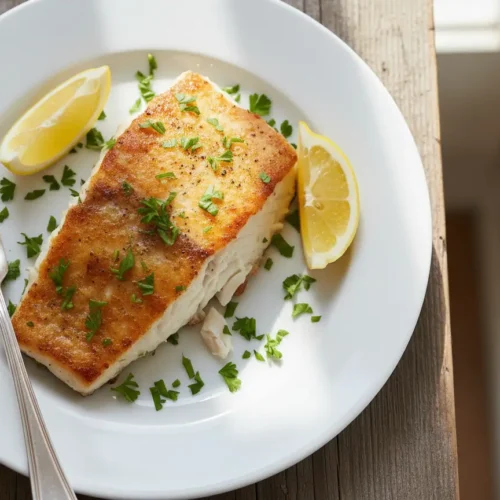
Baked Orange Roughy Recipe
Equipment
- Rimmed baking sheet
- Parchment paper
- Pastry brush
- Thin spatula
- Instant-read thermometer
Ingredients
Fish
- 4 fillets orange roughy about 6 ounces each, about 3/4 inch thick
- 3 tablespoons butter melted, or use olive oil
- 1 teaspoon salt
- 1/2 teaspoon black pepper
- 2 tablespoons fresh lemon juice
Optional Additions
- 2 cloves garlic minced
- 1 teaspoon dried herbs such as thyme, dill, parsley, or Italian seasoning
- 1/4 teaspoon paprika
- 2 tablespoons fresh parsley chopped, for garnish
- 4 wedges lemon for serving
Instructions
- Step 1: Preheat the oven to 375°F and position the rack in the center. Line a rimmed baking sheet with parchment paper or lightly coat it with cooking spray. Pat the orange roughy fillets completely dry with paper towels and place them on the prepared pan with at least 1 inch of space between each fillet.
- Step 2: Brush the fillets with the melted butter or olive oil, using about three-quarters of a tablespoon per fillet. Season both sides with salt and black pepper. Add any optional garlic, dried herbs, or paprika if using, then drizzle the lemon juice over the top just before baking.
- Step 3: Bake on the center rack for 12 to 18 minutes, depending on thickness, checking at the minimum time first. The fish is done when it flakes easily with a fork, looks opaque throughout, and reaches 145°F in the thickest part, or about 140°F before resting for carryover cooking.
- Step 4: Let the fish rest for 2 minutes on the baking sheet. Carefully transfer the fillets with a thin spatula, garnish with fresh parsley, add lemon wedges, and serve immediately.
Notes
- Pat the fillets dry before seasoning so they bake instead of steam.
- Do not crowd the pan; leave space around each fillet for even cooking.
- Start checking at 12 minutes because orange roughy cooks quickly and can dry out fast.
- For leftovers, refrigerate in an airtight container for up to 3 days and reheat gently in a 275°F oven for about 10 minutes.
If you enjoyed this seafood dinner, you’ll love our Baked Honey Garlic Salmon Recipe too.
2 thoughts on “Baked Orange Roughy Recipe”
Comments are closed.