
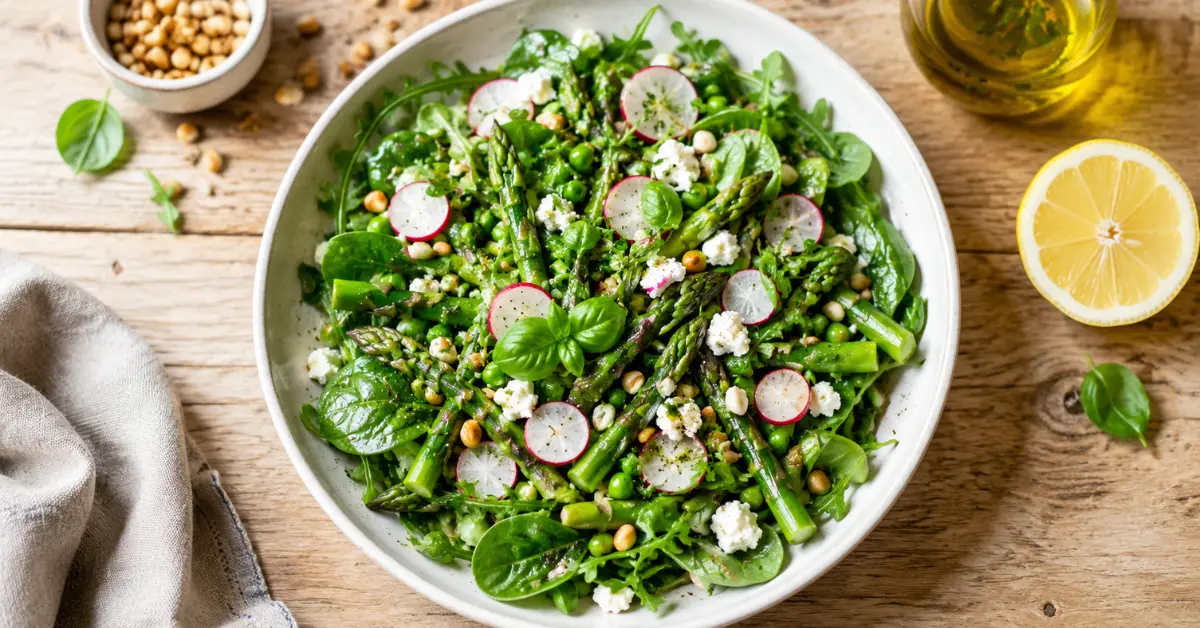
Spring brings the season of renewal and fresh flavors. This spring salad recipe celebrates the best produce available right now.
It combines crisp greens with tender asparagus and sweet peas. The lemon-herb vinaigrette ties everything together beautifully.
You can serve this dish for lunch, brunch, or dinner. It works perfectly for gatherings too. If you enjoy fresh, wholesome meals, you may also like this dense bean salad with chicken for another satisfying salad idea.
Table of Contents
Quick Answer: What Makes This Spring Salad So Good?
This spring salad stands out because it uses peak-season ingredients. Fresh asparagus, green peas, and radishes deliver maximum flavor and nutrition.
The balance between textures creates interest in every bite. You get crunch from nuts and radishes, creaminess from cheese, and brightness from herbs.
The best spring ingredients to use
Peak spring vegetables make this salad exceptional. Baby spinach and arugula provide the perfect base with their tender leaves.
Asparagus adds a slightly earthy flavor when blanched. Fresh or frozen peas contribute natural sweetness.
Radishes bring peppery crunch. Fresh herbs like basil enhance the overall freshness.
The flavor and texture balance
Every element serves a purpose in this recipe. Creamy goat cheese or feta balances the acid from lemon.
Toasted nuts add satisfying crunch. The vinaigrette coats everything without overwhelming the delicate greens.
Salt and pepper enhance each component. This harmony makes the salad memorable.
When to serve it
This spring salad fits many occasions. Serve it as a light lunch with crusty bread.
It works beautifully for Easter brunch or Mother’s Day gatherings. You can also pair it with grilled protein for dinner.
The recipe scales easily for picnics and potlucks. It travels well when components stay separate until serving time.
Why You’ll Love This Spring Salad

This recipe delivers on multiple levels. It tastes amazing and looks beautiful on any table.
Fresh, colorful, and easy
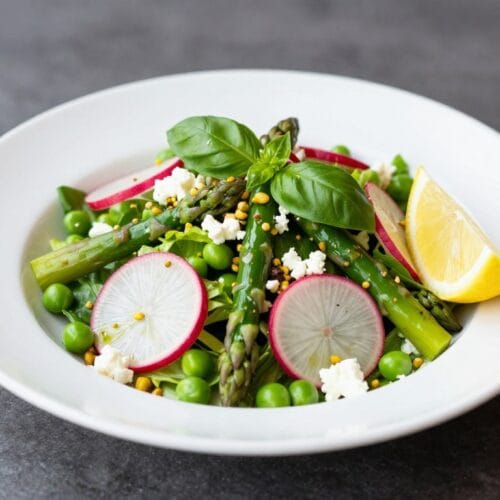
Vibrant colors make this salad visually appealing. The greens, pink radishes, and white cheese create an attractive plate.
Preparation takes minimal time. Most ingredients need little to no cooking.
The recipe comes together in under twenty minutes. Even beginners can master this dish quickly.
Flexible for lunch, brunch, or gatherings
This spring salad adapts to your needs. Serve smaller portions for a side dish at dinner.
Make larger portions for a satisfying lunch. Add protein to transform it into a complete meal.
The recipe multiplies easily for parties. Guests always appreciate fresh, seasonal dishes.
Easy to customize
You can adjust ingredients based on preferences. Swap nuts, cheese, or herbs without compromising flavor.
The recipe accommodates dietary restrictions. Vegan and dairy-free versions work equally well.
Use whatever spring vegetables you find at the market. This flexibility makes the recipe practical year after year.
Debra’s Testing Notes
When I tested this spring salad recipe, I found that blanching the asparagus for just 2 minutes gave the best texture: tender but still slightly crisp. I also tested the salad with romaine, but baby spinach and arugula made the bowl lighter and more balanced with the lemon herb vinaigrette. The feta adds a salty creamy bite, while the radishes give the salad a fresh crunch. For the best flavor, I recommend dressing the salad right before serving so the greens stay crisp.
Ingredients You’ll Need
Gather these fresh ingredients before you start. Everything should be readily available at your local grocery store or farmers market.
Greens and spring vegetables
- 6 cups mixed baby greens (spinach, arugula, or spring mix)
- 1 cup fresh or frozen peas (blanched if fresh)
- 8 asparagus spears (trimmed and cut into 2-inch pieces)
- 4 radishes (thinly sliced)
- 1 cup fresh basil leaves (torn)
Creamy, crunchy, and salty toppings
- 1/2 cup crumbled goat cheese or feta cheese
- 1/3 cup toasted pistachios or other nuts
- 1 avocado (sliced, optional)
- Salt and pepper to taste
Lemon-herb vinaigrette ingredients
- 3 tablespoons olive oil
- 2 tablespoons fresh lemon juice
- 1 teaspoon lemon zest
- 1 teaspoon honey or sugar
- 1/2 teaspoon salt
- 1/4 teaspoon pepper
- 1 tablespoon chopped fresh basil
Never Miss a Fresh Recipe
Join over 100,000 home cooks getting seasonal recipes, cooking tips, and meal planning inspiration delivered weekly. Get instant access to 50+ spring recipes when you subscribe today. Get Free Recipes
Unsubscribe anytime. Your email stays private.
Ingredient Notes and Easy Swaps
Understanding your ingredient options helps you adapt this spring salad recipe to what you have available. Here are the best substitutions and variations.
For more ways to use crisp vegetables in easy meals, browse these napa cabbage recipes for extra inspiration.
Best greens for spring salad
After testing this salad with different greens, I preferred a mix of baby spinach and arugula. The spinach keeps the salad soft and fresh, while the arugula adds a light peppery flavor that works beautifully with the lemon herb vinaigrette.
Spring mix combines multiple greens for variety. Butter lettuce works when you want something delicate.
Avoid iceberg lettuce as it lacks flavor. Mixed greens provide the best nutritional value and taste.
Fresh vs frozen peas
Fresh peas taste sweeter during peak season. Blanch them for two minutes, then shock in ice water.
Frozen peas work perfectly year-round. Thaw them completely and pat dry before adding to the salad.
Both options deliver good results. Choose based on availability and time.
Raw vs blanched or roasted asparagus
Blanched asparagus offers the best texture. Boil for three to four minutes until bright green and tender-crisp.
Roasted asparagus adds deeper flavor. Toss with olive oil, salt, and pepper, then roast at 400°F for twelve minutes.
Raw asparagus works if sliced very thin. Most people prefer the tender texture of cooked asparagus in salad.
Cheese, herb, and nut swaps
Feta cheese provides salty, tangy flavor similar to goat cheese. Crumbled blue cheese works for bold taste.
Fresh dill or mint can replace basil. Parsley adds brightness without competing flavors.
Toasted almonds, walnuts, or sunflower seeds substitute for pistachios. Each adds unique character to the dish.
Vegan, dairy-free, and nut-free options
Omit cheese entirely or use vegan feta alternatives. Nutritional yeast adds savory depth without dairy.
Replace honey with maple syrup in the dressing. This keeps the recipe completely plant-based.
Use toasted pumpkin seeds or sunflower seeds for nut-free crunch. These options work well for allergies.
How to Make Spring Salad Step by Step

Follow these simple steps to create your spring salad. The process takes about twenty minutes from start to finish.
Prep the vegetables
Wash all greens thoroughly and spin them dry. Moisture dilutes the dressing and makes salad soggy.
Trim asparagus by snapping off tough ends. Cut spears into two-inch pieces on a diagonal.
Bring a pot of salted water to a boil. Blanch asparagus for three to four minutes.
Transfer asparagus to an ice bath immediately. This stops cooking and preserves the bright green color.
Prepare frozen peas by thawing and patting dry. Slice radishes into thin rounds using a sharp knife.
Make the dressing
Combine olive oil, lemon juice, and lemon zest in a small bowl. Whisk until the mixture starts to emulsify.
Add honey, salt, pepper, and chopped basil. Mix thoroughly until well combined.
Taste and adjust seasoning as needed. The dressing should taste bright and balanced.
Set aside until ready to dress the salad. Make this up to two days ahead and refrigerate.
Assemble in the right order
Place greens in a large serving bowl or platter. Spread them evenly to create a base.
Arrange asparagus, peas, and radishes over the greens. Distribute them evenly for visual appeal.
Add crumbled cheese and toasted nuts next. Scatter fresh basil leaves on top.
Slice avocado just before serving if using. This prevents browning and maintains freshness.
Toss, taste, and serve
Drizzle the lemon vinaigrette over the entire salad. Start with three-quarters of the dressing.
Toss gently using two large spoons or clean hands. Ensure even coating without bruising delicate greens.
Taste and add more dressing if needed. Serve immediately for best texture and flavor.
Season with additional salt and pepper at the table. Fresh cracked pepper enhances the dish beautifully.
Expert Tips for the Best Texture and Flavor

Small techniques make a significant difference in salad quality. Apply these expert tips for restaurant-worthy results.
How to keep the salad crisp
Dry all vegetables completely after washing. Use a salad spinner for greens and paper towels for other vegetables.
Chill serving bowls in the refrigerator beforehand. Cold dishes help maintain crispness longer.
Store dressing separately until the last minute. Dress only the portion you plan to serve immediately.
Avoid cutting vegetables too far in advance. Prep within two hours of serving time for peak freshness.
When to add avocado, herbs, and crunchy toppings
Slice avocado right before serving to prevent browning. Toss it gently at the very end.
Add fresh herbs after tossing with dressing. This preserves their bright color and prevents wilting.
Sprinkle nuts and seeds just before bringing to the table. They lose crunch when mixed too early with dressing.
Reserve some toppings for garnish on top. This creates visual appeal and textural contrast.
How to balance acid, salt, and creaminess
Taste your dressing before adding to salad. It should taste slightly more acidic than you want the final dish.
Greens and vegetables will dilute the dressing flavor. Compensate by making it bolder initially.
Salt enhances all flavors in the dish. Add it gradually and taste frequently throughout assembly.
Creamy elements like cheese and avocado balance acidity. Adjust quantities based on your preference for richness.
For the best texture, do not overcook the asparagus. I blanch it quickly, then rinse it under cold water to keep the color bright green and the bite slightly crisp. This small step makes the salad taste fresher and look more vibrant.
Common Mistakes to Avoid
Avoiding these common errors ensures perfect results every time you make this spring salad recipe. Learn from these pitfalls.
Overcooking asparagus
Mushy asparagus ruins the texture of your salad. Test for doneness at three minutes by piercing with a fork.
The spears should bend slightly but still have snap. Remember they continue cooking briefly after removing from heat.
An ice bath stops the cooking process immediately. Skip this step and you risk overcooked vegetables.
Using wet greens
Water prevents dressing from adhering to leaves. It also makes the salad watery and diluted.
Invest in a salad spinner for best results. Alternatively, pat greens dry thoroughly with clean kitchen towels.
Even slightly damp greens compromise the final dish. Take extra time to ensure complete dryness.
Assembling too early
Dressed salad loses crispness within thirty minutes. The acid in vinaigrette breaks down cell structure in greens.
Prepare all components ahead of time separately. Combine them only when ready to serve.
For gatherings, set up an assembly station. Let guests dress their own portions for optimal freshness.
Overdressing the salad
Too much dressing makes salad soggy and overwhelming. Start with less than you think you need.
You can always add more dressing at the table. Removing excess dressing is impossible once added.
Lightly coated leaves taste better than drenched ones. Aim for a delicate glaze on each component.
Easy Variations

Customize this spring salad to match your needs. These variations maintain the fresh, seasonal character while adapting to different situations.
High-protein spring salad
Add grilled chicken breast sliced into strips. Season the chicken with salt, pepper, and lemon before grilling.
Hard-boiled eggs provide protein without cooking time. Slice them in half and arrange on top of the salad.
Chickpeas offer plant-based protein that works beautifully. Toss one cup of roasted chickpeas into the mix for added substance.
Grilled shrimp pairs wonderfully with lemon vinaigrette. Season and cook them just before serving for best flavor.
Vegetarian and vegan version
This recipe is naturally vegetarian with the cheese. For vegan adaptation, replace dairy cheese with cashew-based feta.
Use maple syrup instead of honey in the dressing. This simple swap makes the vinaigrette completely plant-based.
Add extra avocado for creaminess without dairy. Nutritional yeast sprinkled on top provides savory depth.
Increase nuts and seeds for satisfaction. Toasted sunflower seeds work particularly well in vegan versions.
Easter or brunch version
Add soft-boiled eggs with jammy yolks for richness. The runny yolk creates a luxurious sauce when broken.
Include edible flowers like violas or nasturtiums. These add elegance perfect for special occasions.
Serve on a large platter family-style. Guests can help themselves while mingling at brunch.
Pair with champagne or sparkling wine. The citrus notes in the dressing complement bubbly perfectly.
Picnic or potluck version
Keep all components in separate containers. Pack dressing in a small jar with a tight lid.
Choose sturdier greens like romaine that travel well. Skip delicate herbs until just before serving.
Omit avocado or add it at the destination. It browns quickly and doesn’t transport well.
Bring extra dressing in case the salad needs refreshing. People appreciate having control over their portion dressing.
What to Serve With Spring Salad
This spring salad pairs beautifully with many dishes. Choose accompaniments based on the meal occasion and time of day.
Light lunch pairings
Serve with crusty sourdough bread and olive oil. The bread provides substance without overwhelming the fresh flavors.
A simple tomato soup complements the salad perfectly. The warm soup contrasts nicely with cool, crisp greens.
Pair with a cup of fresh fruit on the side. Strawberries or citrus segments enhance the spring theme.
Brunch pairings
Offer this salad alongside quiche or frittata. The egg dishes provide protein while the salad adds freshness.
Fresh baked scones or croissants round out the meal. Keep pastries simple to let the salad shine.
Serve mimosas or fresh-squeezed orange juice. Citrus beverages echo the lemon notes in the vinaigrette.
Dinner pairings
Grilled salmon pairs exceptionally well with this salad. The fish and lemon dressing create a cohesive flavor profile.
Roasted chicken makes an excellent protein choice. Season simply with herbs to complement the fresh ingredients.
Serve alongside risotto or pasta primavera. These dishes share the seasonal vegetable focus.
This salad also pairs well with a warm bowl of sweet potato miso soup if you want to turn it into a fuller lunch or light dinner.
Make-Ahead, Meal-Prep, and Storage

Planning ahead makes weeknight meals easier. Here is how to prep components while maintaining quality.safe produce handling and storage
What to prep 1–2 days ahead
Wash and dry all greens completely. Store them wrapped in paper towels inside a sealed container.
Make the lemon vinaigrette up to three days early. Keep it refrigerated in a jar and shake before using.
Blanch asparagus and store it in an airtight container. It stays crisp for up to two days when properly dried.
Toast nuts and store at room temperature. They maintain crunch for up to one week in a sealed container.
What to keep separate until serving
Never dress the salad until serving time. Dressing causes greens to wilt within thirty minutes.
Keep avocado whole until just before serving. Cut surfaces brown quickly even with lemon juice.
Store fresh herbs separately from other ingredients. They wilt faster when in contact with moisture.
Reserve nuts and crunchy toppings until plating. This preserves their texture and prevents sogginess.
How to store leftovers
Transfer undressed components to separate containers. Never store dressed salad as it becomes unpalatable.
Keep greens in a container with paper towels. Change towels if they become damp to prevent wilting.
Store vegetables in the crisper drawer. Maintain refrigerator temperature at 35-40°F for best results.
Dressing keeps well in a sealed jar. Give it a good shake before using as ingredients separate naturally.
How long it lasts
Prepared greens last three to four days when stored properly. Discard if they show any browning or sliminess.
Blanched asparagus stays fresh for two days maximum. The texture degrades after this time period.
Lemon vinaigrette remains good for up to one week. The acid acts as a natural preservative.
Assembled dressed salad should be eaten immediately. It does not store well once tossed with dressing.
Spring Salad FAQs
Can I make spring salad the day before?
You can prep all components the day before, but do not assemble or dress the salad. Store washed greens, blanched asparagus, and other vegetables separately in the refrigerator.u003cbru003eMake the lemon vinaigrette ahead and refrigerate it. Assemble everything within thirty minutes of serving time for the best texture and flavor.
What dressing goes best with spring salad?
Lemon-herb vinaigrette complements spring vegetables perfectly. The bright citrus notes enhance fresh flavors without overwhelming them.u003cbru003eLight vinaigrettes work better than creamy dressings for this recipe. Avoid heavy ranch or blue cheese dressings that mask the delicate spring ingredients
What are the best greens for spring salad?
Baby spinach, arugula, and spring mix work beautifully. These tender greens have mild to slightly peppery flavors that pair well with lemon dressing.u003cbru003eButter lettuce adds delicate texture if you prefer milder greens. Avoid iceberg lettuce as it lacks the flavor and nutrition of other varieties.
Can I use frozen peas or raw asparagus?
Frozen peas work perfectly for this spring salad recipe. Thaw them completely and pat dry before adding to avoid watering down the dressing.u003cbru003eRaw asparagus can work if sliced very thin. Most people prefer blanched asparagus for better texture and digestibility in salad applications.
What protein can I add?
Grilled chicken, hard-boiled eggs, or chickpeas transform this into a complete meal. Each option adds substance without overpowering the fresh spring flavors.u003cbru003eGrilled shrimp pairs wonderfully with the lemon vinaigrette. For plant-based options, add tofu or tempeh seasoned with herbs and olive oil.
How do I keep it from getting soggy?
Dry all vegetables completely after washing. Use a salad spinner for greens and paper towels for other components.u003cbru003eDress the salad immediately before serving. Store dressing separately and toss only the portion you plan to eat right away for maximum crispness.
Spring Salad Recipe
Equipment
- Large pot
- Slotted spoon
- Large mixing bowl
- Small bowl
- Whisk
- Knife
- Cutting board
Ingredients
Salad Ingredients
- 1 pound asparagus trimmed and cut into 2-inch pieces
- 1 cup green peas fresh or thawed frozen
- 5 cups spring mix greens
- 4 radishes thinly sliced
- 1 avocado diced
- 1/2 cup feta cheese crumbled
- 1/4 cup pistachios roughly chopped
- 1/4 cup fresh basil torn or chopped
Vinaigrette
- 3 tablespoons olive oil
- 1 1/2 tablespoons lemon juice freshly squeezed
- 1 teaspoon Dijon mustard
- 1 teaspoon honey
- 1/2 teaspoon salt or to taste
- 1/4 teaspoon black pepper or to taste
Instructions
- Bring a large pot of salted water to a boil. Add the asparagus pieces and blanch for 2 to 3 minutes until bright green and just tender. Transfer them immediately to cold water or an ice bath, then drain well.
- If needed, blanch the peas for about 1 minute, then drain and cool. Pat the asparagus and peas dry so the salad does not become watery.
- In a small bowl, whisk together the olive oil, lemon juice, Dijon mustard, honey, salt, and black pepper until smooth and well combined.
- Add the spring mix greens, radishes, avocado, basil, asparagus, and peas to a large mixing bowl. Drizzle with the vinaigrette and toss gently to coat.
- Top the salad with crumbled feta and chopped pistachios. Serve immediately for the freshest texture and flavor.
Notes
Tip 2: You can swap pistachios for sliced almonds or sunflower seeds.
Tip 3: For extra protein, add grilled chicken, salmon, or chickpeas.
1 thought on “Spring Salad Recipe”
Comments are closed.