
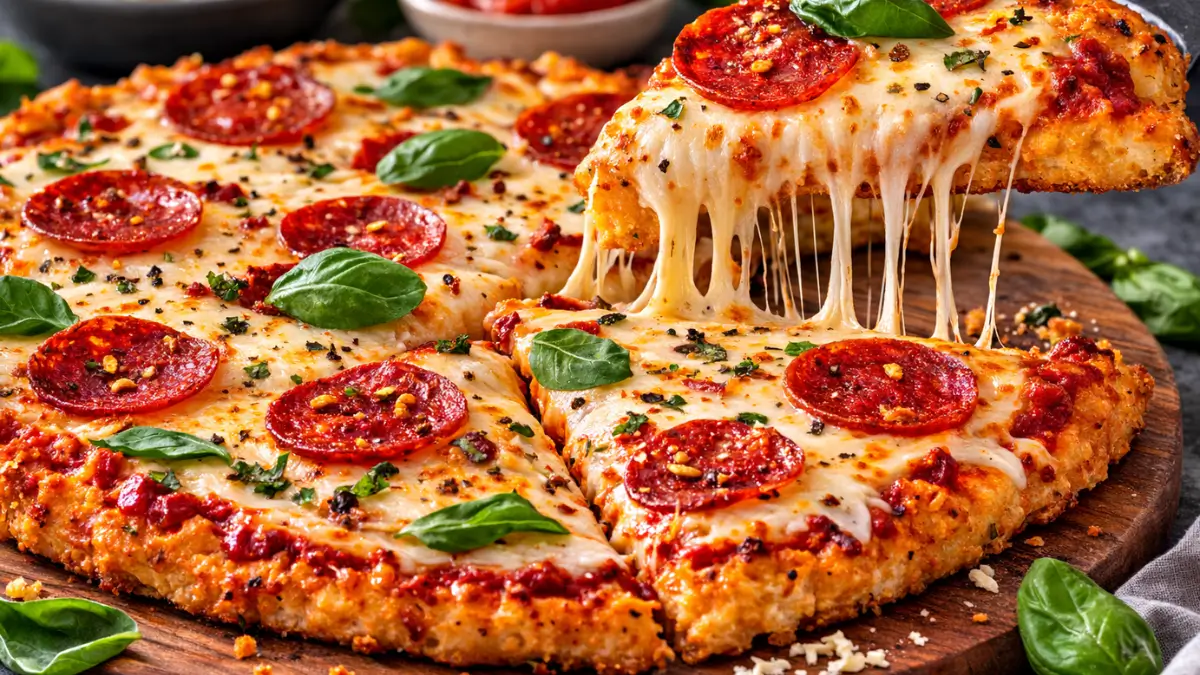
Do you remember the joy of biting into a hot, melty slice after a long week? It feels like a warm hug, but traditional options often leave you feeling sluggish. You shouldn’t have to choose between your health goals and your favorite comfort food.
That is where this crispy chicken crust pizza changes everything for your dinner routine. Imagine a base that is both crunchy and savory, satisfying those deep cravings without the heavy carbs. It provides the perfect solution for anyone wanting a guilt-free indulgence.
This unique chicken crust pizza recipe uses lean protein to create a firm, golden foundation. It allows you to pile on sauce and cheese while keeping every bite perfectly stable and delicious. Finally, you can enjoy a meal that tastes truly indulgent and keeps your wellness journey on track.
Key Takeaways
- Provides a high-protein, low-carb alternative to traditional dough.
- Delivers a satisfyingly firm and crunchy texture in every bite.
- Ideal for keto, gluten-free, and grain-free dietary preferences.
- Requires minimal ingredients for a fast and easy weeknight meal.
- Supports fitness goals without sacrificing the classic flavors you love.
- Offers a versatile base that pairs well with any favorite toppings.
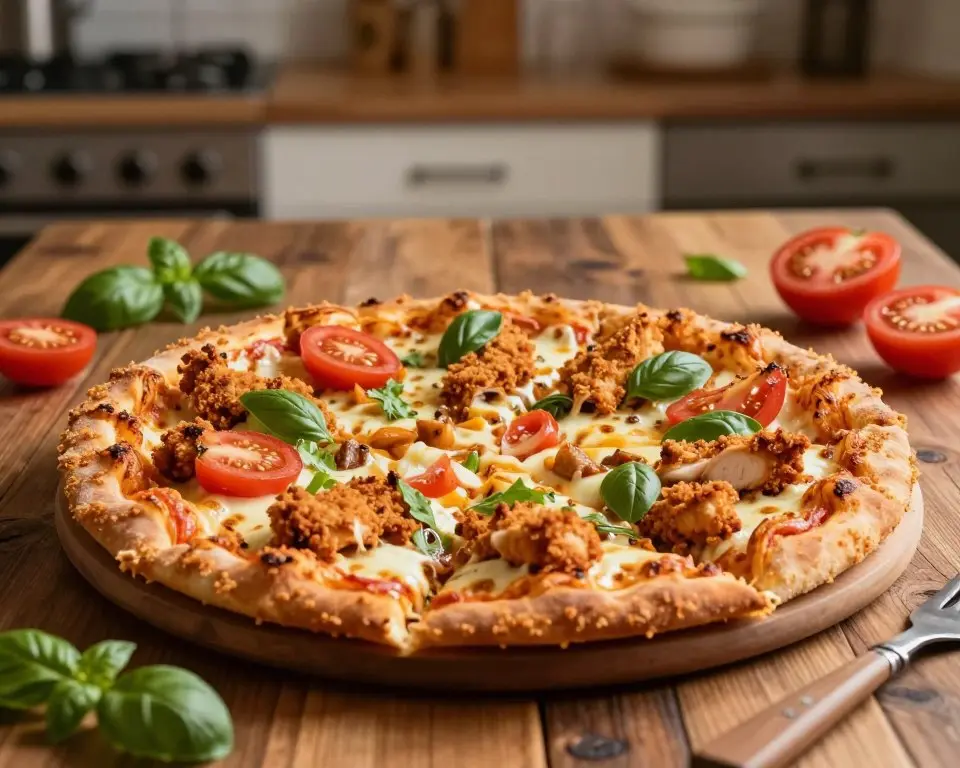
Table of Contents
What Makes Chicken Crust Pizza Special
You might be wondering what makes chicken crust pizza so special. The answer lies in its unique composition and the benefits it offers over traditional pizza crusts. Chicken crust pizza is made by using ground chicken as the base, which is then mixed with various ingredients to create a crust that’s not only delicious but also packed with protein.
One of the key advantages of homemade chicken crust pizza is its ability to cater to various dietary needs. It’s a great option for those following a low-carb or keto diet, as it replaces the traditional high-carb crust with a protein-rich alternative. Additionally, it’s gluten-free, making it suitable for individuals with gluten intolerance or sensitivity.
The preparation method of chicken crust pizza also contributes to its uniqueness. The crust is typically pre-baked before adding the toppings, ensuring a crispy base that’s similar to traditional pizza crusts. This step is crucial in achieving the perfect texture, making it a satisfying meal for those craving pizza.
Furthermore, chicken crust pizza is highly versatile. You can customize it with your favorite toppings, from classic combinations like mozzarella and pepperoni to more innovative choices like BBQ chicken or pesto sauce. This flexibility makes it easy to enjoy a healthy chicken crust pizza that suits your taste preferences.
In summary, chicken crust pizza stands out due to its innovative use of chicken as a crust, its health benefits, and its versatility in terms of toppings. Whether you’re looking for a low-carb meal or just want to try something new, homemade chicken crust pizza is definitely worth considering.
Health Benefits of Low-Carb Chicken Crust Pizza
Chicken crust pizza is not just a trend; it’s a healthier twist on a classic favorite. By using chicken as the crust, you’re significantly reducing the carbohydrate content of your pizza, making it an excellent option for those on low-carb diets.
Nutritional Advantages Over Traditional Pizza
Traditional pizza crusts are made from flour, water, yeast, and sometimes sugar, which are high in carbohydrates. In contrast, a chicken crust pizza uses ground chicken, eggs, and cheese as its base, drastically cutting down on carbs. This substitution not only reduces the carb content but also increases the protein content of the pizza.
Nutritional Comparison:
| Nutritional Aspect | Traditional Pizza Crust | Chicken Crust Pizza |
|---|---|---|
| Carbohydrates | High | Low |
| Protein Content | Moderate | High |
| Gluten Content | Contains Gluten | Gluten-Free |
Perfect for Keto and Gluten-Free Diets
The low-carb nature of chicken crust pizza makes it an ideal choice for those following a ketogenic diet, which requires a very low intake of carbohydrates to induce a metabolic state called ketosis. Additionally, since the crust is made from chicken and not wheat flour, it’s naturally gluten-free, making it suitable for individuals with gluten intolerance or sensitivity.
High Protein Content for Sustained Energy
The high protein content in chicken crust pizza not only supports muscle health but also provides sustained energy. Protein takes longer to digest than carbohydrates, which means you feel fuller for longer, reducing the need for snacking between meals.
By choosing a chicken crust pizza, you’re opting for a meal that’s not only delicious but also aligns with your health and dietary goals, whether you’re following a keto, gluten-free, or simply a healthier eating plan.
Essential Ingredients for Your Chicken Crust Pizza Recipe
The key to a mouth-watering chicken crust pizza lies in selecting the finest ingredients for each component. To create a delicious and satisfying low-carb meal, you’ll need to focus on the quality of the chicken crust, the sauce, and the toppings.
Ingredients for the Chicken Crust
The foundation of a great chicken crust pizza is, of course, the crust itself. To make it, you’ll need:
- Boneless, skinless chicken breast or thighs, finely ground
- Parmesan cheese for added flavor and texture
- Egg to bind the mixture together
- Italian seasoning for a traditional pizza flavor
- Garlic powder and onion powder for extra depth
Sauce and Topping Ingredients
For the sauce and toppings, consider the following:
- A low-carb tomato sauce or pesto as a base
- Mozzarella cheese for melting and a creamy texture
- Your choice of toppings, such as pepperoni, mushrooms, bell peppers, and olives
Smart Ingredient Substitutions
To cater to different tastes and dietary needs, you can make several smart substitutions. For instance, you can use almond flour or coconut flour to adjust the crust’s texture. For a dairy-free version, consider substituting mozzarella with a vegan alternative.
Kitchen Tools and Equipment You’ll Need
Making a delicious homemade chicken crust pizza requires some essential kitchen tools and equipment. To start, you’ll need a few basic items to prepare and bake your pizza.
Primary Tools and Equipment:
- A food processor or blender to grind the chicken and mix the crust ingredients.
- A large mixing bowl to combine the chicken, cheese, and other crust ingredients.
- A baking sheet or pizza stone to bake the crust.
- Parchment paper or a silicone mat to prevent the crust from sticking.
- A pizza peel or a large spatula to transfer the pizza to the oven.
Additional Tools for Ease:
- A meat thermometer to ensure the chicken is cooked to a safe internal temperature.
- A sharp knife or pizza cutter for slicing the finished pizza.
- A cheese grater if you’re using block cheese for your toppings.
Having these tools and equipment ready will make the process of making your homemade chicken crust pizza more efficient and enjoyable. It allows you to focus on the creativity and fun aspects of pizza making.
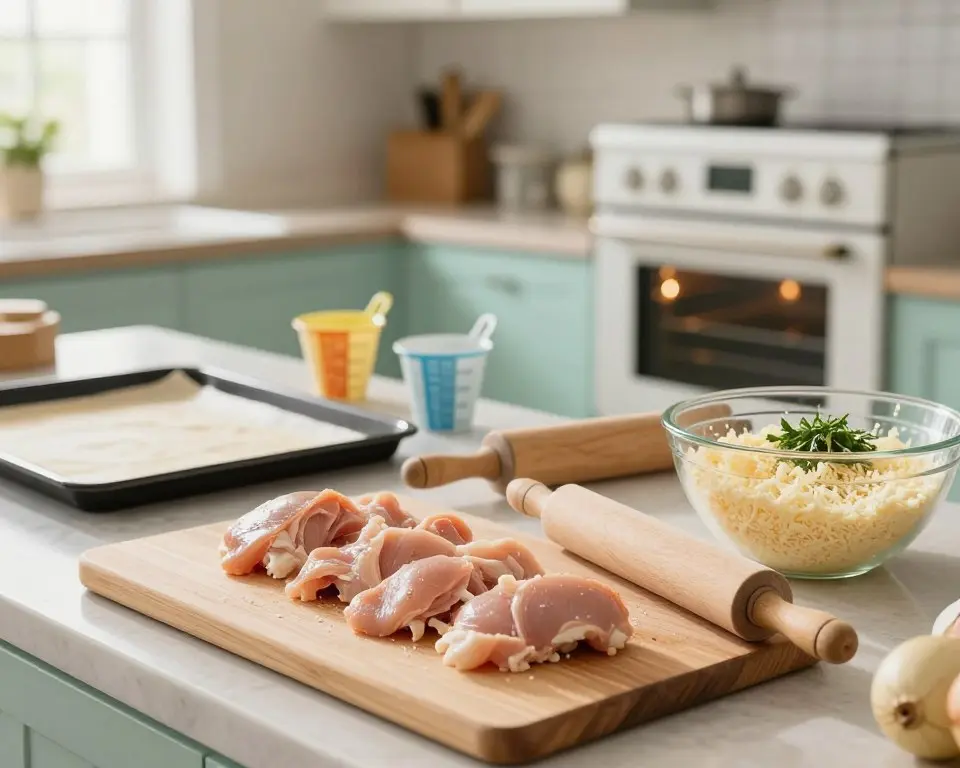
By being prepared with the right kitchen tools and equipment, you’ll be well on your way to creating a delicious homemade chicken crust pizza that meets your dietary needs and satisfies your taste buds.
Complete Chicken Crust Pizza Recipe with Step-by-Step Instructions
Now that we’ve covered the basics, let’s dive into the complete chicken crust pizza recipe with step-by-step instructions. Making a delicious chicken crust pizza is a straightforward process that requires some basic ingredients and kitchen tools.
Step 1: Prepare and Process the Chicken
To start, preheat your oven to 400°F (200°C). Take 1 pound of boneless, skinless chicken breast or thighs and grind them in a food processor until they reach a ground meat consistency. As “The Pizza Bible” by Tony Gemignani suggests, using high-quality chicken is crucial for the best flavor.
“The quality of your ingredients will directly impact the taste of your pizza.”
Tony Gemignani, The Pizza Bible
Step 2: Mix the Crust Ingredients
In a large bowl, combine the ground chicken with 1 egg, 1/2 cup of shredded mozzarella cheese, and your choice of seasonings (e.g., garlic powder, Italian seasoning). Mix everything together until just combined. Be careful not to overmix.
Step 3: Shape and Pre-Bake the Crust
Line a baking sheet with parchment paper or a silicone mat. Shape the chicken mixture into a circle or rectangle, depending on your preference. Pre-bake the crust in the preheated oven for 15-20 minutes, or until it’s firm and lightly golden.
Step 4: Add Sauce and Toppings
Remove the crust from the oven and spread a layer of your favorite pizza sauce on top. Add your desired toppings, keeping in mind the cooking time and the moisture content of the toppings. Some great options include mozzarella cheese, pepperoni, bell peppers, and olives.
Step 5: Final Bake Until Golden and Crispy
Return the pizza to the oven and bake for an additional 10-15 minutes, or until the cheese is melted and bubbly. For an extra crispy crust, broil the pizza for 1-2 minutes, watching closely to avoid burning.
By following these steps, you’ll be able to create a delicious and crispy chicken crust pizza that’s perfect for a quick dinner or as a snack. Enjoy experimenting with different toppings and sauces to make it your own!
For food safety, use a thermometer to make sure the chicken crust reaches a safe minimum internal temperature of 165°F before serving.
Expert Tips for Achieving Maximum Crispiness
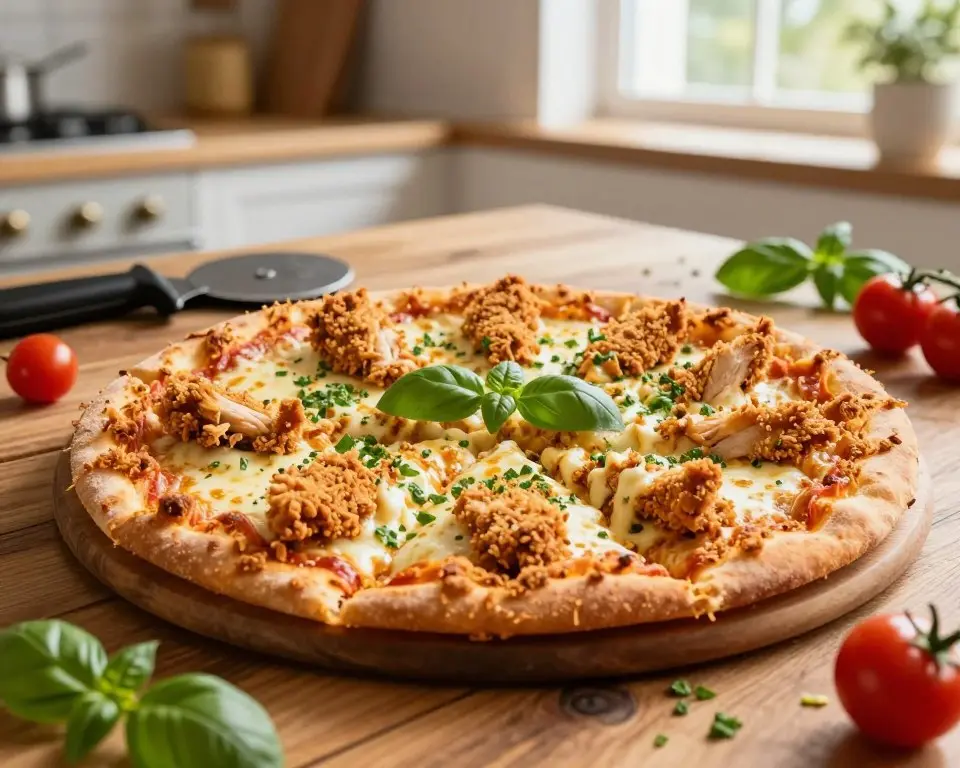
The secret to a perfectly crispy chicken crust pizza lies in a few expert techniques. Achieving the ideal crispiness involves understanding the factors that contribute to a crunchy crust and implementing the right strategies in your cooking process.
Removing Excess Moisture from the Chicken
One of the primary reasons for a soggy crust is excess moisture in the chicken. To combat this, it’s essential to remove as much moisture as possible from the chicken before forming the crust. You can do this by thoroughly squeezing out the moisture from the cooked, shredded chicken using a clean kitchen towel or cheesecloth. This step is crucial for creating a crust that will crisp up nicely in the oven.
Optimal Baking Temperature and Time
Baking temperature and time play a significant role in achieving a crispy crust. A higher oven temperature can help to crisp the crust quickly, but be careful not to overcook it. Preheating your oven to around 425°F (220°C) and baking the crust for the right amount of time is key. Typically, the crust should be pre-baked for about 15-20 minutes before adding toppings, and then an additional 5-10 minutes after toppings are added.
Monitoring the pizza during the baking process is crucial. You want the crust to be golden brown and crispy. If you notice the crust browning too quickly, you can adjust the temperature or baking time accordingly.
Choosing the Right Pan and Preparation
The type of pan you use and how you prepare it can significantly impact the crispiness of your chicken crust pizza. Using a preheated pizza stone or a baking sheet can help to achieve a crispy crust. If you have a pizza stone, preheat it in the oven before placing the pizza on it. This will help to distribute heat evenly and absorb moisture from the crust.
Alternatively, you can use a baking sheet lined with parchment paper. Ensure the sheet is preheated or at least at room temperature before placing the pizza on it. This helps in achieving a crispy bottom crust.
Creative Topping Combinations for Your Homemade Chicken Crust Pizza
Unleash your creativity and take your chicken crust pizza to the next level with unique topping combinations. The beauty of making your own low-carb chicken crust pizza at home is the freedom to experiment with a wide variety of toppings to suit your taste preferences and dietary needs.
Whether you’re following a keto diet or simply looking for a healthier pizza option, the right toppings can elevate your healthy chicken crust pizza into a culinary delight. Let’s explore some exciting topping ideas that cater to different tastes and dietary requirements.
Classic Italian-Style Toppings
For those who love traditional pizza flavors, classic Italian-style toppings are a great place to start. Consider topping your keto chicken crust pizza with:
- Fresh basil leaves
- Mozzarella cheese (or a low-carb alternative)
- San Marzano tomatoes
- Prosciutto or other cured meats
- A drizzle of extra virgin olive oil
Keto-Friendly Low-Carb Options
If you’re on a keto diet, you’ll want to keep your carb count low while maximizing flavor. Some keto-friendly topping ideas include:
- Avocado slices
- Bacon or pancetta
- Grilled chicken or shrimp
- Mushrooms, especially varieties like shiitake or portobello
- A sprinkle of feta cheese
International Flavor Combinations
Don’t be afraid to experiment with international flavors to give your chicken crust pizza a unique twist. Some ideas include:
- A Mediterranean-style pizza with feta, olives, and artichoke hearts
- A Mexican-inspired pizza with salsa, grilled chicken, and jalapeños
- An Asian-fusion pizza with BBQ sauce, grilled chicken, and pickled ginger
By exploring these creative topping combinations, you can enjoy a delicious and satisfying low-carb chicken crust pizza that meets your dietary needs and satisfies your cravings.
Troubleshooting Common Chicken Crust Pizza Problems
While making homemade chicken crust pizza is relatively straightforward, some issues can arise that affect the final product. In this section, we’ll address common problems and provide practical solutions to help you achieve a delicious and crispy pizza.
How to Fix a Soggy Crust
A soggy crust can be disappointing, but there are several reasons why it might happen, and just as many solutions. First, ensure that you’re not overloading your pizza with toppings, as excess moisture can make the crust soggy. Another key factor is the baking temperature and time. Pre-baking the crust before adding toppings can help it stay crispy.
- Pre-bake the crust for 10-12 minutes before adding toppings.
- Use a moderate amount of sauce and toppings to avoid excess moisture.
- Consider using a pizza stone in the oven to enhance crispiness.
Preventing the Crust from Falling Apart
If your chicken crust pizza falls apart easily, it might be due to insufficient binding ingredients or improper handling. To prevent this, make sure you’re using enough egg and cheese to bind the chicken mixture together. Also, handle the crust gently when shaping and transferring it to the baking sheet.
- Use a sufficient amount of egg and cheese in the chicken mixture.
- Mix the ingredients well to ensure they’re fully incorporated.
- Handle the crust gently to avoid breaking it.
Solving Uneven Cooking Issues
Uneven cooking can result in some parts of the crust being overcooked while others remain undercooked. To solve this, ensure that your oven is at the correct temperature and consider using a pizza stone to distribute heat evenly. Rotating the pizza halfway through the baking time can also help achieve uniform cooking.
- Preheat your oven to the correct temperature.
- Use a pizza stone to enhance even cooking.
- Rotate the pizza halfway through baking.
By addressing these common issues, you can improve your chances of making a successful homemade chicken crust pizza that’s both delicious and visually appealing.
Storing and Reheating Your Healthy Chicken Crust Pizza
Savoring your healthy chicken crust pizza doesn’t have to be limited to the first serving; learn how to preserve its quality for future meals. Proper storage and reheating techniques are crucial to maintaining the crispiness and flavor of your gluten-free chicken crust pizza.
Proper Refrigeration Methods
To keep your chicken crust pizza fresh, it’s essential to store it correctly in the refrigerator. Allow the pizza to cool completely before transferring it to an airtight container or wrapping it tightly with plastic wrap or aluminum foil. This prevents moisture from accumulating and making the crust soggy.
Tips for Refrigeration:
- Cool the pizza completely before storing.
- Use airtight containers or wrap tightly.
- Refrigerate at a consistent temperature below 40°F (4°C).
Freezing for Long-Term Storage
For longer storage, freezing is an excellent option. First, place the cooled pizza on a baking sheet lined with parchment paper and put it in the freezer until the pizza is frozen solid. Then, transfer it to a freezer-safe bag or container, making sure to press out as much air as possible before sealing.
Freezing Tips:
- Freeze the pizza until solid, then transfer to a freezer-safe bag.
- Label the bag with the date and contents.
- Store in the freezer at 0°F (-18°C) or below.
Best Reheating Techniques for Crispy Results
Reheating your chicken crust pizza correctly is key to regaining its crispy crust. The oven is the best appliance for reheating, as it helps maintain the crust’s texture.
Oven Reheating: Preheat your oven to 425°F (220°C). Place the pizza on a baking sheet lined with parchment paper and bake for 8-12 minutes, or until the crust is crispy and the cheese is melted.
By following these storage and reheating tips, you can enjoy your healthy chicken crust pizza over multiple meals without compromising on taste or texture.
Conclusion
Now that you’ve learned how to make a crispy chicken crust pizza, it’s time to get cooking! With its numerous health benefits, simplicity, and versatility, this low-carb treat is sure to become a staple in your kitchen. By following the chicken crust pizza recipe outlined in this article, you can enjoy a delicious and satisfying meal that fits your dietary needs.
You can experiment with various topping combinations to keep your meals exciting and tailored to your taste preferences. Whether you’re following a keto or gluten-free diet, or simply looking for a healthier pizza alternative, chicken crust pizza is an excellent choice. So, gather your ingredients, preheat your oven, and start creating your own mouth-watering chicken crust pizzas today!
FAQ
Why should I choose a keto chicken crust pizza over a traditional crust?
Choosing a keto chicken crust pizza is an excellent way to enjoy your favorite flavors while significantly reducing your carbohydrate intake. Unlike traditional dough made with flour, this low carb chicken crust pizza uses lean protein as the base, making it a nutrient-dense option that keeps you full longer and aligns perfectly with ketogenic or gluten-free chicken crust pizza requirements.
How do I ensure I get a perfectly crispy chicken crust pizza?
To achieve a crispy chicken crust pizza, the most important step is removing excess moisture. If you are using canned chicken, such as Swanson, make sure to drain it thoroughly and even pat it dry with paper towels. Additionally, pre-baking the crust on a parchment-lined baking sheet before adding your toppings is essential for a firm, crunchy texture.
Can I use a food processor to make an easy chicken crust pizza?
Yes, using a KitchenAid food processor is a great way to create an easy chicken crust pizza. By pulsing your chicken—whether it is fresh breast meat or canned—into a fine consistency, you ensure the ingredients mix evenly with the binder, resulting in a consistent homemade chicken crust pizza that holds its shape during baking.
Is this chicken crust pizza recipe suitable for those with gluten sensitivities?
Absolutely. This chicken crust pizza recipe is naturally grain-free, making it a gluten-free chicken crust pizza by design. It is a healthy chicken crust pizza alternative for anyone avoiding wheat, as it relies on eggs and cheese (like Kraft Parmesan) to bind the “dough” together instead of flour.
What are the best low-carb toppings for a homemade chicken crust pizza?
To keep your low carb chicken crust pizza keto-friendly, stick to high-quality fats and fresh vegetables. Popular choices include Hormel pepperoni, fresh spinach, mushrooms, and sugar-free marinara sauce. Since the crust is already high in protein, adding creamy fats like Galbani mozzarella or avocado can create a well-balanced, healthy chicken crust pizza.
What is the best way to reheat my leftover chicken crust pizza?
To maintain the integrity of your crispy chicken crust pizza, avoid the microwave. Instead, reheat your slices in an air fryer or on a hot skillet for 3–5 minutes. This method helps the homemade chicken crust pizza regain its firm texture without becoming soggy, ensuring your low carb chicken crust pizza tastes just as good the next day.
Can I freeze the crust ahead of time for a quick meal later?
Yes, you can prepare an easy chicken crust pizza in batches. Simply pre-bake the crusts, let them cool completely, and wrap them tightly in plastic wrap or foil. When you are ready for a healthy chicken crust pizza, just add your toppings and bake directly from the freezer until the cheese is melted and bubbly.