
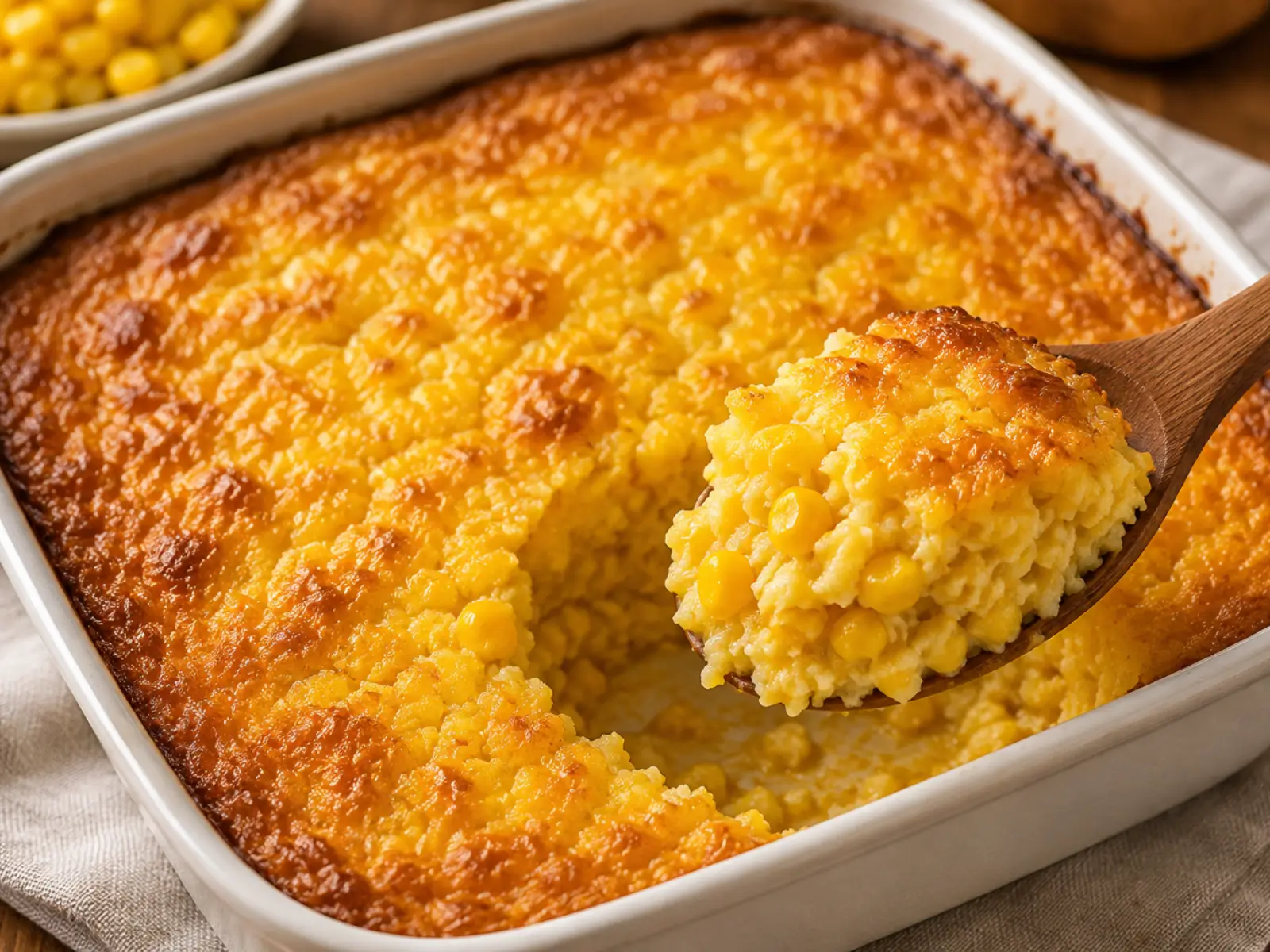
Can I admit something? For years, my corn casserole was hit-or-miss. Sometimes it’d come out creamy and perfect, sometimes dry and crumbly, sometimes so mushy you could pour it. Holidays, potlucks, random Tuesdays — I never knew which version I’d end up with.
Sound familiar? Well, I’ve learned a thing or two since then — and I’m here to spare you the guesswork. This is the corn casserole recipe I wish I’d had all along: just 5 ingredients, perfect texture every time, plus all the little tips and tweaks I’ve figured out the hard way.
I’ll break down the classic Jiffy version (spoiler: drain the corn), teach you how to make it without a mix, show you how to fix it if it comes out too wet or too dry, and walk you through every step so it’s a guaranteed hit at this year’s Thanksgiving. No more corn casserole roulette.
Table of Contents
What Is Corn Casserole, Anyway?
Corn casserole is basically a cross between cornbread and creamed corn, baked into a sweet, savory, spoonable side dish. If you’ve ever had corn pudding or spoonbread, it’s in that family — just a little firmer and more set.
The most popular version — and the one we’re making here — uses a box of Jiffy corn muffin mix as a shortcut, plus a couple of cans of corn, sour cream, and butter. Simple as can be, but so much more than the sum of its parts.
It’s a staple on Southern Thanksgiving tables (right up there with mac and cheese and sweet potato casserole), but honestly, it’s easy enough to make year-round. Pair it with some BBQ chicken and coleslaw in the summer, or chili and cornbread in the winter. Corn casserole knows no season.
The 5 Ingredients You Need
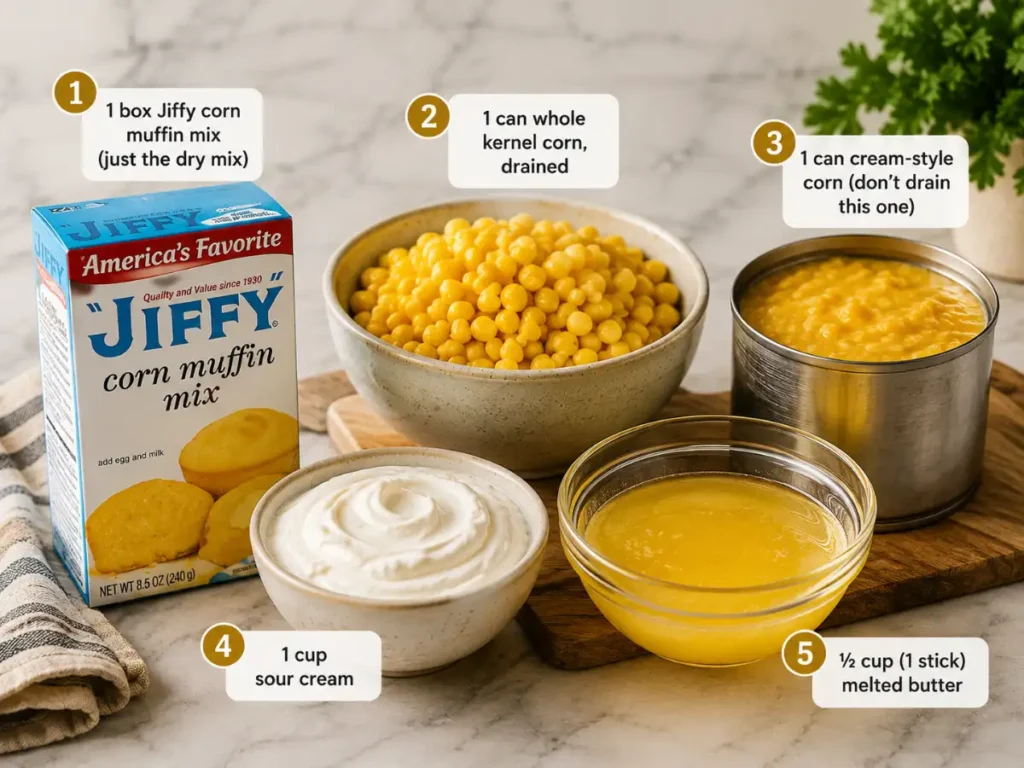
Alright, here’s your grocery list:
- 1 box Jiffy corn muffin mix (just the dry mix)
- 1 can whole kernel corn, drained
- 1 can cream-style corn (don’t drain this one)
- 1 cup sour cream
- ½ cup (1 stick) melted butter
Yep, that’s it. The Jiffy mix is clutch — it’s got the cornmeal, flour, leavening, and a hint of sweetness all in one. The whole corn adds pops of texture, the creamed corn keeps it moist, sour cream adds tang and creaminess, and butter, well, makes everything better.
How to Make Corn Casserole
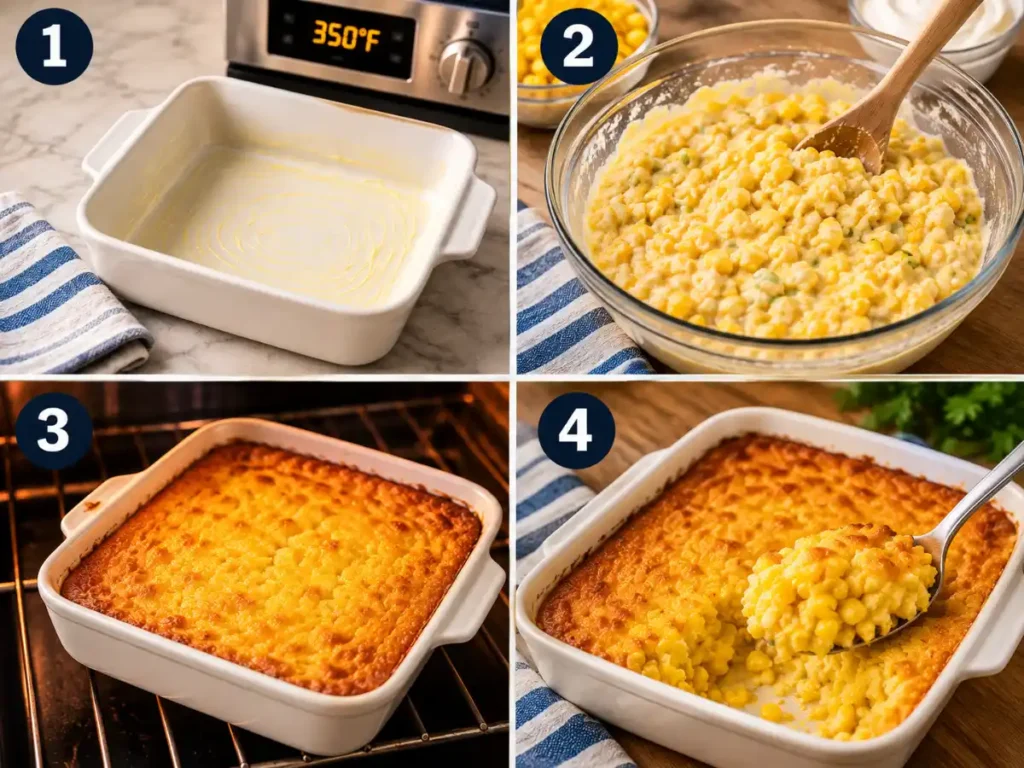
This is a dump-and-stir situation if I’ve ever seen one. No electric mixer, no separating wet and dry, just mix and bake. Here’s how it goes:
- Preheat your oven to 350°F and grease an 8×8-inch baking dish.
- In a large bowl, mix together the Jiffy mix, drained whole corn, creamed corn, sour cream, and melted butter until combined. Pour into your prepared dish.
- Bake for 45-55 minutes, until golden brown around the edges and set in the middle. A toothpick should come out clean, and a thermometer should hit about 160°F.
- Let it rest for at least 10 minutes before serving. This is crucial — it’ll firm up to the perfect scoopable texture as it cools slightly.
Pro tip: Use a light-colored baking dish if you have one. Dark pans can overcook the edges before the center is done.
To Egg or Not to Egg?
Here’s a question that comes up a lot: do you put eggs in corn casserole? Well, it depends on the texture you’re after.
The classic 5-ingredient recipe — the one I’ve laid out here — doesn’t use any eggs. That gives you a creamier, softer, spoonable texture, kind of like a corn pudding. It’ll hold its shape when you scoop it, but just barely.
If you prefer a firmer, more sliceable texture (closer to cornbread), you can whisk a couple of eggs into the mix. Same great flavor, just a little more structured.
Personally, I’m Team No-Egg — I love that creamy, custardy vibe. But if you like yours on the solid side, whisk away.
Wait, Can You Make Corn Casserole Without Jiffy?
Absolutely. I won’t lie, the Jiffy mix is convenient — but it’s not magic. All it really does is combine a few basic pantry staples:
- Cornmeal
- Flour
- Baking powder
- Sugar
To replace one box of Jiffy, just whisk together:
- ⅔ cup cornmeal
- ⅓ cup all-purpose flour
- 2 tablespoons sugar
- 1 tablespoon baking powder
- ¼ teaspoon salt
Use that mixture in place of the Jiffy in the recipe, and voila — corn casserole from scratch. It’ll be a touch less sweet and a little more cornmeal-forward, but just as delicious.
Why Is My Corn Casserole Mushy / Dry / Not Setting? (Lessons Learned)
Alright, let’s talk troubleshooting. If your corn casserole is coming out less than perfect, chances are it’s one of these culprits:
| Problem | Likely Cause | The Fix |
|---|---|---|
| Mushy / wet center | I used to just throw everything in the bowl — juice and all. Turns out, that extra liquid from the whole corn is a recipe for mush. | Drain the whole kernel corn (but not the creamed corn). |
| Too dry / crumbly | I got impatient and left it in the oven too long. Corn casserole waits for no one. | Start checking around the 45 minute mark. And make sure you’re using enough creamed corn and sour cream. |
| Not setting up | I thought I could get away with a bigger pan. Nope — the casserole ends up too thin and just won’t set. | Stick with an 8×8 dish, or a 9×13 if you’re doubling the recipe. And don’t be afraid to add an egg for a little extra structure. |
| Burnt edges | My oven runs hot, and dark pans cook faster. | Reduce the temp by 25°F if you’re using a dark pan, and check early. Tent with foil if the top is browning too quickly. |
The key takeaways: drain the corn, use enough wet ingredients, don’t overbake, and give it a good rest after it comes out of the oven. Master those, and you’re golden.
Corn Casserole vs. Corn Pudding vs. Spoonbread
I grew up on cornbread, so when I first started making corn casserole, I expected something similar. Not quite. Here’s the breakdown:
- Corn casserole = typically made with Jiffy mix or a cornbread base, with whole and creamed corn mixed in. Bakes up softer than cornbread but firmer than pudding.
- Corn pudding = more of a custard situation, usually with a higher ratio of milk and eggs to cornmeal. Softer and creamier than casserole.
- Spoonbread = a Southern specialty that’s like a cross between cornbread and soufflé. Often made with separated eggs for a lighter, spoonier texture.
They’re all in the same family — the delicious, comforting, cornbread-adjacent family. But corn casserole is kind of the Goldilocks of the bunch: not too firm, not too soft, just right.
Mix It Up
Once you’ve nailed the basic recipe, have some fun with it:
- Cheesy: Stir in a cup of shredded cheddar, or go half in the batter, half sprinkled on top. Pepper Jack is also a winner.
- Cream cheese: Swap out half the sour cream for softened cream cheese. Decadent and luscious.
- Jalapeño: Seed and mince a couple of jalapeños for a little kick.
- Bacon: I mean, do I even need to explain this one? Crisp it up and crumble it in.
- Green chiles: A can of diced green chiles adds a nice Southwest vibe.
- Broccoli cheese: Throw in a couple cups of chopped steamed broccoli and an extra handful of cheddar. Voila — corn and broccoli casserole.
Make It Ahead (You Know You Want To)
Thanksgiving is hectic enough without having to juggle a million dishes at the last minute. Here’s how to get corn casserole on the table without breaking a sweat:
- Assemble ahead: Mix everything together, pour it into your baking dish, cover, and refrigerate for up to 2 days. When you’re ready to bake, let it sit at room temp while the oven preheats, then add a few extra minutes to the baking time.
- Bake ahead: Cook it all the way through, let it cool, then cover and refrigerate. On the day of, reheat it covered at 300°F until warmed through (30 minutes or so). Add a sprinkle of cheese on top if you’re feeling fancy.
- Freeze: Wrap it tight and freeze for up to 3 months. According to the USDA, leftover casseroles should be refrigerated within 2 hours, stored in covered airtight containers, and consumed within 3 to 4 days. Reheat refrigerated leftovers to 165°F.. Thaw in the fridge overnight before reheating.
And if oven space is at a premium (isn’t it always?), keep an eye out for my slow cooker corn casserole recipe. Same great flavor, no oven required.
What to Serve with Corn Casserole
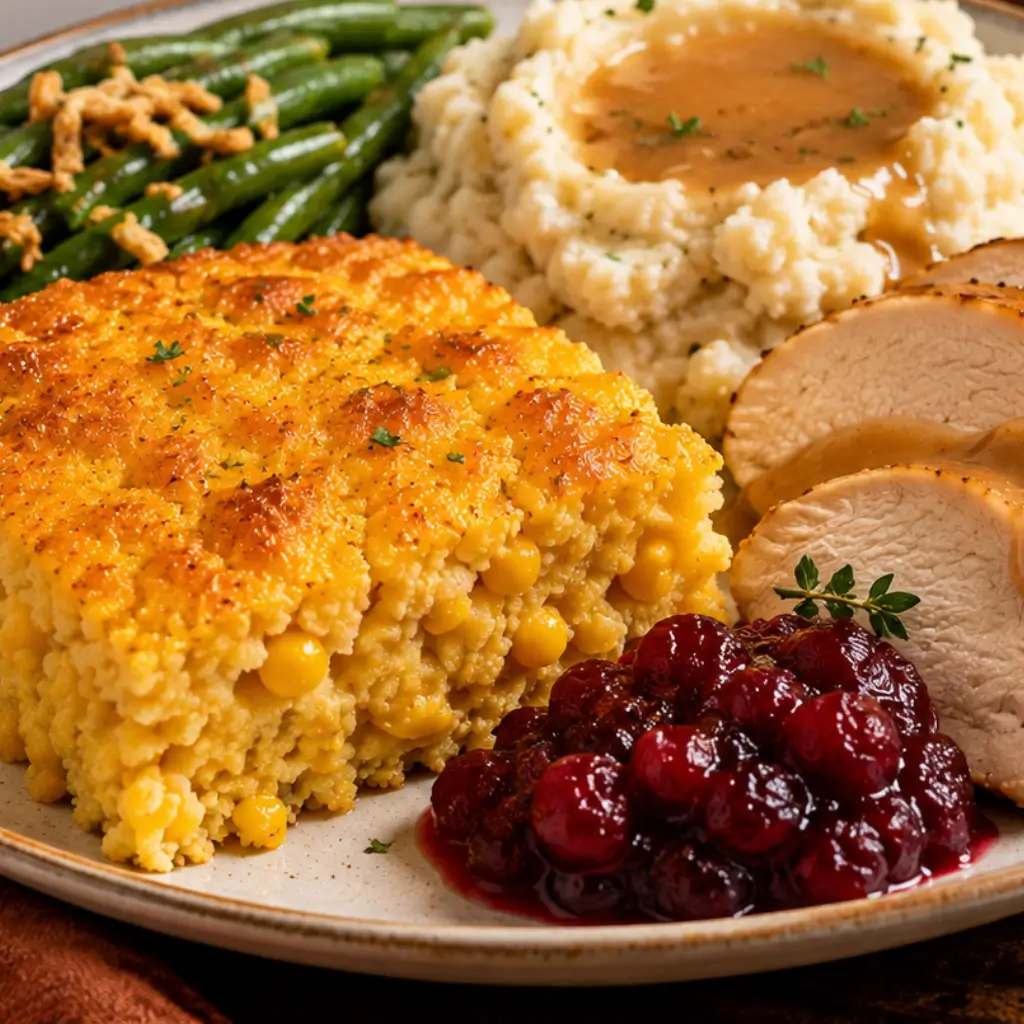
In my house, corn casserole is a non-negotiable at Thanksgiving. It’s right at home next to the turkey, mashed potatoes, green beans, and cranberry sauce. Don’t forget the pumpkin pie for dessert.
But don’t limit yourself to November. Corn casserole is a year-round sidekick for:
- BBQ anything (ribs, chicken, pulled pork)
- Chili (cornbread + corn casserole = match made in heaven)
- Fried chicken
- Pork chops
- Meatloaf
- Basically any homey, comforting main dish you can think of
It’s the little black dress of side dishes — always appropriate, always in style.
Storing Leftovers
I’ve never met a corn casserole that didn’t make fantastic leftovers. Here’s the lowdown:
- Fridge: Cover tightly and refrigerate for up to 4 days. Reheat in the microwave or in a 300°F oven until warmed through.
- Freezer: Wrap securely in plastic wrap and foil, and freeze for up to 3 months. According to the USDA, leftover casseroles should be refrigerated within 2 hours, stored in covered airtight containers, and consumed within 3 to 4 days. Reheat refrigerated leftovers to 165°F.. Thaw overnight in the fridge before reheating.
Pro tip: If you made yours with eggs, it’ll freeze and reheat a little better than the eggless version. But both will get the job done.
Love a good baked casserole side? Don’t miss my Cornbread Casserole for another cozy, crowd-pleasing take on cornbread.
Frequently Asked Questions
u003cstrongu003eWhat are the 5 ingredients in Jiffy corn casserole?u003c/strongu003e
Jiffy corn muffin mix, whole kernel corn, creamed corn, sour cream, and butter. Simple as that.
u003cstrongu003eCan I make corn casserole without Jiffy mix?u003c/strongu003e
You bet. Just mix ⅔ cup cornmeal, ⅓ cup flour, 2 tablespoons sugar, 1 tablespoon baking powder, and ¼ teaspoon salt together, and use that in place of the Jiffy. Easy peasy.
u003cstrongu003eWhy is my corn casserole runny?u003c/strongu003e
Nine times out of ten, it’s because the whole kernel corn didn’t get drained. That extra liquid can really throw off the texture. Make sure to drain the whole corn (but not the creamed corn), and let the casserole rest for a good 10-15 minutes after baking to firm up.
u003cstrongu003eDo you put eggs in corn casserole?u003c/strongu003e
It’s up to you. The classic Jiffy recipe doesn’t use any eggs, which gives you a softer, creamier texture. If you like it firmer and more sliceable, you can add a couple of eggs to the mix.
u003cstrongu003eHow do you know when corn casserole is done?u003c/strongu003e
You’re looking for a golden brown top and edges, and a center that’s just set — a little jiggle is okay, but it shouldn’t be liquidy. A toothpick inserted into the center should come out mostly clean, and an instant-read thermometer should read about 160°F.
u003cstrongu003eHow long can corn casserole sit out?u003c/strongu003e
Not too long, unfortunately. Like any dish with dairy, it should be refrigerated within 2 hours. If your Thanksgiving festivities tend to linger, just pop it in the fridge and reheat it later.
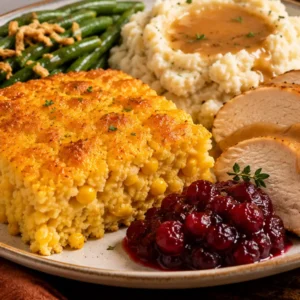
5-Ingredient Corn Casserole
Equipment
- 8×8-inch baking dish
- Large mixing bowl
- Can opener
Ingredients
Corn Casserole
- 1 box Jiffy corn muffin mix (8.5 ounces)
- 1 can whole kernel corn (15.25 ounces), drained
- 1 can cream-style corn (14.75 ounces)
- 1 cup sour cream
- 1/2 cup unsalted butter melted (1 stick)
Instructions
- Preheat your oven to 350°F (175°C). Grease an 8×8-inch baking dish with butter or cooking spray.
- In a large mixing bowl, stir together the Jiffy mix, drained whole kernel corn, cream-style corn, sour cream, and melted butter until well combined.
- Pour the mixture into the prepared baking dish and spread it out evenly.
- Bake for 45-55 minutes, until golden brown around the edges and set in the center. A toothpick inserted into the middle should come out mostly clean.
- Remove from the oven and let rest for at least 10 minutes before serving. This allows it to firm up to the perfect scoopable texture.
- Serve warm and enjoy!
Notes
There you have it — the corn casserole crash course I wish someone had given me years ago. It’s not rocket science, but a few key moves make all the difference: drain the corn, nail the ratio, and give it time to set.
Master those, and you’ll be the one fielding recipe requests at this year’s holiday table. And with a dish this easy, you might just be happy to hand ’em out. 🌽
Craving something different for dinner? Try our Easy Peruvian Recipes at Home for a fresh, flavorful change of pace.